Defense Priorities Defense Priorities
  • Policy Topics
    • Iran
    • Ukraine-Russia
    • NATO
    • China
    • Venezuela
    • Syria
  • Analysis
    • Research
    • Q&A
  • Programs
    • Grand Strategy Program
    • Military Analysis Program
    • Asia Program
    • Middle East Program
  • Experts
  • Events
  • Media
  • About
    • Mission & Vision
    • People
    • Jobs
    • Contact
  • Donate
Select Page
Home / North Korea / What would Kamala Harris do on North Korea?
North Korea, Asia

August 23, 2024

What would Kamala Harris do on North Korea?

By Daniel DePetris

Every U.S. president over the last two decades has arrived at the White House thinking that with enough perseverance, resolve and dexterity, they can solve—or at the least substantially mitigate—the North Korea conundrum. Without fail, every single U.S. president over the last two decades has left that very same building passing on the conundrum to their successors.

President George W. Bush entered the job highly skeptical of the Clinton administration’s “Agreed Framework” deal with Pyongyang, tore it up, and began the process of enacting a U.N. Security Council sanctions regime against the North Korean economy to pressure the Kim dynasty into eliminating its nuclear weapons program. The result: failure.

In 2009, President Barack Obama vowed to talk to Washington’s traditional adversaries if they were willing to “unclench” their fists and in 2012 even arrived at an understanding with the North Koreans known as the “Leap Day Deal,” which traded a nuclear and missile launch moratorium for U.S. aid. Yet after that arrangement blew up months later, Obama largely gave up on diplomacy with the North, spending the rest of his presidency piling on the sanctions pressure and hoping Pyongyang would reform its ways.

President Donald Trump, meanwhile, started blustery but came to see top-level diplomacy with Kim Jong-un as his best chance to wriggle something out of the North. It didn’t work; the two men walked away from their second summit in Hanoi in February 2019 with nothing to show for it. As far as President Biden’s tenure, there’s frankly nothing much to say.

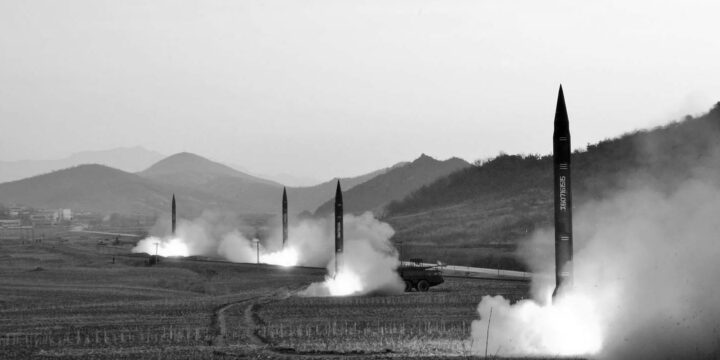
If Kamala Harris wins the 2024 election, she will face the same problem many of her peers confronted: a North Korea steadfastly committed to retaining its nuclear weapons arsenal. The only difference is that North Korea has more of those weapons in its stockpile today than it did previously, not to mention an intercontinental ballistic missile (ICBM) program, newer launch platforms to shoot off those missiles if the time comes, and a more impatient Kim Jong-un who no longer seems to care whether Washington extends him an olive branch or not.

Read at The National Interest

Author

Photo of Daniel DePetris

Daniel
DePetris

Fellow

Defense Priorities

More on Asia

China, Asia

Fate of China’s top general more likely to do with power struggle than corruption

By Lyle Goldstein

January 26, 2026

op-edGrand strategy, Alliances, China, Russia

Russian and Chinese threats to Greenland and the new Arctic sea routes are low

By Lyle Goldstein

January 23, 2026

op-edTaiwan, Asia, China‑Taiwan

The new National Security Strategy’s dangerous language on Taiwan

By Lyle Goldstein

January 6, 2026

In the mediaChina, Asia

Asia giants find warmer ties may cool conflict

Featuring Lyle Goldstein

January 2, 2026

In the mediaChina, Asia, China‑Taiwan

PLA fired 27 rockets: defense ministry

Featuring Lyle Goldstein

December 31, 2025

Press ReleaseAsia, China‑Taiwan

Military drills near Taiwan highlight need for caution

By Lyle Goldstein

December 30, 2025

Events on North Korea

See All Events
in-personNorth Korea, Asia, Deterrence, Diplomacy, Nuclear weapons

Ending the North Korea standoff

March 5, 2018
in-personGrand strategy, Iran, North Korea, Nuclear weapons

Managing nuclear proliferation crises

October 30, 2017

Receive expert foreign policy analysis

Join the hub of realism and restraint

Expert updates and analysis to enhance your understanding of vital U.S. national security issues

Defense Priority Mono Logo

Our mission is to inform citizens, thought leaders, and policymakers of the importance of a strong, dynamic military—used more judiciously to protect America’s narrowly defined national interests—and promote a realistic grand strategy prioritizing restraint, diplomacy, and free trade to ensure U.S. security.

  • Research
  • Experts
  • About
  • For Media
  • Jobs
  • Donate
  • Privacy Policy
  • Terms and Conditions
  • Contact
© 2026 Defense Priorities All Right Reserved