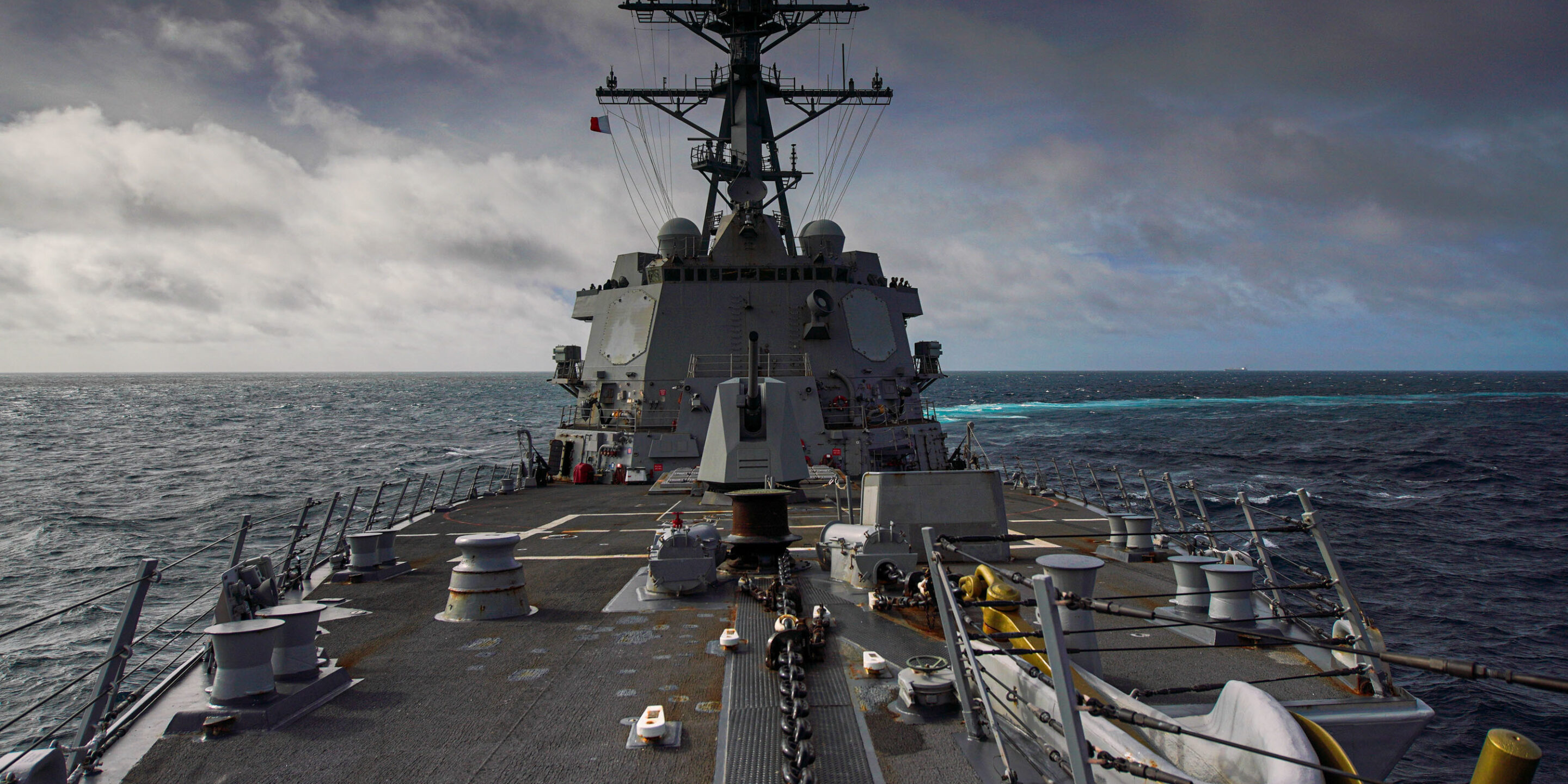
The Trump administration has released its new National Security Strategy (NSS) and many in the U.S. foreign policy elite have declared it soft on China, downgrading the Asia-Pacific region in order to focus more on the Western Hemisphere.
A former senior U.S. diplomat complained in the Wall Street Journal: “To pretend the Chinese threat in Asia… can be ignored… feels like 1930s-era foolishness.” A leading academic expert on strategy offered: “Unlike Trump’s first security strategy, China is not identified by name as a country that poses a military threat, which may be the loudest omission in the entire document.”
Yet an early Chinese assessment of the NSS took a very different interpretation. Though it did note an overall “weakening of U.S. hegemony,” it said of the document’s position on Taiwan, “The strength of this wording far exceeds that of the past.” The analyst added that policies in the new NSS “may increase the risk of military conflict in the Asia-Pacific region.”
Why might the Chinese read the NSS so differently than American critics? While the NSS does declare that the “United States rejects… global domination,” and “The outsized influence of larger, richer, and stronger nations is a timeless truth of international relations,” it does not apply that logic to the long-simmering Taiwan issue.
Author

More on Asia




Events on Taiwan