As the U.S.-Israeli war against Iran drags on, China has largely remained on the sidelines, calling for peace but avoiding direct criticism of President Donald Trump.
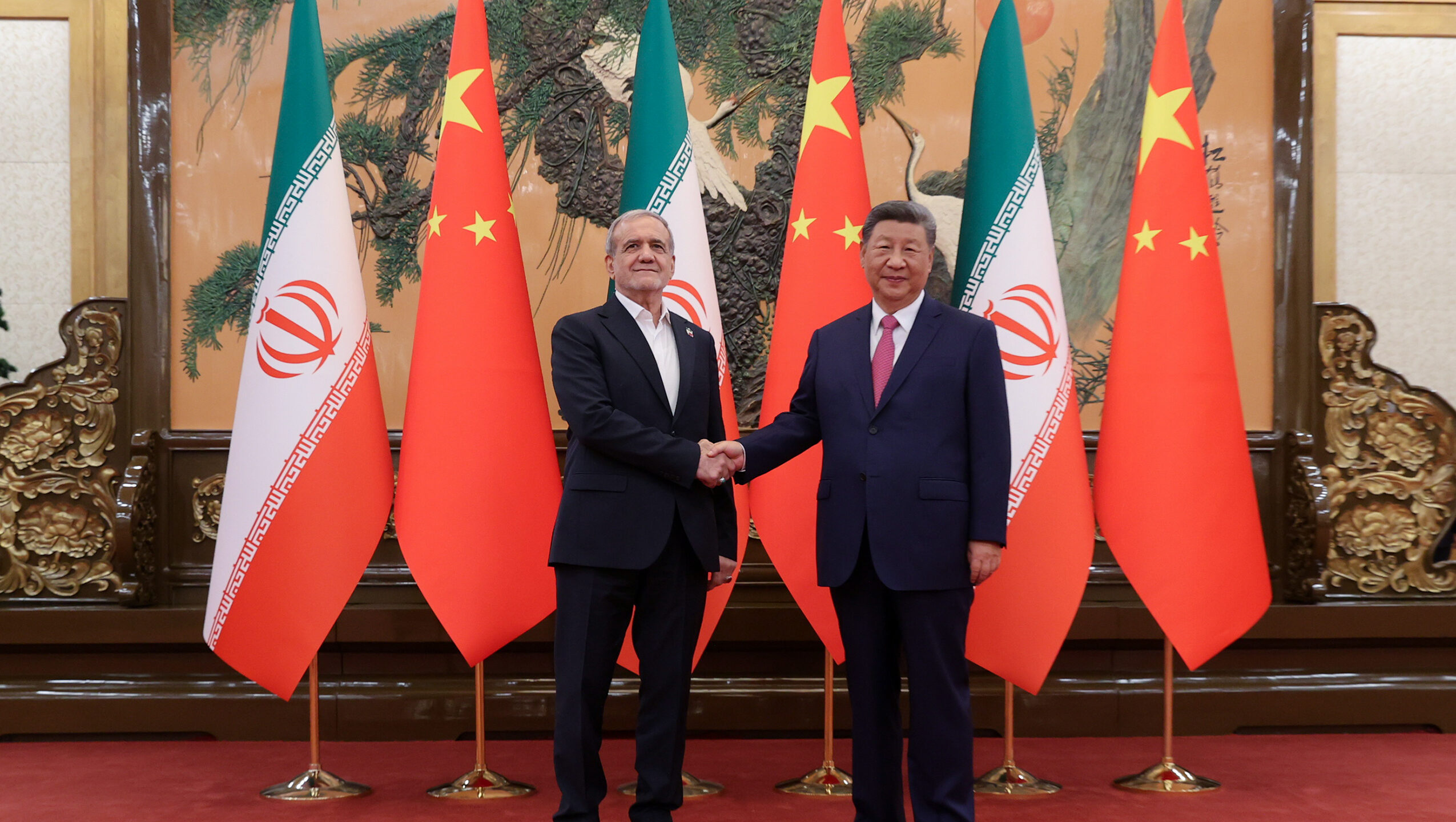
While suggestions that the war is a strategic blow to China are overblown, Beijing gets nearly half of its oil imports from the Middle East and has a strategic partnership with Iran though not a full alliance. However, with the United States bogged down in another Middle East war, Washington has fewer resources devoted to balancing China in the Indo-Pacific.
In this DEFP Q&A, Asia Program Director Lyle Goldstein discusses how China has responded to the war and what it could mean for U.S.-China relations. (This interview was conducted before President Trump requested to delay his forthcoming meeting with Chinese President Xi Jinping. The interview has been lightly edited for clarity.)
How has China responded so far to the war?
Goldstein: China’s response has been pretty low-key. They have condemned the attacks on Iran, calling them destabilizing. They’ve made some symbolic gestures to show support. But it’s worth emphasizing that they don’t have an alliance with Iran and their ties are fairly low-level, particularly in the military. China has taken some prudent measures—such as reducing the amount of diesel it exports—to ensure it does not face shortages. They’ve offered to send diplomats to mediate and they’ve strongly urged both sides to rein in the violence.
One of the keys that I’m watching closely, as all China experts are, is the upcoming summit between President Trump and Chinese President Xi Jinping. That will be a historic moment. It’s very important for both countries and for the world. I believe the summit was in jeopardy, but the Chinese have sent signals that they want to proceed. It could still go off the rails, but I’m pleased that it is moving forward, and it shows that China values a working relationship with the United States.
Does this war harm Chinese interests in a significant way?
Goldstein: It’s true that China gets some energy from Iran, although I think it’s less than most people realize. It’s really a small percentage of China’s total energy mix. My colleague at Defense Priorities, Rose Kelanic, had a wonderful piece in the New York Times where she laid out how China is less vulnerable than the United States because it has been markedly reducing oil’s share of its energy mix. In 2024, China actually reduced its total oil consumption, which is pretty remarkable.
Let’s also recall that China gets much more oil from Russia than from Iran. The Russians have been wanting to build another oil pipeline into China; that will likely go forward now. So this war is serving as yet another impetus for China-Russia economic and strategic coordination.
Observers have argued that this war will harm China. Former Secretary of State Mike Pompeo, for example, has said that if the Iranian regime falls, China will “lose a critical foothold from which to project power in the region and undermine U.S. interests.” I don’t think that’s true at all. China has a partnership with Iran, but it also has partnerships with countries throughout the Gulf, including the UAE, Saudi Arabia, and Oman. China has never been on one side of the Middle East’s regional rivalries. Beijing has taken a mature, balanced approach to regional diplomacy and development.
Will China get more involved?
Goldstein: China has been watching U.S. mistakes over the last several decades. They already knew it can be perilous to get really involved in other regions, especially the Middle East. Chinese international relations scholars are fond of saying that the Middle East is a “graveyard of superpowers.” They are well acquainted with how the Afghanistan intervention played a role in the Soviet Union’s collapse. They have thoroughly studied our experiences in Iraq and Afghanistan.
China has no major ambitions to get involved or to orchestrate security arrangements in the region. What they are interested in is development—in making a lot of money, to put it more crudely. They have a lot invested in the region and are looking to promote stability.
Some Chinese officials may be happy to see the U.S. bogged down in another Middle East war that will sap its strength, especially in the Indo-Pacific. But after the U.S. capture of Venezuelan President Nicolás Maduro, and now this war on Iran, I am concerned that China may come to the conclusion that it will have to take a more robust stance against U.S. actions. Beijing could make life harder for us around the world. They have chosen not to go that route at this point. But if this pattern of zero-sum interaction continues and we don’t stabilize our relations with China, Beijing may embrace a new cold war approach. The U.S. should do everything it can to avoid that.
There are a few disturbing things we’re already seeing. For example, Chinese companies have published satellite photos of various U.S. deployments to the Middle East, and there is some evidence that China and Iran were discussing Chinese sales of anti-ship missiles to Iran. While that didn’t happen, this is the future we may be looking at if we keep going in this direction.
If we can stabilize the bilateral relationship overall, hopefully we can avoid this high-intensity, militarized rivalry, which I think will hurt both countries and the whole world.
Author

More on Asia
Events on China