Defense Priorities Defense Priorities
  • Policy Topics
    • Venezuela
    • China
    • Israel-Hamas
    • Ukraine-Russia
    • NATO
    • Syria
  • Analysis
    • Research
    • Q&A
  • Programs
    • Grand Strategy Program
    • Military Analysis Program
    • Asia Program
    • Middle East Program
  • Experts
  • Events
  • Media
  • About
    • Mission & Vision
    • People
    • Jobs
    • Contact
  • Donate
Select Page
Home / Taiwan / How China will squeeze, not seize, Taiwan
Taiwan, Asia, China, China‑Taiwan

May 21, 2024

How China will squeeze, not seize, Taiwan

By Jennifer Kavanagh

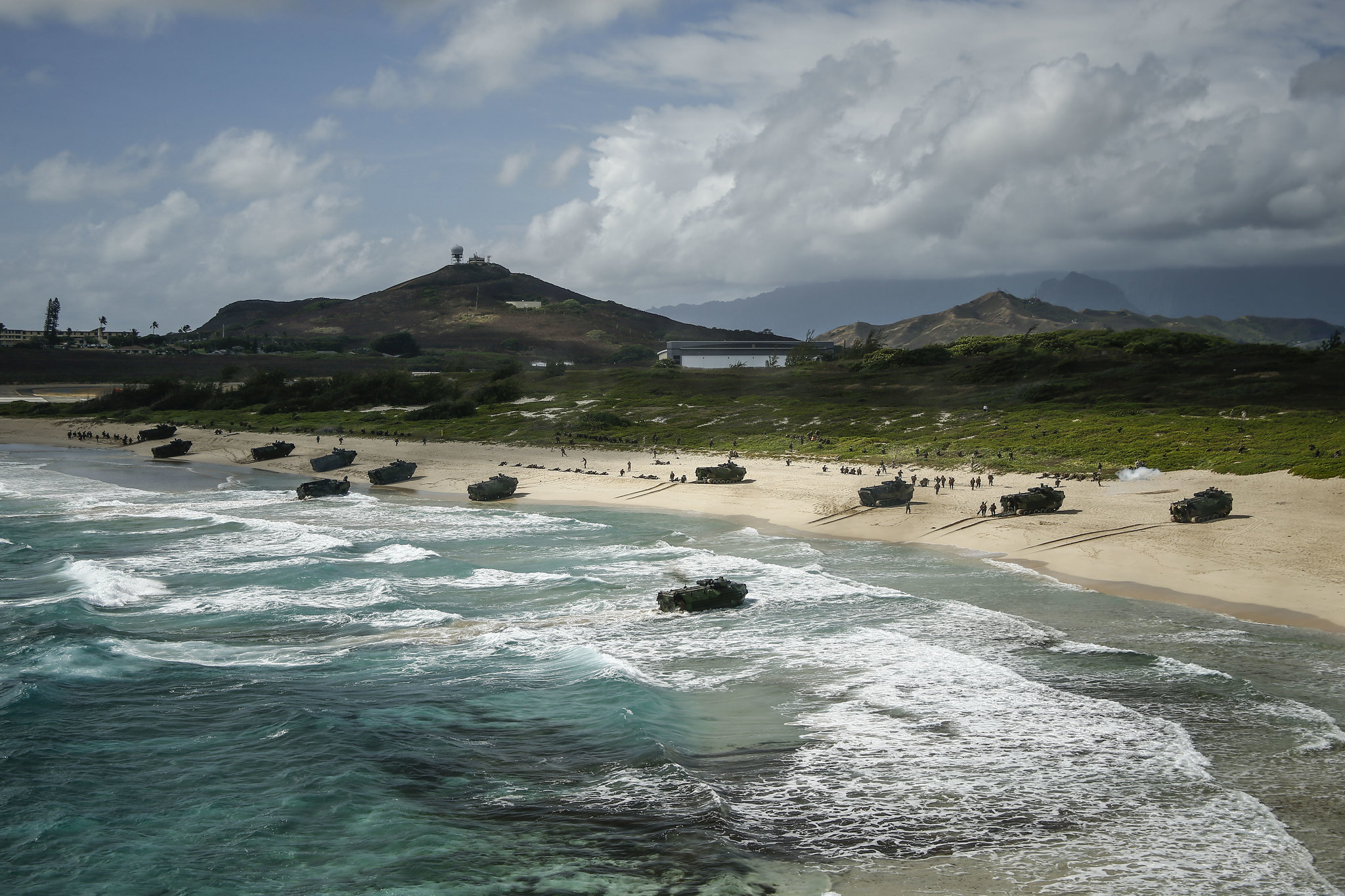
Testifying before the Senate Armed Services Committee in 2021, Admiral Philip Davidson, the retiring commander of U.S. military joint forces in the Indo-Pacific, expressed concern that China was accelerating its timeline to unify with Taiwan by amphibious invasion. “I think the threat is manifest during this decade, in fact in the next six years,” he warned. This assessment that the United States is up against an urgent deadline to head off a Chinese attack on Taiwan—dubbed the “Davidson Window”—has since become a driving force in U.S. defense strategy and policy in Asia.

Indeed, the Defense Department has defined a potential Chinese invasion of Taiwan as the “pacing scenario” around which U.S. military capabilities are benchmarked, major investments are made, and joint forces are trained and deployed. Taipei has been somewhat less fixated on this particular threat. But over the last decade, as the cross-strait military balance has tilted in Beijing’s favor, Taiwan’s leaders have ramped up their military spending and training expressly to deter and deny such an attack.

The threat of an amphibious invasion, however, is the wrong focal point for the United States’ efforts to protect Taiwan. China’s patient, long-term Taiwan policy, which treats unification as a “historical inevitability,” together with its modest record of military action abroad, suggests that Beijing’s more probable plan is to gradually intensify the policy it is already pursuing: a creeping encroachment into Taiwan’s airspace, maritime space, and information space. The world should expect to see more of what have come to be known as “gray-zone operations”—coercive activities in the military and economic domains that fall short of war.

Read at Foreign Affairs

Author

Jennifer
Kavanagh

Senior Fellow & Director of Military Analysis

Defense Priorities

More on Asia

op-edTaiwan, Asia, China‑Taiwan

The new National Security Strategy’s dangerous language on Taiwan

By Lyle Goldstein

January 6, 2026

In the mediaChina, Asia

Asia giants find warmer ties may cool conflict

Featuring Lyle Goldstein

January 2, 2026

In the mediaChina, Asia, China‑Taiwan

PLA fired 27 rockets: defense ministry

Featuring Lyle Goldstein

December 31, 2025

Press ReleaseAsia, China‑Taiwan

Military drills near Taiwan highlight need for caution

By Lyle Goldstein

December 30, 2025

In the mediaChina‑Taiwan, Asia, Taiwan

China encircles Taiwan in massive military display

Featuring Lyle Goldstein

December 30, 2025

op-edTaiwan, Asia, China, China‑Taiwan

What Trump could do to defuse Taiwan’s powder keg

By Lyle Goldstein

December 25, 2025

Events on Taiwan

See All Events
virtualAsia, China, Grand strategy, Taiwan

Are semiconductors a reason to defend Taiwan?

November 17, 2022
virtualChina, Grand strategy, Taiwan

Taiwan tensions and U.S.-China competition

August 25, 2022

Receive expert foreign policy analysis

Join the hub of realism and restraint

Expert updates and analysis to enhance your understanding of vital U.S. national security issues

Defense Priority Mono Logo

Our mission is to inform citizens, thought leaders, and policymakers of the importance of a strong, dynamic military—used more judiciously to protect America’s narrowly defined national interests—and promote a realistic grand strategy prioritizing restraint, diplomacy, and free trade to ensure U.S. security.

  • Research
  • Experts
  • About
  • For Media
  • Jobs
  • Donate
  • Privacy Policy
  • Terms and Conditions
  • Contact
© 2026 Defense Priorities All Right Reserved