Defense Priorities Defense Priorities
  • Policy Topics
    • US-Israel-Iran
    • Ukraine-Russia
    • Western Hemisphere
    • NATO
    • China
  • Analysis
    • Policy Papers
    • Symposia
    • Q&A
    • Polls
    • Grand Strategy Explained
    • Target Taiwan
  • Programs
    • Grand Strategy Program
    • Military Analysis Program
    • Asia Program
    • Middle East Program
  • Experts
  • Events
  • Media
  • About
    • Mission & Vision
    • People
    • Jobs
    • Contact
  • Donate
Select Page
Home / NATO / An empty U.S.-NATO arms deal
NATO, Europe and Eurasia

August 28, 2025

An empty U.S.-NATO arms deal

By Violet Collins

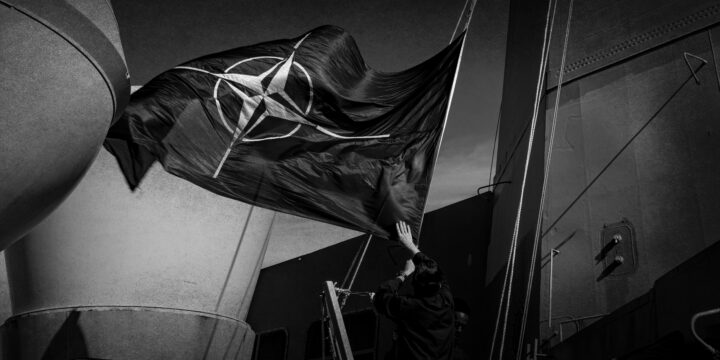
The NATO-U.S. deal allowing for European governments to purchase American weapons and send them to Ukraine shows promise as an alternative approach for Ukrainian rapid access to defense capabilities. What it doesn’t show promise towards is protecting American security priorities and long-term defense capabilities. Considering the current shortages in American stockpiles and the agreement’s failure to address long-term burden sharing within NATO and across the Atlantic, this deal should be recognized as a win for European security interests rather than a triumph for Washington.

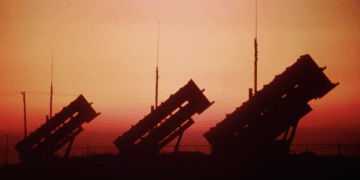
Under the new deal, the Donald Trump administration has resumed providing military supplies to Ukraine via an arrangement where NATO members purchase armaments directly from the United States, most notably Patriot air defense systems, and distribute them to Ukraine. The Netherlands has already led the way in establishing new arms pipelines via this mechanism with its €500 million purchase of Patriot missiles and system parts, with other European states expected to follow suit.

At the core of this delivery mechanism is its solution to quickly restock European stockpiles and coordinate arms delivery to Ukraine, allowing European access to defensive military capabilities without depleting their own stockpiles. While this mechanism holds the potential for European countries to provide military aid to Ukraine rapidly, it is erroneous for American and European leaders to consider this deal anything more than a temporary solution to the deep-seated tensions within NATO.

Read at National Interest

Author

Violet
Collins

Contributing Fellow

Defense Priorities

More on Europe

Op-edUkraine‑Russia, Europe and Eurasia, NATO

An EU-style Article 4 mechanism would be insignificant

By Daniel DePetris

September 30, 2026

Op-edNATO, Europe and Eurasia

What really matters when Burnham meets Trump

By Daniel DePetris

September 22, 2026

In the mediaUkraine‑Russia, Europe and Eurasia, Russia, Ukraine

As Walls Close In, Zelensky Lashes Out

Featuring Jennifer Kavanagh

September 16, 2026

Op-edUkraine‑Russia, Europe and Eurasia, Russia, Ukraine

Trump Zelensky Trump denials can’t hide billions in U.S. weapons sent to Ukraine

By Jennifer Kavanagh

September 9, 2026

In the mediaGrand strategy, NATO

As The CIA Director Warns Putin Not to Take Advantage of U.S. Munitions Shortages, Europe Moves Away From Dependence on American Weapons and Security Guarantees

Featuring Jennifer Kavanagh

August 31, 2026

Op-edUkraine‑Russia, Europe and Eurasia, NATO, Russia, Ukraine

Russia does not want a war with Europe

By Jennifer Kavanagh

August 28, 2026

Events on NATO

See All Events
virtualNATO, Alliances, Burden sharing, Europe and Eurasia, Grand strategy

Assessing the 2026 NDS: Will it usher in burden shifting?

February 9, 2026
virtualNATO, Alliances, Europe and Eurasia, Russia, Ukraine, Ukraine‑Russia

A ‘bridge’ to NATO or false hope for Ukraine?

July 12, 2024
virtualNATO, Alliances, Deterrence, Europe and Eurasia, Nuclear weapons

New York for Paris? NATO and extended deterrence in a new nuclear age

July 2, 2024

Receive expert foreign policy analysis

Join the hub of realism and restraint

Expert updates and analysis to enhance your understanding of vital U.S. national security issues

Defense Priority Mono Logo

Our mission is to inform citizens, thought leaders, and policymakers of the importance of a strong, dynamic military—used more judiciously to protect America’s narrowly defined national interests—and promote a realistic grand strategy prioritizing restraint, diplomacy, and free trade to ensure U.S. security.

Defense Priorities Foundation is a 501(c)(3) non-profit organization supported entirely by American individuals and foundations—no funding comes from the U.S. government or any foreign government. Donations are unlimited and deductible for Federal Income Tax purposes.

  • Experts
  • Papers
  • Symposia
  • Q&A
  • Polls
  • Events
  • Media
  • Terms and Conditions
  • Privacy Policy
  • About
  • Jobs
  • Contact
  • Donate
© 2026 Defense Priorities Foundation. All rights reserved.