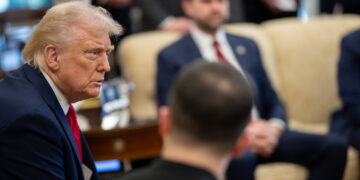
Prime Minister Andy Burnham’s honeymoon is over. His plate at 10 Downing Street is full and his office is packed to the brim with a collection of troubles ranging from the UK’s shrimp-like defence budget to the country’s ongoing cost of living crisis. He can now add an in-person meeting with U.S. President Donald Trump to the mix, an engagement that can either go smoothly or poorly depending on which side of the bed Trump wakes up on that morning.
As hundreds of diplomats descend on Manhattan for the annual UN General Assembly meetings for a week of speeches and after-dinner cocktails at any one of New York City’s fine establishments, one can easily picture Burnham huddling with advisers in his hotel room trying to decipher how his session went. The PM’s harsh criticism of Trump during his past life as mayor of Greater Manchester won’t make things easy on him, although the fact that Burnham has already spoken to Trump twice on the phone means the two politicians at least have some familiarity with each other.
But that’s where the similarities end. Burnham and Trump enter their meeting on the sidelines of the UN with different objectives, political philosophies, politics and ways of doing business. The first likes to think of himself as a less rigid, more for-the-people version of the stiff, boring Keir Starmer; the latter has an ego the size of UN headquarters and doesn’t hesitate to employ coercion, rhetorically or otherwise, to browbeat the person on the table. Just ask Starmer, whose relatively rosy personal and professional relationship with Trump during the first year of his second term quickly fell apart like a house of cards over the war in Iran. Starmer eventually came around to allowing U.S. bombers stationed at British bases to strike Iranian targets along the Strait of Hormuz, but Trump never forget the initial snub and cites it to this very day.
Author