Defense Priorities Defense Priorities
  • Policy Topics
    • US-Israel-Iran
    • Ukraine-Russia
    • Western Hemisphere
    • NATO
    • China
    • Syria
  • Analysis
    • Research
    • Q&A
  • Programs
    • Grand Strategy Program
    • Military Analysis Program
    • Asia Program
    • Middle East Program
  • Experts
  • Events
  • Media
  • About
    • Mission & Vision
    • People
    • Jobs
    • Contact
  • Donate
Select Page
Home / NATO / Why Trump’s Germany Drawdown is Overdue
NATO, Alliances, Europe and Eurasia

May 28, 2026

Why Trump’s Germany Drawdown is Overdue

By Violet Collins

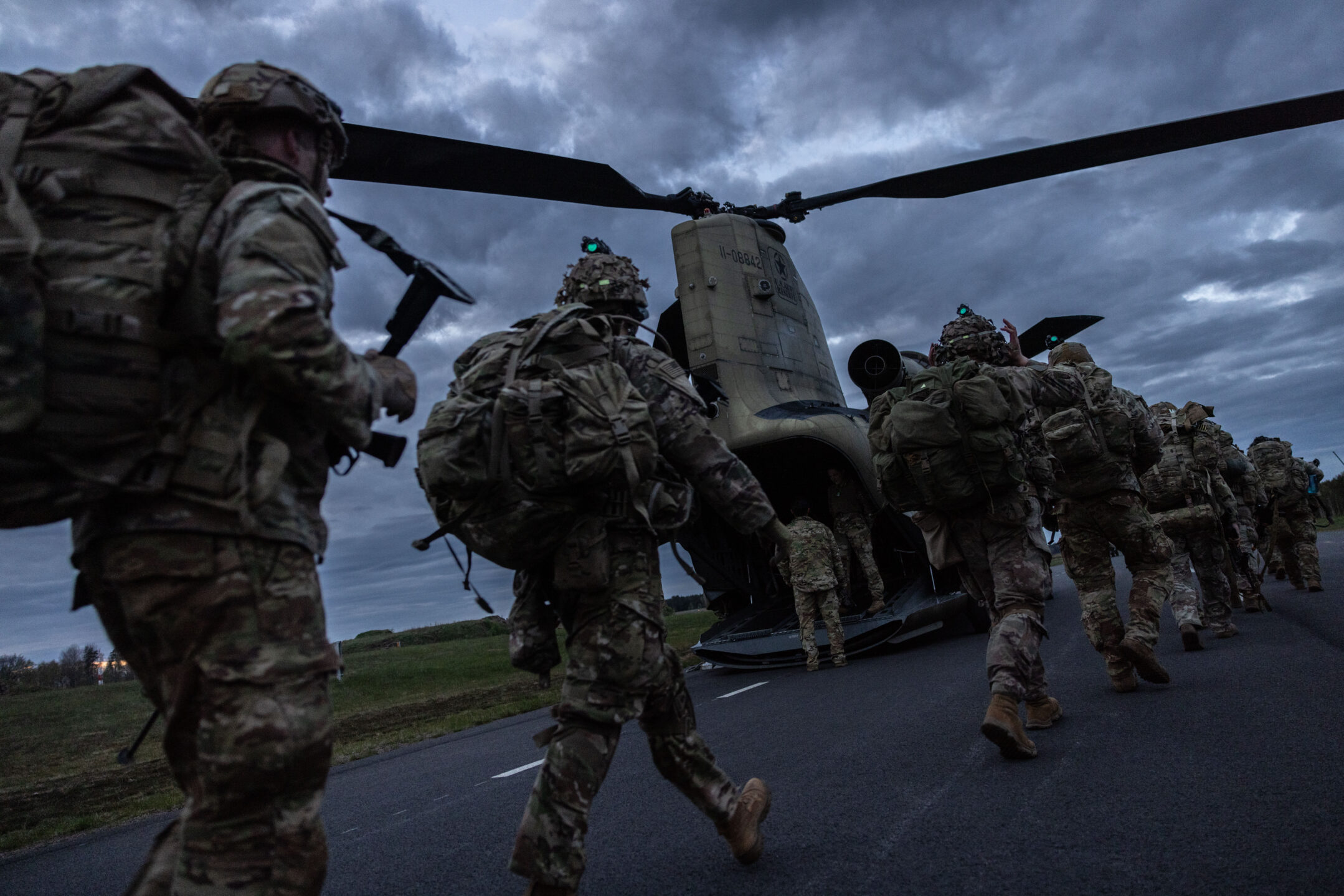
Washington’s retaliatory threat to pull troops out of Germany has become a reality in the Pentagon, following Secretary Hegseth’s announcement of the plan to withdraw 5,000 American troops in response to German Chancellor Merz’s criticism of American strategy in Iran. While this modest initial withdrawal is keeping with the Trump administration’s often reactive foreign policy, embarking on troop withdrawal is the right move and long overdue, even if its catalyst is rooted in a misplaced desire to punish Berlin.

The U.S. has maintained force presence in Germany for 80 years, today numbering 79 total installations and over 30,000 troops and accounting for over half of all American active-duty soldiers deployed in Europe. The Ramstein airbase serves as the core of U.S. force presence in the region, providing a complex network of infrastructure for global missions, including airdrops and medical evacuations. Other major bases in Germany hold the headquarters for U.S. Special Forces and Africa command, while the Grafenwoehr base serves as the largest American training facility outside of the United States.

Primary U.S. security concerns now lay elsewhere, both in the Indo-Pacific, and, as Washington has emphasized, close to home in the Western hemisphere. The German bases alone cost $4-5 billion a year to sustain, defense money that could no doubt be better spent elsewhere. Current U.S. force deployments and resources dedicated to maintaining the bases in Germany are simply disproportional to U.S. security interests in the region.

Aside from the sheer cost of the U.S. troop deployments in Germany and the pressing need to focus U.S. forces and resources elsewhere, sustaining a healthy and durable transatlantic security partnership rests on sustainable burden shifting. Further, asking American taxpayers to continue bearing the costs, both in terms of personnel and finances, poses a moral hazard for European security architecture going forward. For Europe, continuing to fall under the security umbrella of the U.S. is not sustainable or certain. Rather than allow European forces to atrophy and drag their feet, healthy decoupling is beyond necessary. As long as the U.S. continues to bear the bulk of the burden for European security, there will be no true impetus for European states to take more responsibility for their own security and assume a stronger and more sustainable role within the transatlantic partnership.

Read at Real Clear Defense

Author

Violet
Collins

Contributing Fellow

Defense Priorities

More on Europe

ExplainerBurden sharing, Basing and force posture, Europe and Eurasia

Stop bargaining with Europe, start leaving

By Benjamin Friedman and Moritz Graefrath

May 27, 2026

In the mediaNATO, Europe and Eurasia

U.S. to pull jets, destroyers and submarines from NATO as part of European drawdown

Featuring Jennifer Kavanagh

May 26, 2026

In the mediaUkraine‑Russia, Europe and Eurasia, Iran, Russia, Ukraine, US‑Israel‑Iran

How the War in Iran Helped Ukraine Go From Problem to Solution

Featuring Jennifer Kavanagh

May 22, 2026

Op-edNATO, Europe and Eurasia

Germany’s New Military Strategy Deserves a Strong U.S. Endorsement

By Thomas P. Cavanna

May 20, 2026

NATO headquarters in Brussels
In the mediaNATO, Europe and Eurasia

NATO’s top commander downplays U.S. troop withdrawal

Featuring Jennifer Kavanagh

May 19, 2026

In the mediaNATO, Europe and Eurasia

Should the United States Withdraw Troops from Germany?

Featuring Jennifer Kavanagh

May 19, 2026

Events on NATO

See All Events
virtualNATO, Alliances, Burden sharing, Europe and Eurasia, Grand strategy

Assessing the 2026 NDS: Will it usher in burden shifting?

February 9, 2026
virtualNATO, Alliances, Europe and Eurasia, Russia, Ukraine, Ukraine‑Russia

A ‘bridge’ to NATO or false hope for Ukraine?

July 12, 2024
virtualNATO, Alliances, Deterrence, Europe and Eurasia, Nuclear weapons

New York for Paris? NATO and extended deterrence in a new nuclear age

July 2, 2024

Receive expert foreign policy analysis

Join the hub of realism and restraint

Expert updates and analysis to enhance your understanding of vital U.S. national security issues

Defense Priority Mono Logo

Our mission is to inform citizens, thought leaders, and policymakers of the importance of a strong, dynamic military—used more judiciously to protect America’s narrowly defined national interests—and promote a realistic grand strategy prioritizing restraint, diplomacy, and free trade to ensure U.S. security.

  • Research
  • Experts
  • About
  • For Media
  • Jobs
  • Donate
  • Privacy Policy
  • Terms and Conditions
  • Contact
© 2026 Defense Priorities Foundation. All rights reserved.