Defense Priorities Defense Priorities
  • Policy Topics
    • US-Israel-Iran
    • Ukraine-Russia
    • Western Hemisphere
    • NATO
    • China
  • Analysis
    • Policy Papers
    • Symposia
    • Q&A
    • Polls
    • Grand Strategy Explained
    • Target Taiwan
  • Programs
    • Grand Strategy Program
    • Military Analysis Program
    • Asia Program
    • Middle East Program
  • Experts
  • Events
  • Media
  • About
    • Mission & Vision
    • People
    • Jobs
    • Contact
  • Donate
Select Page
Home / Israel-Hamas / What is the point of the U.S. military presence in Syria?
Israel‑Hamas, Middle East

March 10, 2024

What is the point of the U.S. military presence in Syria?

By Bree Megivern

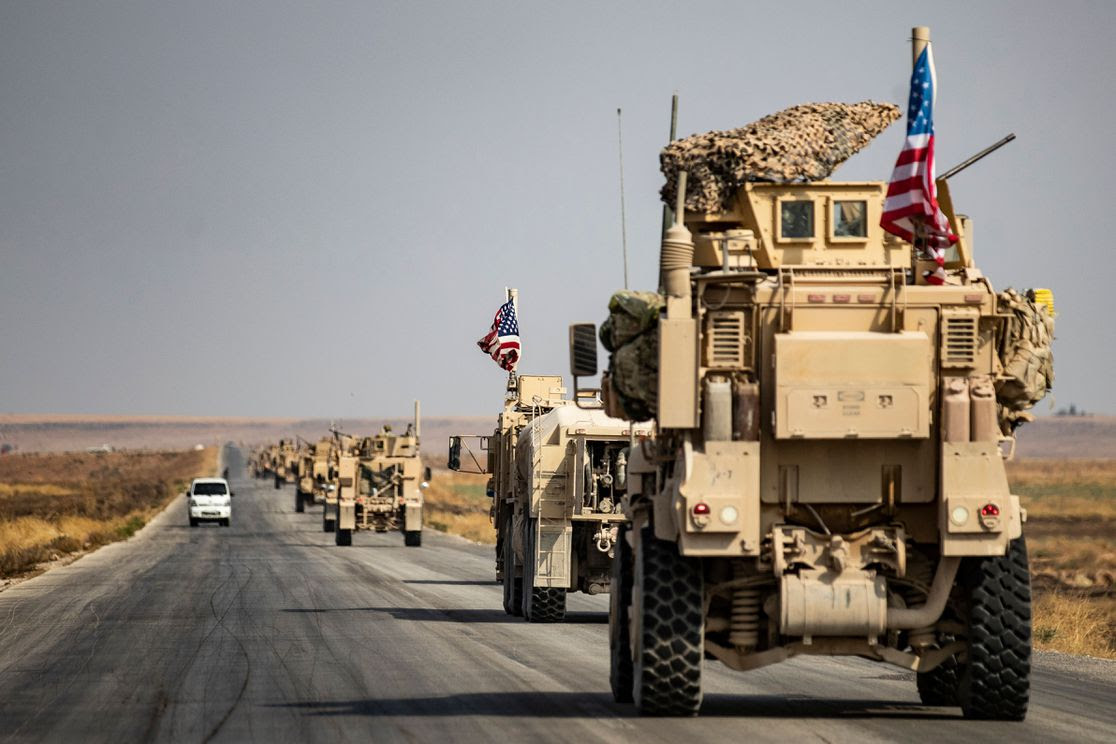
Members of the U.S. military are sitting ducks in the Middle East, and in December 2023, eighty-four members of the Senate voted to keep them there because fewer U.S. troops in the Middle East could be a “gift” to Iran. In early December, Senator Rand Paul (R-KY) brought forth a bill to remove 900 U.S. troops from Syria amid the barrage of drone attacks in Iraq, Syria, and Jordan by Iranian-backed militias. Roughly a month after that vote, a drone attack on Tower 22 in Jordan killed three U.S. service members and injured dozens more. After the deadly January 28 attack, the Biden administration found itself trying to balance an impossible scale. How could it satisfy political pressure without inadvertently escalating tensions into a regional conflict?

On the surface, removing U.S. troops due to rising instability seems counterintuitive, but the question of reducing the number of troops is emblematic of a larger problem. The soldiers were initially deployed to a location without congressional authorization and remained there long after their original military mission was accomplished. The U.S. presence in Syria is part of a U.S.-led coalition, Operation Inherent Resolve (OIR), which began in 2014 to defeat the Islamic State in Iraq and Syria. Congress did not specifically approve OIR since the Obama administration relied on the 2001 and 2002 Authorization for the Use of Military Force as a legal justification. By bypassing Congress, the Obama administration circumvented Congressional oversight mechanisms and a framework that may have established clearer guidelines for concluding OIR.

Read at The National Interest

Author

Bree
Megivern

Former Contributing Fellow

Defense Priorities

More on Middle East

Op-edUS‑Israel‑Iran, Iran, Middle East

There’s a new Cold War in the Middle East, and neither side is winning

By Daniel DePetris

June 30, 2026

In the mediaUS‑Israel‑Iran, Iran, Middle East

Inside The Trump-Netanyahu Rift—How Israel Is The ‘Wild Card’ In U.S.-Iran Peace Talks

Featuring Daniel DePetris

June 30, 2026

In the mediaUS‑Israel‑Iran, Iran, Middle East

Defense Priorities Daniel DePetris on the ongoing negotiations with Iran

Featuring Daniel DePetris

June 26, 2026

Op-edUS‑Israel‑Iran, Iran, Middle East

The Iran War Was a Loss for the U.S., But the Ceasefire Deal Is a Win

By Adam Gallagher

June 25, 2026

Op-edIsrael, Iran, Middle East, US‑Israel‑Iran

Israel is the wild card as the U.S. and Iran work to ink a lasting peace deal

By Daniel DePetris

June 23, 2026

Op-edUS‑Israel‑Iran, Iran, Middle East

The U.S. and Iran have a fragile path ahead

By Daniel DePetris

June 22, 2026

Events on Israel-Hamas

See All Events
virtualMiddle East, Basing and force posture, Diplomacy, Houthis, Iran, Iraq, Israel, Israel‑Hamas, Military analysis, Syria

Trump in the Middle East: Impacts, implications, and alternatives

May 16, 2025
virtualHouthis, Iran, Israel‑Hamas, Middle East, Yemen

Houthi conundrum: defend, degrade, or defer

March 28, 2024
virtualMiddle East, Iran, Israel‑Hamas, Israel‑Iran, Syria, Yemen

Keeping the U.S. out of war in the Middle East

January 16, 2024

Receive expert foreign policy analysis

Join the hub of realism and restraint

Expert updates and analysis to enhance your understanding of vital U.S. national security issues

Defense Priority Mono Logo

Our mission is to inform citizens, thought leaders, and policymakers of the importance of a strong, dynamic military—used more judiciously to protect America’s narrowly defined national interests—and promote a realistic grand strategy prioritizing restraint, diplomacy, and free trade to ensure U.S. security.

  • Experts
  • Papers
  • Symposia
  • Q&A
  • Polls
  • Events
  • Media
  • Donate
  • About
  • Jobs
  • Contact
© 2026 Defense Priorities Foundation. All rights reserved.