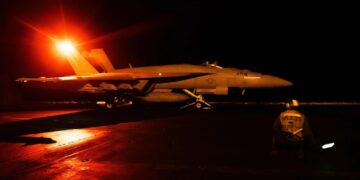
Since the United States first struck Iranian military targets seven months ago, Tehran’s strategy has revolved around using the Strait of Hormuz as a trump card to pressure Washington into either negotiating a peace or ending the war unilaterally.
The Islamic Revolutionary Guard Corps (IRGC) wasted little time gumming up the waterway, using a combination of cruise missiles, drones and rhetorical threats to deter tankers from transiting through the area. The effects were almost immediate: the number of ships that traveled through the Strait each day plummeted from around 130 before the war to single digits, raising global crude oil prices, forcing some Middle East suppliers to ease production and creating a political storm for Donald Trump.
However, Iran’s leverage seems to be eroding. While it’s impossible to pinpoint oil flows through the Strait with certainty, Iran’s closure is losing its luster as the US military expends resources to give shipping companies the confidence to make the journey again. According to Kpler, an average of 1o million barrels of oil per day left the Middle East this month, still well below the pre-war level of around 16 million. The US blockade of Iranian ports, meanwhile, has essentially shut down Tehran’s ability to export crude.
Author

More on Middle East