In the wake of the memorandum of understanding signed by the U.S. and Iran, American national security strategists are returning to their favorite pastime: wringing their hands over great power competition with Russia and especially China.
As one columnist noted recently, “For Beijing and Moscow … evidence of America’s military industrial weakness [from the conflict with Iran] may catalyze decisions to move forward on their own strategic interests.” Looming especially large in the minds of Washington strategists is the dark specter of a China-Russia alliance as a so-called axis of authoritarians.
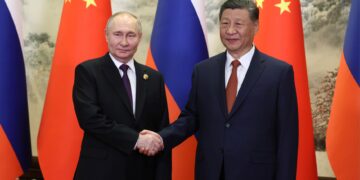
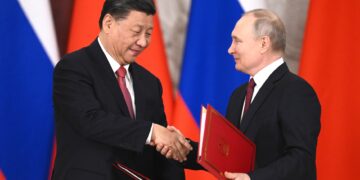
Yet as I outline in a new explainer, such fears are substantially exaggerated. The China-Russia relationship is better characterized as a “quasi-alliance” that falls far short of a mutual defense commitment or a genuine threat to America. As illustrated in the Russia-Ukraine war, the supposed “no limits partnership” clearly has major limits in reality.
The two Eurasian giants have not joined in a tight alliance for various reasons, including that they do not wish to further antagonize Washington. The China-Russia bilateral relationship remains, to a large extent, commercial in nature.
Author

More on Asia



Events on China