Defense Priorities Defense Priorities
  • Policy Topics
    • Iran
    • Western Hemisphere
    • Ukraine-Russia
    • NATO
    • China
    • Syria
  • Analysis
    • Research
    • Q&A
  • Programs
    • Grand Strategy Program
    • Military Analysis Program
    • Asia Program
    • Middle East Program
  • Experts
  • Events
  • Media
  • About
    • Mission & Vision
    • People
    • Jobs
    • Contact
  • Donate
Select Page
Home / North Korea / Russia-DPRK Relations: Strategic partnership or opportunistic alliance?
North Korea, Alliances, Asia, Europe and Eurasia, Russia

October 25, 2024

Russia-DPRK Relations: Strategic partnership or opportunistic alliance?

By Daniel DePetris

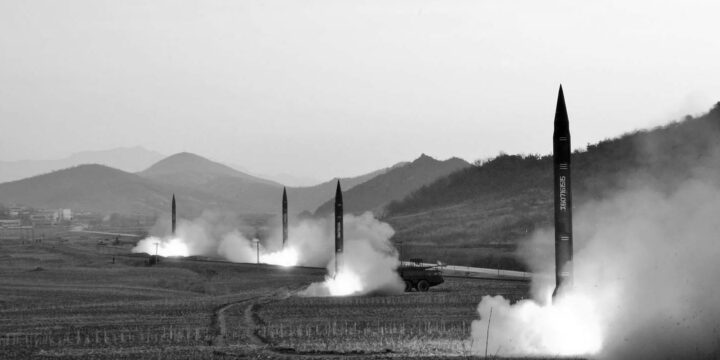
Europe’s deadliest armed conflict in nearly 80 years has put Russia-DPRK relations into overdrive, with Russia’s need for outside assistance fueling the development of deep military cooperation. Russian President Vladimir Putin and Democratic People’s Republic of Korea (DPRK or North Korea) leader Kim Jong Un have established a personal rapport with each other, one driven in large measure by a shared animosity of US foreign policy and what both perceive—rightly or wrongly—to be an overbearing United States desperately seeking to maintain hegemony in Europe and East Asia.

Two questions naturally arise. First, how deep does the Russia-DPRK relationship go? And second, can it now be categorized as an alliance in the same vein as what the United States shares with South Korea and Japan? The answers are not mutually exclusive; just because Moscow and Pyongyang are collaborating more seamlessly than they have in the past does not necessarily mean either one expects a full-scale alliance to be established as a result or that they are even interested in such an arrangement. What the two countries boast at the present moment is, if anything, a marriage of convenience fueled by self-interest, a desire to counter Washington’s strengthening of its own alliance system, and a firmly-held belief in Moscow and Pyongyang that the United States is trying to link the North Atlantic Treaty Organization (NATO) in Europe with its bilateral alliances in East Asia. The war in Ukraine, where Japan—which signed a 10-year security agreement with Kyiv in June with an accompanying $4.5 billion in non-military aid—and South Korea (to a more limited extent) are members of the U.S.-organized sanctions regime against Russia, only reaffirms this belief in the minds of Russian and North Korean officials.

Read at 38 North

Author

Photo of Daniel DePetris

Daniel
DePetris

Fellow

Defense Priorities

More on Asia

op-edAsia

Why the U.S. and South Korea will not jointly construct nuclear submarines

By Lyle Goldstein

January 27, 2026

China, Asia

Fate of China’s top general more likely to do with power struggle than corruption

By Lyle Goldstein

January 26, 2026

op-edGrand strategy, Alliances, China, Greenland, Russia, Western Hemisphere

Russian and Chinese threats to Greenland and the new Arctic sea routes are low

By Lyle Goldstein

January 23, 2026

In the mediaChina, Asia, Military analysis, Naval power

China’s retro submarine design speeds up challenge to U.S. undersea dominance

Featuring Lyle Goldstein

January 23, 2026

In the mediaChina‑Taiwan, Asia, China, Taiwan

China, Taiwan, and the cost of american power: Is it worth sacrificing american lives for Taiwan?

Featuring Lyle Goldstein

January 20, 2026

In the mediaRussia, China

How threats of a polar war are coloring virtually every aspect of Trump’s foreign policy

Featuring Lyle Goldstein

January 19, 2026

Events on North Korea

See All Events
in-personNorth Korea, Asia, Deterrence, Diplomacy, Nuclear weapons

Ending the North Korea standoff

March 5, 2018
in-personGrand strategy, Iran, North Korea, Nuclear weapons

Managing nuclear proliferation crises

October 30, 2017

Receive expert foreign policy analysis

Join the hub of realism and restraint

Expert updates and analysis to enhance your understanding of vital U.S. national security issues

Defense Priority Mono Logo

Our mission is to inform citizens, thought leaders, and policymakers of the importance of a strong, dynamic military—used more judiciously to protect America’s narrowly defined national interests—and promote a realistic grand strategy prioritizing restraint, diplomacy, and free trade to ensure U.S. security.

  • Research
  • Experts
  • About
  • For Media
  • Jobs
  • Donate
  • Privacy Policy
  • Terms and Conditions
  • Contact
© 2026 Defense Priorities All Right Reserved