Defense Priorities Defense Priorities
  • Policy Topics
    • US-Israel-Iran
    • Ukraine-Russia
    • Western Hemisphere
    • NATO
    • China
    • Syria
  • Analysis
    • Research
    • Q&A
  • Programs
    • Grand Strategy Program
    • Military Analysis Program
    • Asia Program
    • Middle East Program
  • Experts
  • Events
  • Media
  • About
    • Mission & Vision
    • People
    • Jobs
    • Contact
  • Donate
Select Page
Home / NATO / NATO’s false promises are encouraging misplaced Ukrainian hopes
NATO, Ukraine‑Russia

July 18, 2024

NATO’s false promises are encouraging misplaced Ukrainian hopes

The alliance’s irresponsible policy toward Ukraine continues, providing false hope, making peace less likely and the war more dangerous.

By Christopher McCallion and Benjamin Friedman

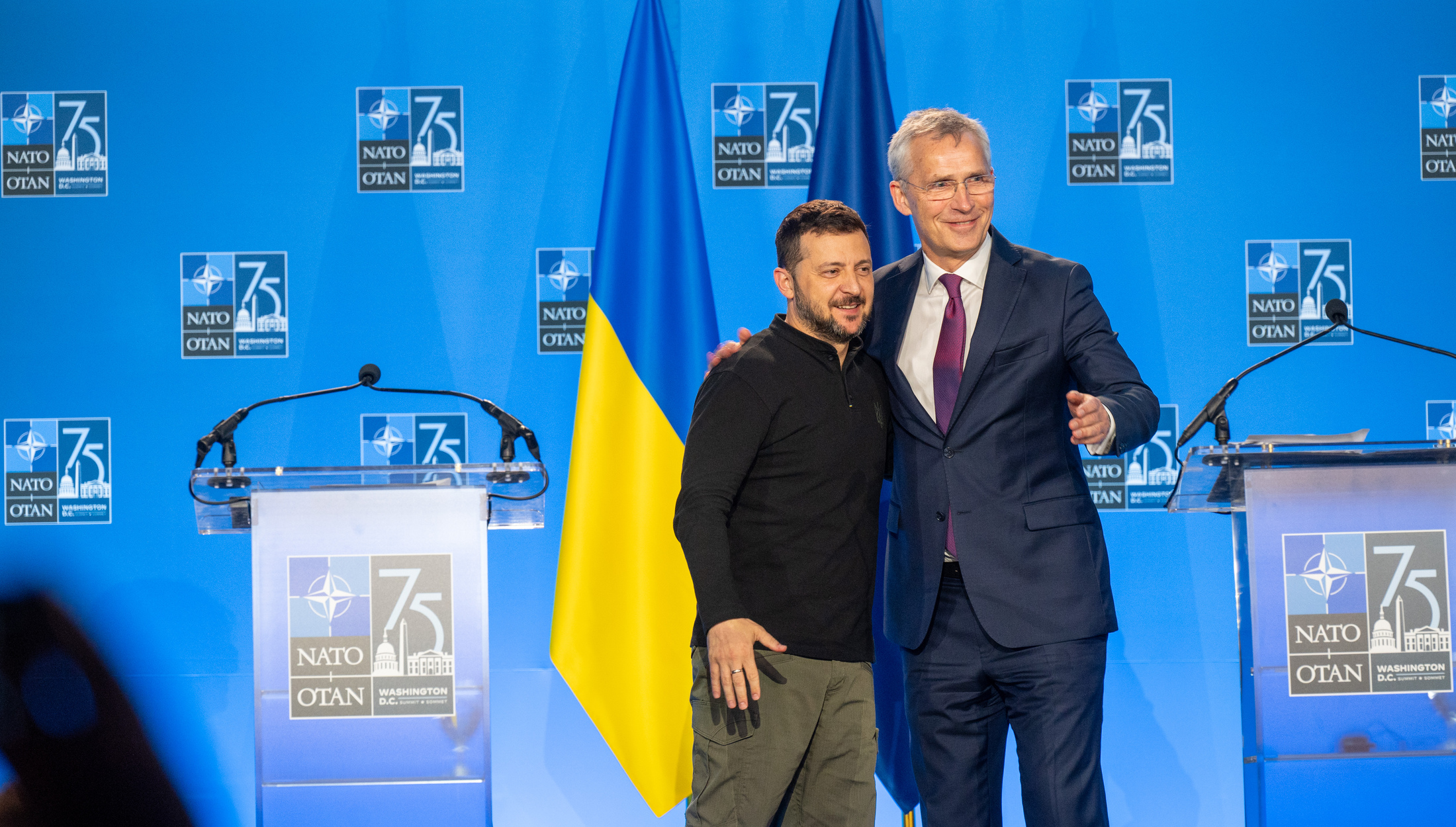
At the 2024 NATO Summit in Washington, commemorating the alliance’s 75th anniversary, leaders offered Ukraine a fresh round of false hope in its war against Russia—which is worse than doing nothing.

Whether by military commitment or intensified support, the pretension that NATO could currently deliver a Ukrainian victory, or secure one later, encourages the country’s leaders to postpone reckoning with their dire circumstances. Moreover, it threatens to further imperil NATO members without a security payoff.

This charade is nothing new, but now is an especially bad time.

After the failure of Ukraine’s counteroffensive in 2023, recognition that its forces cannot regain more of its territory has begun to sink in. Indeed, despite the flow of heavy Western aid, Kyiv may struggle to hold what it has—a circumstance that suggests it should start exploring negotiations with Moscow to end or even freeze the conflict via an armistice now, before the battlefield situation worsens and negotiating room shrinks.

But instead, Washington and European capitals are, unfortunately, doubling down—at least rhetorically—continuing to claim Ukraine will someday join NATO. In fact, after promoting a vague “bridge” to Ukraine’s eventual membership before the summit, during the gathering NATO leaders claimed Ukraine is on an “irreversible path” to entry.

Read at Politico

Authors

Photo of Chris McCallion

Christopher
McCallion

Fellow

Defense Priorities

Photo of Benjamin Friedman

Benjamin
Friedman

Policy Director

Defense Priorities

More on Europe

In the mediaUS‑Israel‑Iran, Alliances, Iran, Middle East, NATO

Our Adversaries—And Allies—Are Learning These Lessons From U.S.-Iran Negotiations: Analyst

Featuring Daniel DePetris

April 14, 2026

Op-edNATO, Europe and Eurasia, Iran, US‑Israel‑Iran

Threatening NATO Over Iran Is Stupid, but Potentially Useful

By Benjamin Friedman

April 12, 2026

Op-edUkraine‑Russia, Europe and Eurasia, Russia, Ukraine

A Flawed Formula for Peace in Ukraine

By Jennifer Kavanagh

April 7, 2026

Op-edNATO, Alliances, Europe and Eurasia

Our NATO allies are unwilling to play Donald Trump’s game this time around

By Daniel DePetris

April 7, 2026

In the mediaNATO, Alliances, Iran, Middle East, US‑Israel‑Iran

Trump roils NATO as pressure builds over Strait of Hormuz

Featuring Jennifer Kavanagh

April 5, 2026

Op-edUS‑Israel‑Iran, Alliances, Iran, Middle East, NATO

Trump’s ‘Art of the Deal’ Is Losing Friends and Alienating Allies

By Daniel DePetris

April 2, 2026

Events on NATO

See All Events
virtualNATO, Alliances, Burden sharing, Europe and Eurasia, Grand strategy

Assessing the 2026 NDS: Will it usher in burden shifting?

February 9, 2026
virtualNATO, Alliances, Europe and Eurasia, Russia, Ukraine, Ukraine‑Russia

A ‘bridge’ to NATO or false hope for Ukraine?

July 12, 2024
virtualNATO, Alliances, Deterrence, Europe and Eurasia, Nuclear weapons

New York for Paris? NATO and extended deterrence in a new nuclear age

July 2, 2024

Receive expert foreign policy analysis

Join the hub of realism and restraint

Expert updates and analysis to enhance your understanding of vital U.S. national security issues

Defense Priority Mono Logo

Our mission is to inform citizens, thought leaders, and policymakers of the importance of a strong, dynamic military—used more judiciously to protect America’s narrowly defined national interests—and promote a realistic grand strategy prioritizing restraint, diplomacy, and free trade to ensure U.S. security.

  • Research
  • Experts
  • About
  • For Media
  • Jobs
  • Donate
  • Privacy Policy
  • Terms and Conditions
  • Contact
© 2026 Defense Priorities Foundation. All rights reserved.