Defense Priorities Defense Priorities
  • Policy Topics
    • Iran
    • Western Hemisphere
    • Ukraine-Russia
    • NATO
    • China
    • Syria
  • Analysis
    • Research
    • Q&A
  • Programs
    • Grand Strategy Program
    • Military Analysis Program
    • Asia Program
    • Middle East Program
  • Experts
  • Events
  • Media
  • About
    • Mission & Vision
    • People
    • Jobs
    • Contact
  • Donate
Select Page
Home / Russia / Lurching oward détente?
Russia, Europe and Eurasia, Naval power, Ukraine‑Russia

August 5, 2025

Lurching oward détente?

By Lyle Goldstein

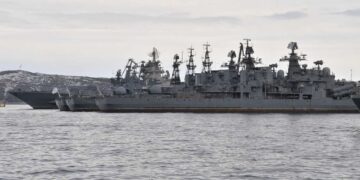
Despite deep acrimony over Russia’s invasion of Ukraine, sound strategy demands Washington seek to normalize ties with the Kremlin. The United States and Russia share many fundamental interests, including strategic stability and the continuous flow of maritime commerce.

Twenty years ago this month, a remarkable and inspiring set of events transpired off the Kamchatka Peninsula in Russia’s Far East that should resonate with mariners, no matter what their nationality, and should remind leaders what is possible when Russia and the United States cooperate in naval affairs. After seven Russian sailors were trapped in the Priz-class submersible AS-28, 190 meters beneath the surface of the sea, sailors and officers in the U.S. Navy and sister services leapt into action to save their lives. The operation was successful and printed a new chapter into the long history of U.S.-Russia naval collaboration.

The naval ties that bind the United States and Russia stretch back to John Paul Jones’ exploits in 1787–88 to help secure Crimea for Czarina Catherine. The Russian Navy sent two cruiser squadrons, one to each U.S. coast, in September 1863 to show support for the Union during the U.S. Civil War and simultaneously warn the British against intervening on the side of the Confederacy. During World War II, a majority of lend-lease aid sent to assist the Soviet war effort against the German Wehrmacht went across the North Pacific in a maritime logistics effort of extraordinary strategic import.

There is a humanitarian imperative to pursue international submarine rescue—a model that proved itself two decades ago in the Priz-class submersible rescue. A return to collaboration of this kind is just one of the benefits that would accrue from normalizing the naval relationship between the United States and Russia.

Read at Proceedings

Author

Photo of Lyle Goldstein

Lyle
Goldstein

Director, Asia Program

Defense Priorities

More on Eurasia

In the mediaNuclear weapons, Russia

Russia warns of response to any U.S. weapons deployment in Greenland

Featuring Jennifer Kavanagh

February 5, 2026

In the mediaRussia, Nuclear weapons

Expiry of nuclear weapons pact between U.S. and Russia risks new arms race

Featuring Jennifer Kavanagh

February 3, 2026

op-edRussia, Europe and Eurasia, Nuclear weapons

Salvaging a New START

By Jennifer Kavanagh

January 30, 2026

op-edUkraine‑Russia, Europe and Eurasia, Russia, Ukraine

Conceding Donetsk won’t end the war in Ukraine

By Jennifer Kavanagh

January 28, 2026

op-edGrand strategy, Alliances, China, Greenland, Russia, Western Hemisphere

Russian and Chinese threats to Greenland and the new Arctic sea routes are low

By Lyle Goldstein

January 23, 2026

In the mediaRussia, China

How threats of a polar war are coloring virtually every aspect of Trump’s foreign policy

Featuring Lyle Goldstein

January 19, 2026

Events on Russia

See All Events
virtualUkraine‑Russia, Air power, Diplomacy, Drones, Europe and Eurasia, Land power, Military analysis, Russia, Ukraine

Ukraine’s critical choice: Pursue peace or fight on

April 16, 2025
virtualChina, Alliances, Balance of power, Diplomacy, Grand strategy, Russia

China-Russia: Cooperation or a no-limits alliance?

April 3, 2025
virtualUkraine‑Russia, Europe and Eurasia, Russia, Ukraine

Trump and Ukraine: Prolonging or ending the war

December 13, 2024

Receive expert foreign policy analysis

Join the hub of realism and restraint

Expert updates and analysis to enhance your understanding of vital U.S. national security issues

Defense Priority Mono Logo

Our mission is to inform citizens, thought leaders, and policymakers of the importance of a strong, dynamic military—used more judiciously to protect America’s narrowly defined national interests—and promote a realistic grand strategy prioritizing restraint, diplomacy, and free trade to ensure U.S. security.

  • Research
  • Experts
  • About
  • For Media
  • Jobs
  • Donate
  • Privacy Policy
  • Terms and Conditions
  • Contact
© 2026 Defense Priorities All Right Reserved