Defense Priorities Defense Priorities
  • Policy Topics
    • US-Israel-Iran
    • Ukraine-Russia
    • Western Hemisphere
    • NATO
    • China
  • Analysis
    • Policy Papers
    • Symposia
    • Q&A
    • Polls
    • Grand Strategy Explained
    • Target Taiwan
  • Programs
    • Grand Strategy Program
    • Military Analysis Program
    • Asia Program
    • Middle East Program
  • Experts
  • Events
  • Media
  • About
    • Mission & Vision
    • People
    • Jobs
    • Contact
  • Donate
Select Page
Home / China / China tariffs deal could backfire on Trump
China, Air power, Asia, Balance of power, China‑Taiwan, Global posture, Land power, Naval power, Taiwan

May 12, 2025

China tariffs deal could backfire on Trump

By Jennifer Kavanagh

After two days of talks, the U.S. and China have reportedly reached a deal to substantially lower tariffs for the next 90 days. Beijing will reduce duties on U.S. imports from 125% to 10%, while tariffs on Chinese goods entering America will be cut from 145% to 30%.

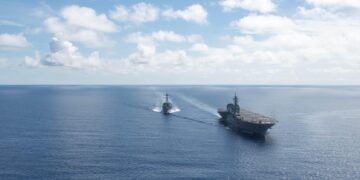
Any deal to reduce tariffs on Chinese imports will naturally please American consumers, not to mention businesses fearful of sharp price increases and empty store shelves. But this deal will be equally important for the opportunity it creates to stabilise the security relationship between the two rival powers. With tensions rising in the Taiwan Strait, the South China Sea, and waters around Japan, the Trump administration should use the opening created by the successful Geneva summit to press forward on what might be its most important task: preventing a war between the United States and China.

When Donald Trump returned to the White House in January, those hoping for an improvement in Sino-American security ties were optimistic. Trump had a good rapport with Chinese President Xi Jinping during his first term, and seemed interested in forging mutually beneficial deals with Beijing in his second term—even if they broke from U.S. foreign policy convention. The American president billed himself as a “peacemaker” and promised to keep the country out of foreign wars, including in Asia. Though asked multiple times, Trump refused to follow former president Joe Biden in committing U.S. military support to Taiwan if the island were attacked by China.

The “Liberation Day” tariffs placed on China quickly dampened this optimism. As the two countries spiralled into tit-for-tat tariff increases, the appetite for bilateral discussion around regional security concerns shrank. The security implications of the trade war were severe, despite being overshadowed by the economic fallout. Most importantly, worsening economic relations between the rival nations risked spillover into the military domain, while simultaneously cutting off the communication channels that might prevent a regional crisis from escalating into a full-blown conflict.

Read at UnHerd

Author

Jennifer
Kavanagh

Senior Fellow & Director of Military Analysis

Defense Priorities

More on Asia

Op-edAsia, China

A New Security Order Is Taking Shape in Asia

By Jennifer Kavanagh

July 27, 2026

In the mediaChina, Asia, China‑Taiwan, Russia

China is gaining troubling military know-how from Russia

Featuring Lyle Goldstein

July 23, 2026

In the mediaChina, Asia, China‑Taiwan

The KMT’s Wager: Courting China Without Becoming Its Instrument

Featuring Lyle Goldstein

July 19, 2026

In the mediaChina, Asia

How Trump’s election integrity speech could affect the Xi Jinping summit

Featuring Lyle Goldstein

July 17, 2026

In the mediaChina, Asia, Russia

China eyes Russian submarine rescue expertise in Yellow Sea naval drills

Featuring Lyle Goldstein

July 8, 2026

Op-edChina‑Taiwan, Asia, Taiwan

Europe leans in on Taiwan. But to what end?

By Lyle Goldstein

July 2, 2026

Events on China

See All Events
virtualGreat power competition, Balance of power, China, Grand strategy, Middle East

U.S.-China competition and the value of Middle East influence

June 10, 2025
virtualChina, Alliances, Balance of power, Diplomacy, Grand strategy, Russia

China-Russia: Cooperation or a no-limits alliance?

April 3, 2025
virtualAsia, Basing and force posture, Burden sharing, China, Grand strategy

Rethinking U.S. strategy in East Asia: do more bases mean more deterrence?

January 24, 2024

Receive expert foreign policy analysis

Join the hub of realism and restraint

Expert updates and analysis to enhance your understanding of vital U.S. national security issues

Defense Priority Mono Logo

Our mission is to inform citizens, thought leaders, and policymakers of the importance of a strong, dynamic military—used more judiciously to protect America’s narrowly defined national interests—and promote a realistic grand strategy prioritizing restraint, diplomacy, and free trade to ensure U.S. security.

  • Experts
  • Papers
  • Symposia
  • Q&A
  • Polls
  • Events
  • Media
  • Terms and Conditions
  • Privacy Policy
  • About
  • Jobs
  • Contact
  • Donate
© 2026 Defense Priorities Foundation. All rights reserved.