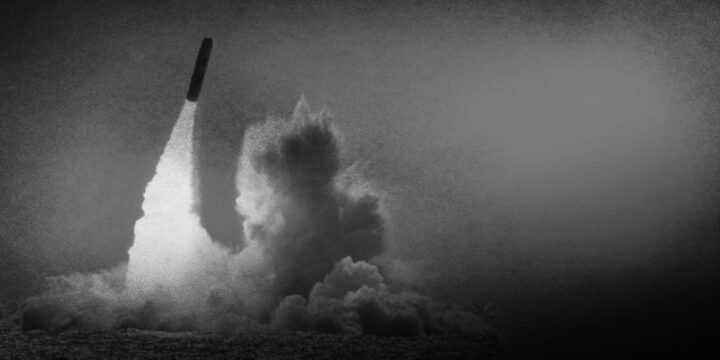
“When those are coming online, that should be disturbing to everyone. We would like to call the nuclear era a bygone era, but that’s clearly not the case,” said Defense Priorities director of Asia studies Lyle Goldstein, who has tracked Burevestnik for years and co-authored the upcoming book “The New Cold War at Sea: Maritime Implications of the China-Russia Quasi-Alliance.”
“I can tell you (Russia has) not been shy about these nuclear signals that they’re sending and so I don’t doubt that the president has been exposed to this a lot over the last week,” he said.
Goldstein saw Trump’s announcement as a “natural consequence” of what he calls a new Cold War. Though not altogether unexpected, Goldstein said he is “disturbed by it very fundamentally.”
“The logic of nuclear rivalry is there. It’s terrible. It doesn’t serve anyone and it will make us all much poorer at a minimum, but of course, it could be the end of the planet,” Goldstein said.
Goldstein said he can’t think of any nuclear expert in the world who thinks testing these weapons would benefit the U.S.
“The nature of nuclear arms racing we ought to know from before and that previous Cold War showed us that whatever one side did, the other side quickly followed,” Goldstein said.
Featuring

More on Eurasia