Defense Priorities Defense Priorities
  • Policy Topics
    • US-Israel-Iran
    • Ukraine-Russia
    • Western Hemisphere
    • NATO
    • China
  • Analysis
    • Policy Papers
    • Symposia
    • Q&A
    • Polls
    • Grand Strategy Explained
    • Target Taiwan
  • Programs
    • Grand Strategy Program
    • Military Analysis Program
    • Asia Program
    • Middle East Program
  • Experts
  • Events
  • Media
  • About
    • Mission & Vision
    • People
    • Jobs
    • Contact
  • Donate
Select Page
Home / China / Trump, China and the question of selling arms to Beijing
China, Asia, China‑Taiwan

September 29, 2026

Trump, China and the question of selling arms to Beijing

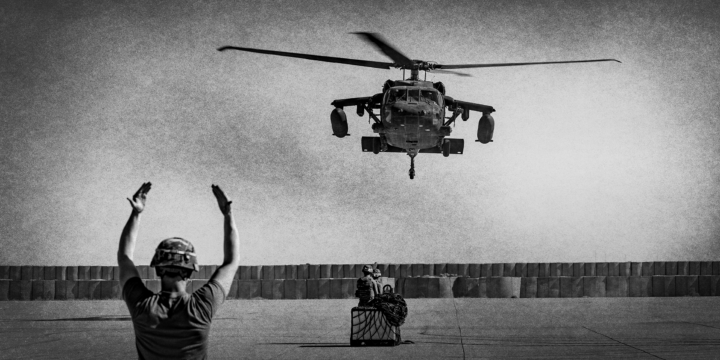
Lyle Goldstein, the director of the Asia Program at Defense Priorities, said Trump might have misspoken or made an offer “without thinking it through,” but logically many would be concerned about U.S. military technology going to Beijing. He noted that in the 1980s, China was considered an emerging market for U.S. weapons as Washington sold Blackhawk helicopters and lightweight torpedoes.

“These are both important weapons systems. In both cases, they helped the PLA make major advances. The huge role of the Blackhawk sale back then is reflected in the fact that the contemporary Z-20 that China is building in large numbers is derivative of the original American design,” he told The Hill on Monday, referring to the Harbin Z-20 medium-lift utility helicopter.

Goldstein said even if it’s impossible for the U.S. to sell high-end exquisite weapons systems, such as PAC-3 interceptors or Tomahawk missiles, it might be possible to sell Beijing “lower-end items.”

Goldstein, who is also a senior fellow at the Watson Institute for International and Public Affairs at Brown University, said it is possible that Trump is making an effort to lower the “level of mutual suspicion” between the countries and slash the trade deficit by selling older weaponry.

“Remember, it’s clear that Trump prioritizes the success of American companies and especially exports. His singular achievement in the Russia-Ukraine War has been to reduce America’s role, while continuing the process of U.S. weapons exports by getting the Europeans to fund these outlays,” he said. “It’s hard to imagine, but he could attempt to reduce the yawning trade deficit with China by selling them old American weapons.”

“I think the national security establishment would strongly oppose that approach, but Trump has questioned many orthodoxies in Washington,” Goldstein said.

Read at The Hill

Featuring

Photo of Lyle Goldstein

Lyle
Goldstein

Director, Asia Program

Defense Priorities

More on Asia

Op-edAsia, Basing and global posture, China, Military analysis

Tip of the spear, or stranded on beaches? Chinese planners dissect USMC Pacific posture

By Lyle Goldstein

October 20, 2026

Op-edIsrael‑Iran, Asia, China, Middle East

Why the Iran war hasn’t deterred China in East Asia

By Peter Harris

October 18, 2026

In the mediaChina‑Taiwan, Asia, Military analysis, Military strategy and budget, Taiwan

Is this the best time for U.S. strategists to push for abandoning ambiguity on Taiwan?

Featuring Jennifer Kavanagh

October 13, 2026

In the mediaChina, Asia, China‑Taiwan, Grand strategy, Middle East

Great power cooperation in a fragmented world

Featuring Jennifer Kavanagh

October 8, 2026

Op-edChina‑Taiwan, Asia, Taiwan

America’s commitment to Taiwan is a liability

By Jennifer Kavanagh

October 7, 2026

In the mediaChina, Asia, Russia

Turkmenistan grows its arsenal of Chinese air defenses as Russia’s role shrinks

Featuring Lyle Goldstein

October 6, 2026

Events on China

See All Events
virtualGreat power competition, Balance of power, China, Grand strategy, Middle East

U.S.-China competition and the value of Middle East influence

June 10, 2025
virtualChina, Alliances and commitments, Balance of power, Diplomacy, Grand strategy, Russia

China-Russia: Cooperation or a no-limits alliance?

April 3, 2025
virtualAsia, Basing and global posture, Burden sharing, China, Grand strategy

Rethinking U.S. strategy in East Asia: do more bases mean more deterrence?

January 24, 2024

Receive expert foreign policy analysis

Join the hub of realism and restraint

Expert updates and analysis to enhance your understanding of vital U.S. national security issues

Defense Priority Mono Logo

Our mission is to inform citizens, thought leaders, and policymakers of the importance of a strong, dynamic military—used more judiciously to protect America’s narrowly defined national interests—and promote a realistic grand strategy prioritizing restraint, diplomacy, and free trade to ensure U.S. security.

Defense Priorities Foundation is a 501(c)(3) non-profit organization supported entirely by donations from individuals and foundations—no funding comes from the U.S. government or any foreign government. Donations are unlimited and deductible for Federal Income Tax purposes.

  • Experts
  • Papers
  • Symposia
  • Q&A
  • Polls
  • Events
  • Media
  • Terms and Conditions
  • Privacy Policy
  • About
  • Jobs
  • Contact
  • Donate
© 2026 Defense Priorities Foundation. All rights reserved.