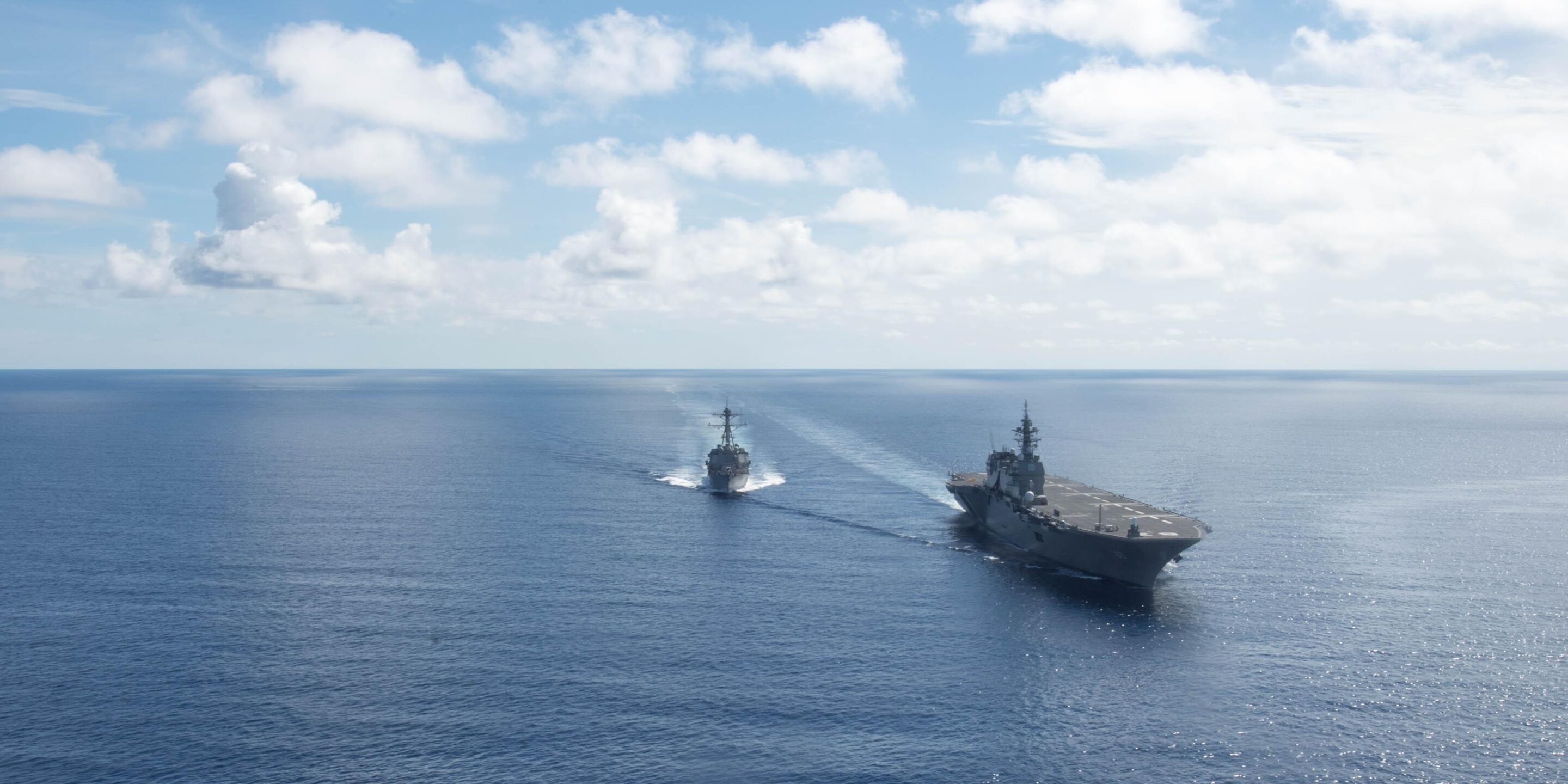
Kavanagh told the South China Morning Post on October 8 that of her many modeling efforts looking at what would be required to break through a blockade of Taiwan, the bottom line was that neither Beijing nor Washington could defeat the other side.
“The conflict would start with some kind of intense war. [In the modeling, the] U.S. typically runs out of air-defense missiles and offensive missiles before China does, even if China depletes stockpiles,” she said.
“My assumption is that China blockades Taiwan and just bleeds it out. And there’s not so much the U.S. can do.”
In a research report published on September 10, Kavanagh not only proposed ending strategic ambiguity over Taiwan but also argued for replacing U.S. mutual defense treaties with Japan, South Korea, the Philippines and Australia with narrower security partnerships.
“When I started arguing this, I was trying to be careful how I phrased what I was saying in the way that would make it clear that I was arguing for something that I thought was in U.S. interests,” said Kavanagh, explaining how her position had become more direct since she first made the argument earlier last year.
“The U.S. foreign policy is in a period of flux. And people are debating what the U.S. role in the world should be.
“Being clear and direct about alternatives and options that the U.S. has, and making a strong case for why this is in the U.S.’s interest contributes to the debate.”
Read at South China Morning Post
Featuring

More on Asia