Defense Priorities Defense Priorities
  • Policy Topics
    • US-Israel-Iran
    • Ukraine-Russia
    • Western Hemisphere
    • NATO
    • China
  • Analysis
    • Policy Papers
    • Symposia
    • Q&A
    • Polls
    • Grand Strategy Explained
    • Target Taiwan
  • Programs
    • Grand Strategy Program
    • Military Analysis Program
    • Asia Program
    • Middle East Program
  • Experts
  • Events
  • Media
  • About
    • Mission & Vision
    • People
    • Jobs
    • Contact
  • Donate
Select Page
Home / Grand strategy / Data-Broke: U.S. Tech Firms’ Counterintelligence Dilemma
Grand strategy, Cyber

May 19, 2025

Data-Broke: U.S. Tech Firms’ Counterintelligence Dilemma

By Gavin Wilde

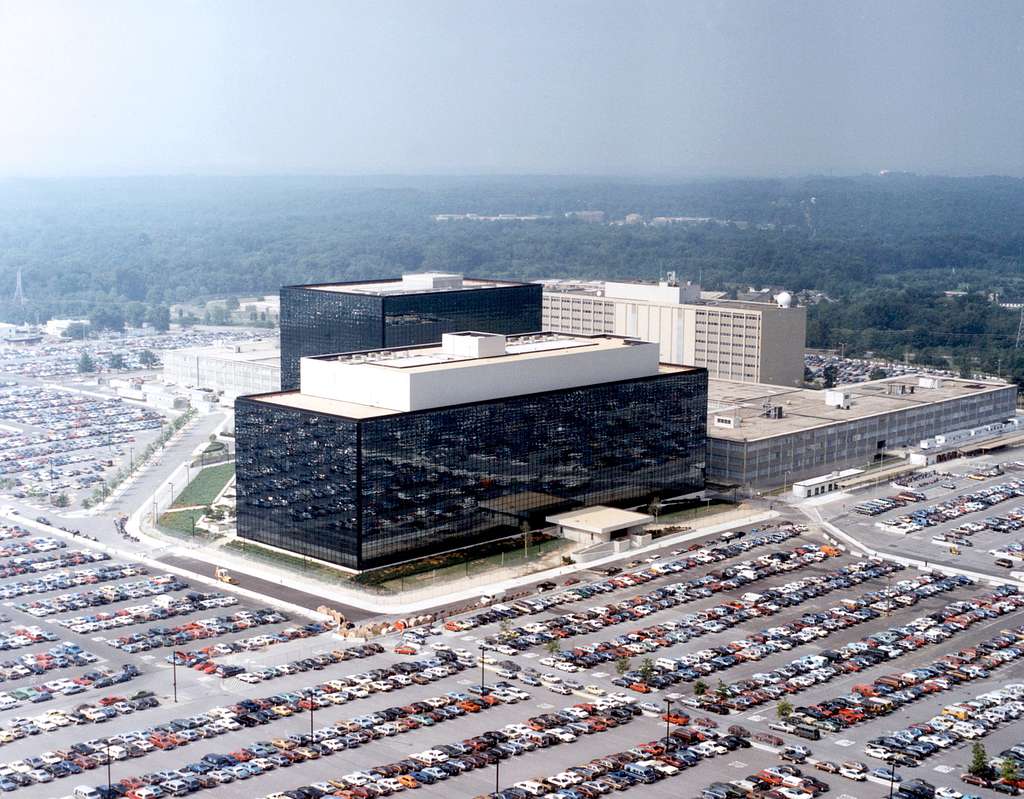
Nearly a decade has passed since the breach of the U.S. Office of Personnel Management (OPM) by Chinese state-backed hackers in the spring of 2015. That the operation netted Beijing the detailed backgrounds and personal data of over twenty million federal employees, clearance-holders, and applicants, as well as that of their co-habitants and spouses, constituted one of the most damaging counterintelligence breaches in U.S. history. Assessing the loss, former Central Intelligence Agency (CIA) and National Security Agency (NSA) chief Michael Hayden offered a blunt, sobering take: “It remains a treasure trove of information that is available to the Chinese [Communist Party] until the people represented by that information age off. There’s no fixing it.” In his estimation, the impact of the breach would take a generation or more to fully subside, until the youngest members of the federal workforce at that time ultimately retired.

Over the following decade, it would become clear that such counterintelligence hazards would hardly subside at all for reasons that were not yet fully evident, but still perhaps predictable. The aggregation of personal and location data on American consumers, including military service members, intelligence officers, national security officials, and contractors, would become part and parcel of the data-driven advertising behemoth that underpins the modern digital economy. While the threat of sophisticated cyber breaches into sensitive datasets remains, another trend is both an addition and contributor to the hacking risk: there is little need to steal through cunning espionage what can be obtained through little cost or effort in a vast and open data marketplace.

The question is whether such a status quo can be sustained without causing irrevocable damage to the counterintelligence interests of the United States. Can consumer data be treated as a “strategic resource,” as the most recent National Counterintelligence Strategy asserts, from both the commercial and security perspectives simultaneously? Or will one necessarily come at the expense of the other? As the age of “Big Data” and advances in computing have birthed the Artificial Intelligence era, these questions require urgent attention from policymakers. In what follows, we argue that they have, indeed, at critical points come into underappreciated but serious tension.

Read at American Affairs

Author

Gavin
Wilde

Former Non-Resident Fellow

Defense Priorities

The Latest

In the mediaChina, Asia, Military analysis, Naval power

China’s next carrier could be its longest—what are Beijing’s plans?

Featuring Lyle Goldstein

September 25, 2026

In the mediaMiddle East

Precision weapons made U.S. bases vulnerable—and less necessary, report says

Featuring Benjamin Friedman

September 25, 2026

ExplainerIran, Air power, Basing and force posture, Middle East, Military analysis

The proliferation of accuracy and vulnerability of military bases

By Benjamin Friedman

September 24, 2026

Press ReleaseChina, Asia, Diplomacy

Trump-Xi summit should build on ‘constructive strategic stability’ framework

By Lyle Goldstein

September 23, 2026

Op-edHouthis, Middle East, Yemen

Trump is right to avoid a war with the Houthis

By Daniel DePetris

September 22, 2026

In the mediaGrand strategy, Drones

Beyond drones: Why technology cannot replace mass

Featuring Gil Barndollar

September 22, 2026

Events on Grand strategy

See All Events
virtualGlobal posture, Grand strategy, Military analysis

Assessing the 2026 NDS: What comes next?

February 9, 2026
virtualEurope and Eurasia, Asia, Grand strategy

Assessing the 2026 NDS: Alignment with restraint?

February 9, 2026
virtualNATO, Alliances, Burden sharing, Europe and Eurasia, Grand strategy

Assessing the 2026 NDS: Will it usher in burden shifting?

February 9, 2026

Receive expert foreign policy analysis

Join the hub of realism and restraint

Expert updates and analysis to enhance your understanding of vital U.S. national security issues

Defense Priority Mono Logo

Our mission is to inform citizens, thought leaders, and policymakers of the importance of a strong, dynamic military—used more judiciously to protect America’s narrowly defined national interests—and promote a realistic grand strategy prioritizing restraint, diplomacy, and free trade to ensure U.S. security.

Defense Priorities Foundation is a 501(c)(3) non-profit organization supported entirely by American individuals and foundations—no funding comes from the U.S. government or any foreign government. Donations are unlimited and deductible for Federal Income Tax purposes.

  • Experts
  • Papers
  • Symposia
  • Q&A
  • Polls
  • Events
  • Media
  • Terms and Conditions
  • Privacy Policy
  • About
  • Jobs
  • Contact
  • Donate
© 2026 Defense Priorities Foundation. All rights reserved.