FOR IMMEDIATE RELEASE:
August 17, 2026
Contact: press@defensepriorities.org
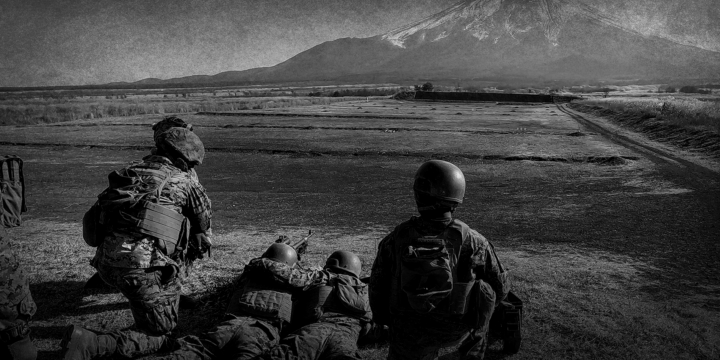
WASHINGTON, DC—Today, President Trump announced that the U.S. will scale back its joint military exercises with South Korea. Defense Priorities Director of Military Analysis Jennifer Kavanagh issued the following statement in response:
“President Trump’s decision to reduce the number of bilateral military exercises the United States conducts with South Korea is both a necessary and strategically wise one aligned with U.S. interests.
“For decades, the Pentagon has argued that U.S. military exercises with South Korea advance several objectives, including deterring aggression by North Korea and China; encouraging regional stability; and preparing U.S. and South Korean soldiers to operate together in a contingency. The reality is that there is little evidence bilateral exercises support any of these aims. In fact, they seem to work in the other direction.
“Rather than making the region more peaceful, U.S.-led exercises in the Western Pacific often raise regional tensions by aggravating and provoking their intended audiences in Beijing and Pyongyang. Far from being deterred, China and North Korea often respond by accelerating their military buildups and expanding their regional military activities, including with their own military exercises or test launches of new weapons. The net result is a worse security environment that leaves allies and U.S. personnel at greater risk of entanglement in conflict. Already depleted after the failed Iran war, these are risks the United States can ill afford.
“More importantly, however, bilateral exercises with South Korea unnecessarily burn U.S. resources and readiness at a time when the United States is running low on both. The U.S. military should not be preparing to fight alongside South Korea, especially in a war on the peninsula with its northern neighbor. Instead, Washington should be handing the responsibility for South Korea’s security over to Seoul in its entirety.
“South Korea is more than capable of managing its own conventional defense and should be preparing to do so in the very near term. Continuing to reassure Seoul that the United States will always be there with joint drills and a large forward presence does not support this goal. Reducing military exercises, in contrast, would make a narrower U.S. commitment tangible and credible.
“Finally, putting aside the strategic benefits of the move, the decision to cut the number of joint drills conducted with South Korea is obligatory for the United States. After expending much of its military capacity in the Middle East, the United States does not have the resources to continue military operations in other theaters at the same tempo. It will have to reduce its activities, footprint, and commitments.
“President Trump is smart to begin reducing U.S. military entanglements in Asia and to push allies more forcefully to be self-sufficient. Starting with South Korea makes sense, but Trump should not stop there. Cutting U.S. military exercises elsewhere in the region, with Japan, the Philippines, and Australia should be next.”
Author

More on Asia


Events on Asia