Defense Priorities Defense Priorities
  • Policy Topics
    • Iran
    • Western Hemisphere
    • Ukraine-Russia
    • NATO
    • China
    • Syria
  • Analysis
    • Research
    • Q&A
  • Programs
    • Grand Strategy Program
    • Military Analysis Program
    • Asia Program
    • Middle East Program
  • Experts
  • Events
  • Media
  • About
    • Mission & Vision
    • People
    • Jobs
    • Contact
  • Donate
Select Page
Home / Grand strategy / Why Trump probably can’t pull off a ‘reverse Nixon’
Grand strategy, Asia, China

April 8, 2025

Why Trump probably can’t pull off a ‘reverse Nixon’

By Lyle Goldstein

President Donald Trump’s unorthodox diplomacy has alarm bells ringing around the world, not least in Washington, D.C. While much of the inside-the-beltway elite is horrified at the prospect of America supposedly reorienting toward Russia, administration insiders have hinted at an ambitious plan to drive a wedge between Moscow and Beijing.

They’ve raised the possibility of a so-called “Reverse Nixon” maneuver aimed at fostering a global balance of power more favorable to America. But can it work?

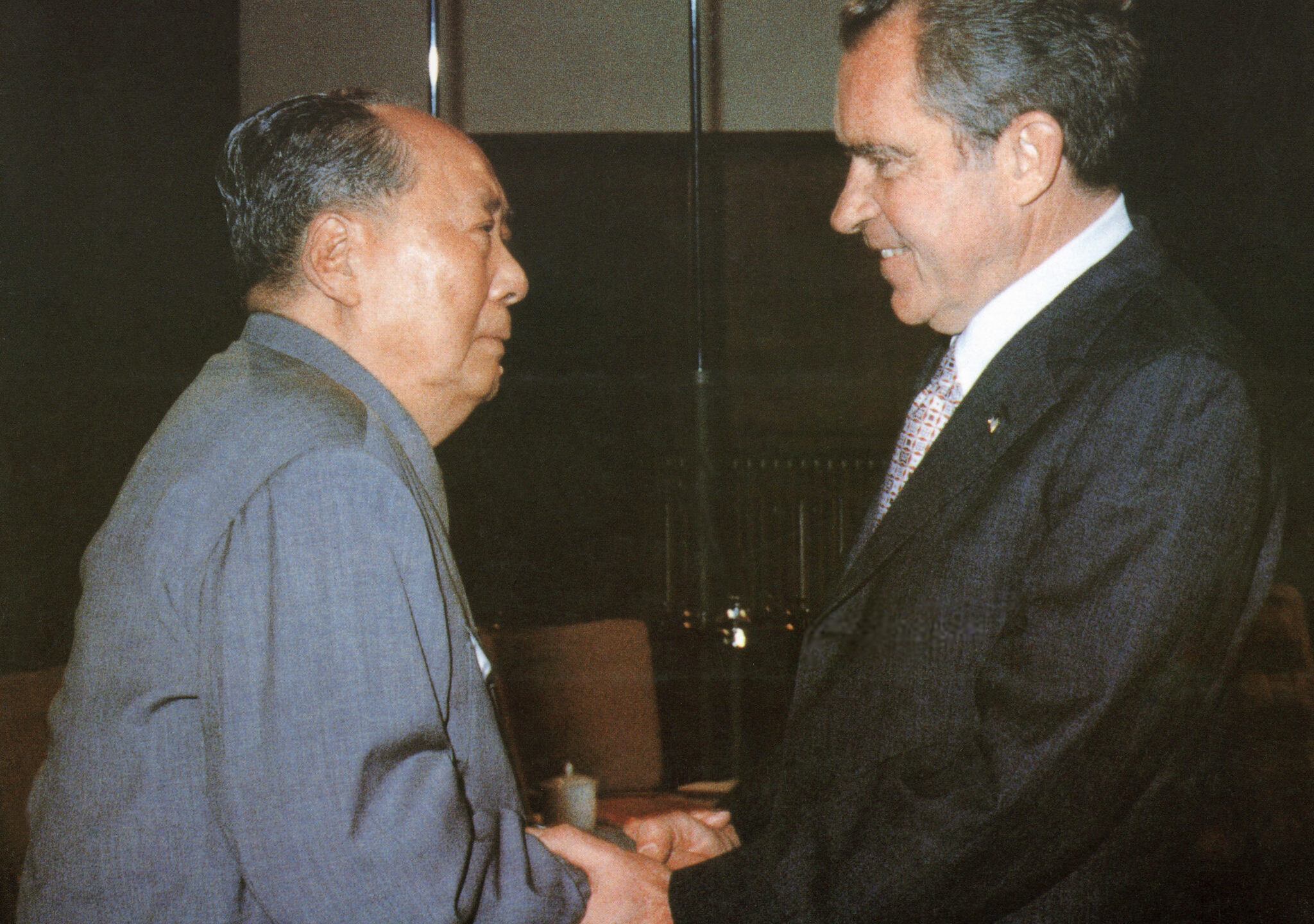
President Richard Nixon famously visited China in 1972, ending a 25-year freeze between Washington and Beijing. The table had been set for his diplomacy years earlier with bloody skirmishes along the Chinese-Soviet border in 1969. This fracture between the Eurasian communist giants effectively opened a door for Nixon.

Nixon’s decisive move on the global chessboard proved an immense geopolitical blow to the Soviets. Now, the Kremlin had to contend with powerful military blocs on both its western and eastern frontiers. And, as would become clear in the 1980s, the combination of America’s technological prowess and China’s immense demographic resources and hunger for modernization would prove more than a little unnerving for the USSR, which was already overextended.

Today’s world is very different, of course, but could Trump’s attempted rapprochement with the Kremlin bring about a similarly stunning transformation in world politics?

Read at Responsible Statecraft

Author

Photo of Lyle Goldstein

Lyle
Goldstein

Director, Asia Program

Defense Priorities

More on Asia

op-edAsia

Why the U.S. and South Korea will not jointly construct nuclear submarines

By Lyle Goldstein

January 27, 2026

China, Asia

Fate of China’s top general more likely to do with power struggle than corruption

By Lyle Goldstein

January 26, 2026

op-edGrand strategy, Alliances, China, Greenland, Russia, Western Hemisphere

Russian and Chinese threats to Greenland and the new Arctic sea routes are low

By Lyle Goldstein

January 23, 2026

In the mediaChina, Asia, Military analysis, Naval power

China’s retro submarine design speeds up challenge to U.S. undersea dominance

Featuring Lyle Goldstein

January 23, 2026

In the mediaChina‑Taiwan, Asia, China, Taiwan

China, Taiwan, and the cost of american power: Is it worth sacrificing american lives for Taiwan?

Featuring Lyle Goldstein

January 20, 2026

In the mediaRussia, China

How threats of a polar war are coloring virtually every aspect of Trump’s foreign policy

Featuring Lyle Goldstein

January 19, 2026

Events on Grand strategy

See All Events
virtualGreat power competition, Balance of power, China, Grand strategy, Middle East

U.S.-China competition and the value of Middle East influence

June 10, 2025
virtualChina, Alliances, Balance of power, Diplomacy, Grand strategy, Russia

China-Russia: Cooperation or a no-limits alliance?

April 3, 2025
virtualSyria, Balance of power, Basing and force posture, Counterterrorism, Middle East, Military analysis

Syria after Assad: Prospects for U.S. withdrawal

February 21, 2025

Receive expert foreign policy analysis

Join the hub of realism and restraint

Expert updates and analysis to enhance your understanding of vital U.S. national security issues

Defense Priority Mono Logo

Our mission is to inform citizens, thought leaders, and policymakers of the importance of a strong, dynamic military—used more judiciously to protect America’s narrowly defined national interests—and promote a realistic grand strategy prioritizing restraint, diplomacy, and free trade to ensure U.S. security.

  • Research
  • Experts
  • About
  • For Media
  • Jobs
  • Donate
  • Privacy Policy
  • Terms and Conditions
  • Contact
© 2026 Defense Priorities All Right Reserved