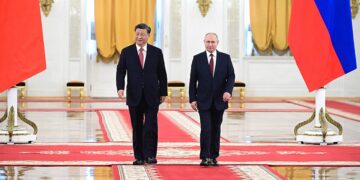
In an era of global conflict and turbulence, the prospect of a trilateral summit bringing together the leaders of China, Russia, and the U.S. is a hopeful sign. But whether the aspiration for a more peaceful and stable global order can be met during the Shenzhen meeting expected this month is open to question.
Doubts are visible in all corners. Still, it would be a mistake to pass up such an extraordinary opportunity. I have written in a recent book that this brand of trilateralism is necessary to knit a dysfunctional global order back together. In particular, this three-way meeting has the possibility to make progress on both nuclear stability and regional conflict, issues that are haunting our world at present with the specter of uncontrolled, violent escalation to even more tragic levels.
Trilateral diplomacy presents unique challenges, but such a summit contains the potential of breaking free from the assumptions that too often stall bilateral or multilateral agreements. Moreover, the China–Russia–U.S. triangle brings together the three most powerful military forces on earth, so difficult but necessary discussion about security issues naturally comes to the fore.
Read at The American Conservative
Author

More on Asia

Events on China