Defense Priorities Defense Priorities
  • Policy Topics
    • US-Israel-Iran
    • Ukraine-Russia
    • Western Hemisphere
    • NATO
    • China
  • Analysis
    • Policy Papers
    • Symposia
    • Q&A
    • Polls
    • Grand Strategy Explained
    • Target Taiwan
  • Programs
    • Grand Strategy Program
    • Military Analysis Program
    • Asia Program
    • Middle East Program
  • Experts
  • Events
  • Media
  • About
    • Mission & Vision
    • People
    • Jobs
    • Contact
  • Donate
Select Page
Home / Grand strategy / Washington’s Middle East strategy is all cost, no benefit
Grand strategy, Israel, Israel‑Hamas, Middle East

February 26, 2025

Washington’s Middle East strategy is all cost, no benefit

By Violet Collins

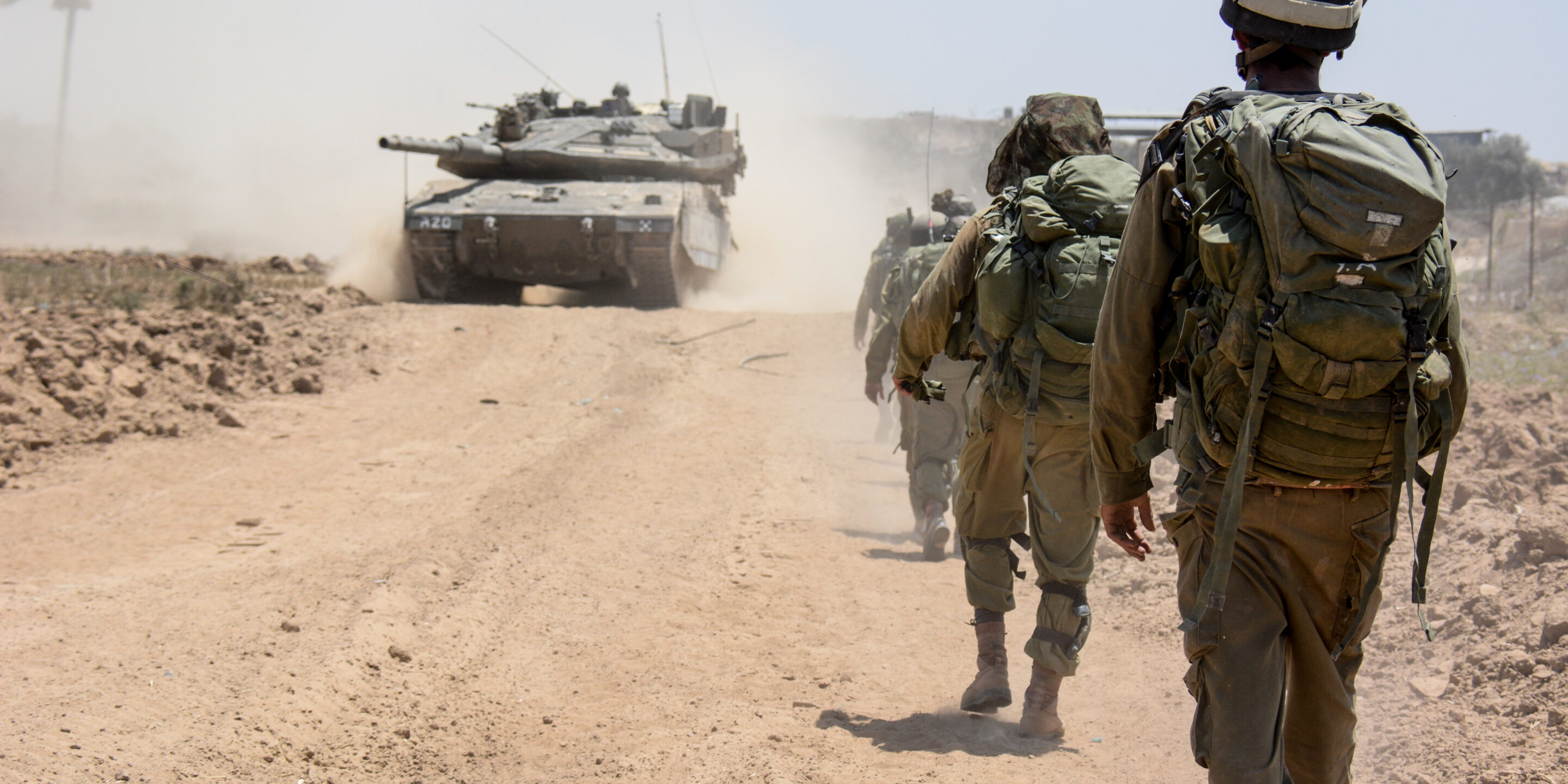
Amonth after a drone attack killed three American troops at a US military outpost in Jordan’s borderlands with Syria, decisionmakers in DC are still contending with restricted policy options. The strike at the Tower 22 outpost came as instability ripped across the greater Middle East. Within days, the US said it retaliated with strikes on more than 85 sites in Syria and Iraq that targeted Iran’s Islamic Revolutionary Guards Corps (IRGC) Quds force and “affiliated” militias. As the risk of greater conflict looms, the violence has revealed the growing constraint on America’s foreign policy choices in the Middle East as a result of maintaining active troop deployments.

As Israel’s war in the Gaza Strip continues and tensions in the Red Sea worsen, it is high time for the US to discuss the withdrawal of its troops from the Middle East—a region where their lives are threatened thanks to ongoing conflicts and instability.

In considering the costs and benefits of troop deployments, the recent American casualties were not incurred in the pursuit of actively protecting American security interests in the region. Thus, it is crucial to evaluate why maintaining these troops was worth the risk and the cost in the first place. In the words of US Defense Secretary Lloyd Austin, American troops in Syria, Jordan, and Iraq remain in place to ensure the territorial defeat of the Islamic State in Iraq and Syria (ISIS). But ISIS’s capabilities have been far diminished since they were largely defeated on the battlefield years ago.

Read at Ink Stick

Author

Violet
Collins

Contributing Fellow

Defense Priorities

More on Middle East

Op-edUS‑Israel‑Iran, Iran, Middle East

Reopening the Strait of Hormuz leaves US with mixed success

By Daniel DePetris

September 30, 2026

In the mediaUS‑Israel‑Iran, Basing and force posture, Middle East, Military analysis

After Iran war damage, U.S. may close some Middle East bases for good

Featuring Jennifer Kavanagh

September 29, 2026

In the mediaMiddle East

Precision weapons made U.S. bases vulnerable—and less necessary, report says

Featuring Benjamin Friedman

September 25, 2026

ExplainerIran, Air power, Basing and force posture, Middle East, Military analysis

The proliferation of accuracy and vulnerability of military bases

By Benjamin Friedman

September 24, 2026

Op-edHouthis, Middle East, Yemen

Trump is right to avoid a war with the Houthis

By Daniel DePetris

September 22, 2026

In the mediaChina, Asia, Iran, Middle East, US‑Israel‑Iran

Oil prices are high but could be much worse. Trump has China’s Xi to thank for that

Featuring Rosemary Kelanic

September 19, 2026

Events on Grand strategy

See All Events
virtualGlobal posture, Grand strategy, Military analysis

Assessing the 2026 NDS: What comes next?

February 9, 2026
virtualEurope and Eurasia, Asia, Grand strategy

Assessing the 2026 NDS: Alignment with restraint?

February 9, 2026
virtualNATO, Alliances, Burden sharing, Europe and Eurasia, Grand strategy

Assessing the 2026 NDS: Will it usher in burden shifting?

February 9, 2026

Receive expert foreign policy analysis

Join the hub of realism and restraint

Expert updates and analysis to enhance your understanding of vital U.S. national security issues

Defense Priority Mono Logo

Our mission is to inform citizens, thought leaders, and policymakers of the importance of a strong, dynamic military—used more judiciously to protect America’s narrowly defined national interests—and promote a realistic grand strategy prioritizing restraint, diplomacy, and free trade to ensure U.S. security.

Defense Priorities Foundation is a 501(c)(3) non-profit organization supported entirely by American individuals and foundations—no funding comes from the U.S. government or any foreign government. Donations are unlimited and deductible for Federal Income Tax purposes.

  • Experts
  • Papers
  • Symposia
  • Q&A
  • Polls
  • Events
  • Media
  • Terms and Conditions
  • Privacy Policy
  • About
  • Jobs
  • Contact
  • Donate
© 2026 Defense Priorities Foundation. All rights reserved.