Defense Priorities Defense Priorities
  • Policy Topics
    • US-Israel-Iran
    • Ukraine-Russia
    • Western Hemisphere
    • NATO
    • China
    • Syria
  • Analysis
    • Research
    • Q&A
  • Programs
    • Grand Strategy Program
    • Military Analysis Program
    • Asia Program
    • Middle East Program
  • Experts
  • Events
  • Media
  • About
    • Mission & Vision
    • People
    • Jobs
    • Contact
  • Donate
Select Page
Home / China / Understanding China’s Amphibious Warfare: The Yijiangshan Case Study
China, Asia

April 9, 2026

Understanding China’s Amphibious Warfare: The Yijiangshan Case Study

By Lyle Goldstein

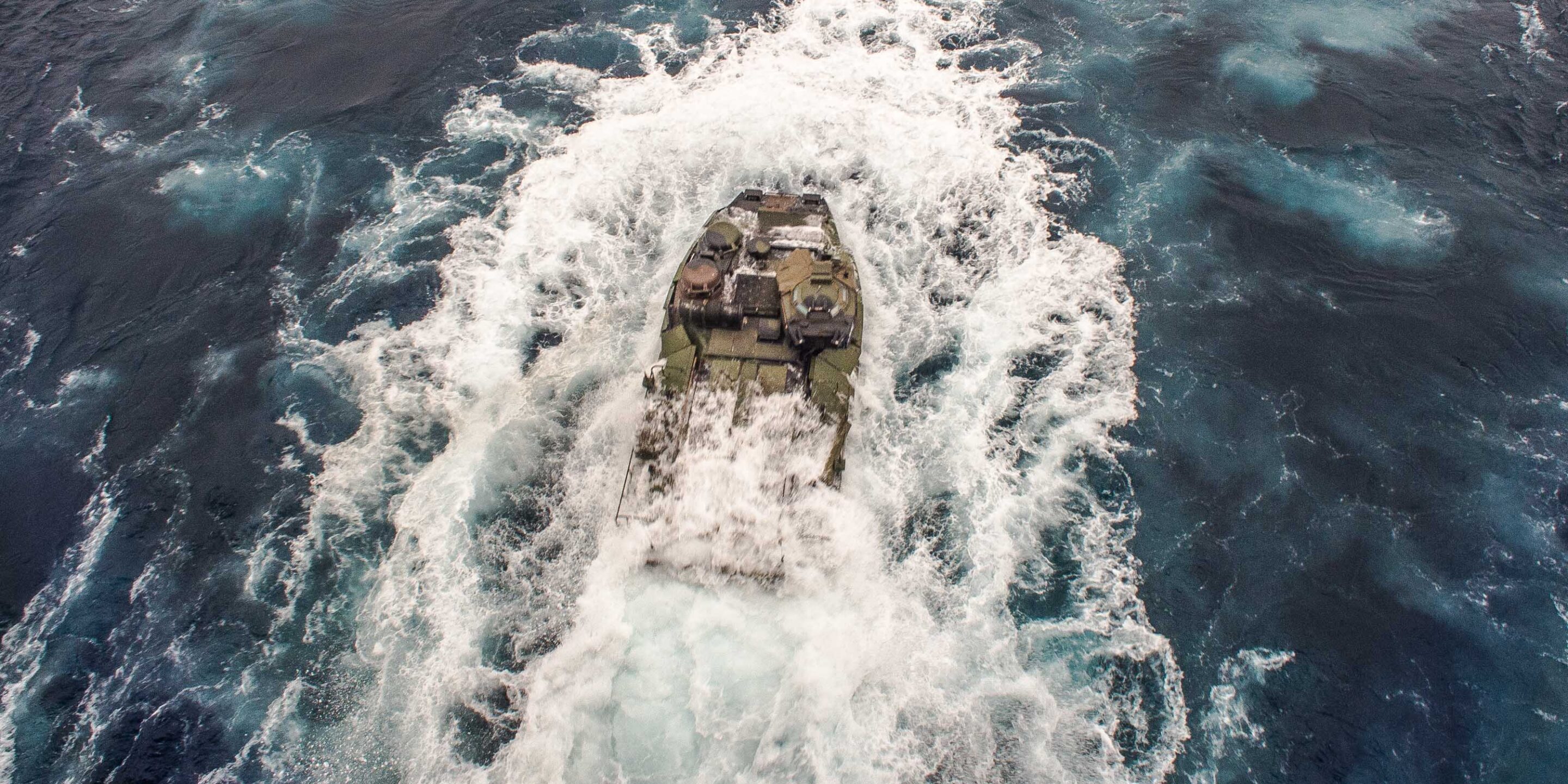
The Taiwan scenario often is regarded as the most dangerous military contingency in the world, as it could spark direct conflict between two nuclear-armed superpowers.1 It likely would include a significant amphibious component, so U.S. military strategists today are refocusing on amphibious warfare—a warfare domain their grandfathers understood well. Hard-earned lessons from Tarawa and Anzio made for extraordinary successes at Normandy, Okinawa, and Inchon. But the U.S. military has not conducted a large-scale amphibious invasion for nearly three-quarters of a century and logically has concentrated its efforts elsewhere.2 The same cannot be said of China’s People’s Liberation Army (PLA).

To understand China’s military objectives and methods with respect to Taiwan and amphibious warfare, it is essential to examine PLA writings, history, doctrinal development, and culture. Last November, I visited what may be China’s only museum devoted exclusively to amphibious warfare. Located in Taizhou, about 120 miles southeast of Shanghai, the museum commemorates the January 1955 Battle of Yijiangshan Island. Seventy years later, the battle appears to have become a point of careful study by the PLA, as a new generation of Chinese soldiers grapples with the complexities of amphibious warfare.

Apart from lessons in coordinating joint amphibious assault operations, Yijiangshan offers key strategic lessons for U.S. strategists today, as well as suggests the situation in the Taiwan Strait is more dangerous now than it was in the 1950s.

Read at Proceedings

Author

Photo of Lyle Goldstein

Lyle
Goldstein

Director, Asia Program

Defense Priorities

More on Asia

In the mediaChina‑Taiwan, Asia, China

Allies say Xi has no shot at convincing Trump to change Taiwan policy

Featuring Lyle Goldstein

May 13, 2026

Press ReleaseChina, Asia, Diplomacy

Trump-Xi summit presents a win-win opportunity

By Lyle Goldstein

May 12, 2026

In the mediaChina, Asia, Diplomacy

Trump faces an emboldened China in return to Beijing

Featuring Lyle Goldstein

May 12, 2026

In the mediaChina‑Taiwan, Asia, China

What Does Trump Want From Beijing Meeting With Xi?

Featuring Lyle Goldstein

May 12, 2026

In the mediaChina, Asia, China‑Taiwan

Iran war may give China, Xi, some leverage on Trump at Beijing summit

Featuring Lyle Goldstein

May 11, 2026

In the mediaChina, Asia, US‑Israel‑Iran

Trump heads to China amid ongoing war with Iran

Featuring Lyle Goldstein

May 11, 2026

Events on China

See All Events
virtualGreat power competition, Balance of power, China, Grand strategy, Middle East

U.S.-China competition and the value of Middle East influence

June 10, 2025
virtualChina, Alliances, Balance of power, Diplomacy, Grand strategy, Russia

China-Russia: Cooperation or a no-limits alliance?

April 3, 2025
virtualAsia, Basing and force posture, Burden sharing, China, Grand strategy

Rethinking U.S. strategy in East Asia: do more bases mean more deterrence?

January 24, 2024

Receive expert foreign policy analysis

Join the hub of realism and restraint

Expert updates and analysis to enhance your understanding of vital U.S. national security issues

Defense Priority Mono Logo

Our mission is to inform citizens, thought leaders, and policymakers of the importance of a strong, dynamic military—used more judiciously to protect America’s narrowly defined national interests—and promote a realistic grand strategy prioritizing restraint, diplomacy, and free trade to ensure U.S. security.

  • Research
  • Experts
  • About
  • For Media
  • Jobs
  • Donate
  • Privacy Policy
  • Terms and Conditions
  • Contact
© 2026 Defense Priorities Foundation. All rights reserved.