Defense Priorities Defense Priorities
  • Policy Topics
    • Iran
    • Western Hemisphere
    • Ukraine-Russia
    • NATO
    • China
    • Syria
  • Analysis
    • Research
    • Q&A
  • Programs
    • Grand Strategy Program
    • Military Analysis Program
    • Asia Program
    • Middle East Program
  • Experts
  • Events
  • Media
  • About
    • Mission & Vision
    • People
    • Jobs
    • Contact
  • Donate
Select Page
Home / Syria / U.S. troops finally leave Syria
Syria, Middle East

February 13, 2026

U.S. troops finally leave Syria

By Daniel DePetris

In December 2018, to the shock of pretty much everybody in the U.S. national security establishment at the time, President Donald Trump publicly ordered the withdrawal of all U.S. troops from Syria. The announcement caused a panic within the Defense Department, State Department and National Security Council, whose officials teamed up to dissuade Trump from going through with it. A similar story unfolded ten months later, in October 2019. Again, the bureaucracy pushed back; in October 2019, the House went so far as to pass a resolution opposing a U.S. withdrawal, with senior Republican lawmakers signing onto the measure.

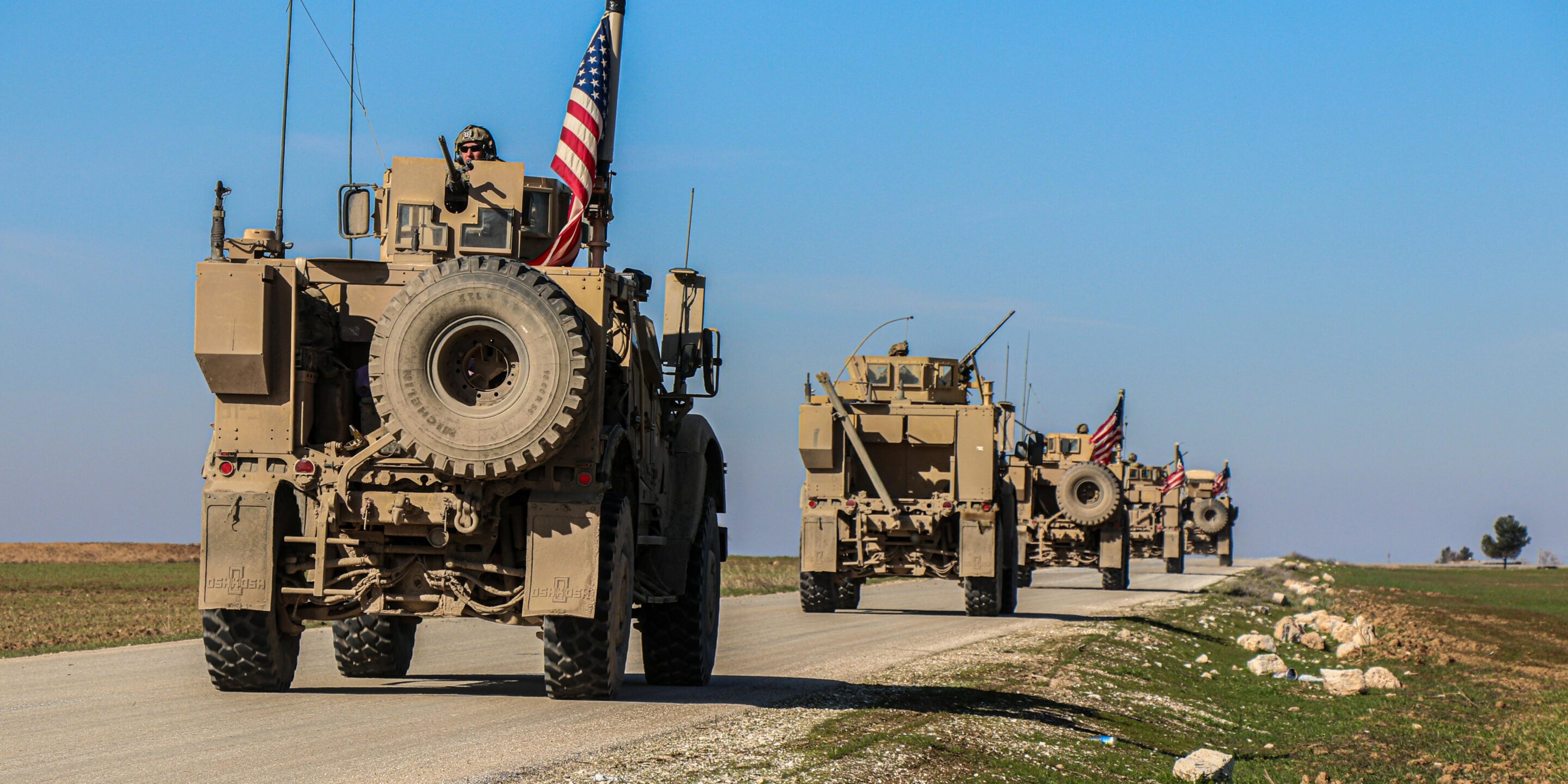
Fast-forward more than six years later, and the U.S. troop withdrawal Trump floated about during his first term is finally coming to fruition in his second. On Thursday, February 12, U.S. Central Command issued a statement that the U.S. military “completed the orderly departure of U.S. forces from al-Tanf Garrison in Syria… as part of a deliberate and conditions-based transition” of the counter-ISIS mission. The news came days after U.S. troops and equipment reportedly left the al-Shaddadi base in northeastern Syria, likely for next-door Iraq.

Today’s departure from the al-Tanf garrison in eastern Syria is especially noteworthy. Al-Tanf, located at the cross-section between Iraq, Syria and Jordan, was used by the U.S.-led coalition as a key staging ground for the training of anti-ISIS fighters. It quickly grew to become a de-facto U.S. partition of Syrian territory, complete with a 55-kilometer no-fly and no-drive zone around the base. Any hostile force encroaching into the zone was at high risk of getting neutralized by U.S. air power. During several instances in 2017, militias supporting former Syrian dictator Bashar al-Assad tested the zone by flying drones and sending military vehicles into U.S.-enforced deconfliction bubble. The drones were shot down, the vehicles were destroyed and the personnel manning them were killed.

Read at Spectator

Author

Photo of Daniel DePetris

Daniel
DePetris

Fellow

Defense Priorities

More on Middle East

op-edIran, Middle East, U.S.‑Iran

Trump should step back from the brink with Iran

By Alexander Langlois

February 18, 2026

op-edIran, Middle East

Provoking a war with Iran could be a deadly miscalculation for Trump

By Rosemary Kelanic

February 12, 2026

Press ReleaseSyria, Middle East

Drawdown from Syria a success worth scaling

By Rosemary Kelanic

February 12, 2026

op-edU.S.‑Iran, Iran, Middle East

Trump’s maximalism could derail Iran negotiations

By Daniel DePetris

February 12, 2026

op-edSyria, Middle East

What the latest ceasefire and unification deal means for Syria

By Alexander Langlois

February 9, 2026

op-edGrand strategy, Iran, U.S.‑Iran, Ukraine, Ukraine‑Russia

What happens when we give Europe first dibs on U.S. missiles for war

By Jennifer Kavanagh

February 9, 2026

Events on Syria

See All Events
virtualMiddle East, Basing and force posture, Diplomacy, Houthis, Iran, Iraq, Israel, Israel‑Hamas, Military analysis, Syria

Trump in the Middle East: Impacts, implications, and alternatives

May 16, 2025
virtualSyria, Balance of power, Basing and force posture, Counterterrorism, Middle East, Military analysis

Syria after Assad: Prospects for U.S. withdrawal

February 21, 2025
virtualMiddle East, Iran, Israel‑Hamas, Israel‑Iran, Syria, Yemen

Keeping the U.S. out of war in the Middle East

January 16, 2024

Receive expert foreign policy analysis

Join the hub of realism and restraint

Expert updates and analysis to enhance your understanding of vital U.S. national security issues

Defense Priority Mono Logo

Our mission is to inform citizens, thought leaders, and policymakers of the importance of a strong, dynamic military—used more judiciously to protect America’s narrowly defined national interests—and promote a realistic grand strategy prioritizing restraint, diplomacy, and free trade to ensure U.S. security.

  • Research
  • Experts
  • About
  • For Media
  • Jobs
  • Donate
  • Privacy Policy
  • Terms and Conditions
  • Contact
© 2026 Defense Priorities All Right Reserved