Defense Priorities Defense Priorities
  • Policy Topics
    • US-Israel-Iran
    • Ukraine-Russia
    • Western Hemisphere
    • NATO
    • China
    • Syria
  • Analysis
    • Research
    • Q&A
  • Programs
    • Grand Strategy Program
    • Military Analysis Program
    • Asia Program
    • Middle East Program
  • Experts
  • Events
  • Media
  • About
    • Mission & Vision
    • People
    • Jobs
    • Contact
  • Donate
Select Page
Home / Ukraine-Russia / The U.S. should do more to advocate for peace
Ukraine‑Russia, Europe and Eurasia, Grand strategy, Russia, Ukraine

February 2, 2025

The U.S. should do more to advocate for peace

By Sabreena Croteau

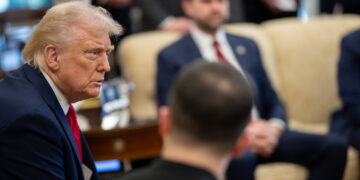
With Donald Trump’s return to the White House, many commentators are focused on the potential for deal-making. First, with the latest ceasefire agreement in Gaza and second, with Trump’s claims to be able to bring about an end to hostilities and fighting in Ukraine. However, with the U.S. being a secondary actor in both conflicts, not physically participating directly in fighting on the ground, why should a change of leadership in the United States serve as a focal point for a potential deal in either conflict?

With the ceasefire in Gaza coming just days before the inauguration, it seems that the transition of power in the U.S. is turning out to be a key force in breaking the bargaining stalemate, implying the potential for the same to be the case in Ukraine. However, simply coming to power is not enough for the incoming U.S. administration to end the wars, as a negotiation process is complex, with multiple factors driving actors and outcomes.

In his book How Wars End, Dan Reiter, professor of political science at Emory University, introduces a two-pronged framework in bargaining processes for conflict termination. The first prong involves information—the states will attempt bargaining to end conflicts after fighting has revealed the information that was unknowable or private at the beginning of the conflict, including the relative balance of power, the fighting resolve on either side, and the potential actions of third parties. Reiter then argues that while this prong is important to the deal-making process, it is not enough on its own to ensure that bargaining is even attempted, let alone concluded. In the case of Ukraine, much of this information was known as early as March 2022, and yet the fighting has continued for three years.

Read at The Critic

Author

Photo of Sabreena Croteau

Sabreena
Croteau

Contributing Fellow

Defense Priorities

More on Europe

Op-edUkraine‑Russia, Europe and Eurasia, Russia, Ukraine

A Flawed Formula for Peace in Ukraine

By Jennifer Kavanagh

April 7, 2026

Op-edNATO, Alliances, Europe and Eurasia

Our NATO allies are unwilling to play Donald Trump’s game this time around

By Daniel DePetris

April 7, 2026

In the mediaNATO, Alliances, Iran, Middle East, US‑Israel‑Iran

Trump roils NATO as pressure builds over Strait of Hormuz

Featuring Jennifer Kavanagh

April 5, 2026

Op-edUS‑Israel‑Iran, Alliances, Iran, Middle East, NATO

Trump’s ‘Art of the Deal’ Is Losing Friends and Alienating Allies

By Daniel DePetris

April 2, 2026

Op-edNATO, Alliances, Europe and Eurasia, Iran, Middle East, US‑Israel‑Iran

Europe is in mutiny against Trump

By Daniel DePetris

April 1, 2026

Q&AAlliances, Europe and Eurasia, Iran, NATO

How will the war in Iran impact U.S.-Europe relations?

By Thomas P. Cavanna

March 31, 2026

Events on Ukraine-Russia

See All Events
virtualUkraine‑Russia, Air power, Diplomacy, Drones, Europe and Eurasia, Land power, Military analysis, Russia, Ukraine

Ukraine’s critical choice: Pursue peace or fight on

April 16, 2025
virtualUkraine‑Russia, Europe and Eurasia, Russia, Ukraine

Trump and Ukraine: Prolonging or ending the war

December 13, 2024
virtualNATO, Alliances, Europe and Eurasia, Russia, Ukraine, Ukraine‑Russia

A ‘bridge’ to NATO or false hope for Ukraine?

July 12, 2024

Receive expert foreign policy analysis

Join the hub of realism and restraint

Expert updates and analysis to enhance your understanding of vital U.S. national security issues

Defense Priority Mono Logo

Our mission is to inform citizens, thought leaders, and policymakers of the importance of a strong, dynamic military—used more judiciously to protect America’s narrowly defined national interests—and promote a realistic grand strategy prioritizing restraint, diplomacy, and free trade to ensure U.S. security.

  • Research
  • Experts
  • About
  • For Media
  • Jobs
  • Donate
  • Privacy Policy
  • Terms and Conditions
  • Contact
© 2026 Defense Priorities Foundation. All rights reserved.