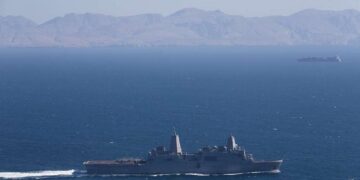
The disruption of oil shipments through the Strait of Hormuz over the past seven months has raised energy prices and exacerbated inflation, forcing the Fed to raise interest rates while the Treasury tries to combat higher yields on U.S. bonds. Both augur poorly for the U.S. economy generally, at least in the short run.
The U.S. war in Iran, the latest—and hopefully last — in a series of failed Middle East conflicts, has produced the very costs for ordinary Americans that the U.S. military presence in the region was originally intended to prevent starting in the 1970s. In the wake of the OPEC oil shock, the Iranian Revolution, and the Soviet invasion of Afghanistan, the U.S. declared it would intervene in the Middle East to maintain stability in the region. After the First Gulf War, the U.S. made its military presence in the Gulf permanent.
Rather than preventing a disruption of oil flows through the Persian Gulf, the U.S. has created one. While crude oil shipments through the strait are approaching prewar levels, refined fuel shipments are still down. Oil and gas prices remain high and are likely to stay that way for months after the crisis ends—whenever that may be.
Author

More on Middle East