Defense Priorities Defense Priorities
  • Policy Topics
    • US-Israel-Iran
    • Ukraine-Russia
    • Western Hemisphere
    • NATO
    • China
    • Syria
  • Analysis
    • Research
    • Q&A
  • Programs
    • Grand Strategy Program
    • Military Analysis Program
    • Asia Program
    • Middle East Program
  • Experts
  • Events
  • Media
  • About
    • Mission & Vision
    • People
    • Jobs
    • Contact
  • Donate
Select Page
Home / Grand strategy / The Pentagon is ignoring its own strategy
Grand strategy, Air power, Asia, Balance of power, Global posture, Land power, Naval power

May 7, 2025

The Pentagon is ignoring its own strategy

By Jennifer Kavanagh

During his first official visit to Asia in March, U.S. Defense Secretary Pete Hegseth delivered a strong message to Washington’s allies and partners. “What the Trump administration will do … is truly prioritize and shift [to] this region of the world in a way that is unprecedented, to match the threats of the future,” he said.

This rhetoric aligns with the Pentagon’s Interim National Defense Strategic Guidance, which is designed to serve as a placeholder until a full National Defense Strategy is published later this year. The guidance established the Indo-Pacific as its top priority beyond protecting the homeland. To that end, it committed the United States to “assume risk in other theaters,” namely the Middle East and Europe, to ensure that its military has the personnel, platforms, and equipment necessary to maintain deterrence in East Asia.

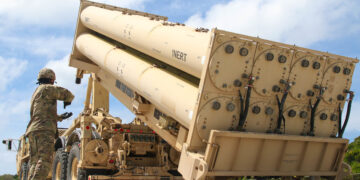
The Defense Department, however, does not seem to be following its own recommendations. Instead of focusing on Asia, it has continued to spread itself thin with too many missions in too many regions at once. Without strict prioritization, the Trump administration risks repeating the mistakes of its predecessors, leaving the U.S. military overextended and out of position if a real threat to its interests emerges.

Read at Foreign Policy

Author

Jennifer
Kavanagh

Senior Fellow & Director of Military Analysis

Defense Priorities

More on Asia

Op-edChina, Asia, China‑Taiwan

Time for a ‘Fourth Communique’ To Stabilize U.S.-China Relations

By Lyle Goldstein

April 13, 2026

In the mediaChina‑Taiwan, Asia, China, Military analysis, Naval power

China launched ten submarines in four years. The U.S. Navy struggled to built just seven.

Featuring Mike Sweeney

April 11, 2026

Op-edChina, Asia

Understanding China’s Amphibious Warfare: The Yijiangshan Case Study

By Lyle Goldstein

April 9, 2026

Op-edChina, Asia, Iran, Middle East, US‑Israel‑Iran

The delayed U.S.-China summit is another cost of the Iran war

By Lyle Goldstein

March 26, 2026

Op-edNorth Korea, Asia

Iran war draining U.S. arsenal that keeps North Korea in check

By John Grover

March 23, 2026

In the mediaChina‑Taiwan, Asia, Taiwan

Cross-strait crossroads: Pathways for America’s Taiwan policy

Featuring Jennifer Kavanagh

March 23, 2026

Events on Grand strategy

See All Events
virtualGlobal posture, Grand strategy, Military analysis

Assessing the 2026 NDS: What comes next?

February 9, 2026
virtualEurope and Eurasia, Asia, Grand strategy

Assessing the 2026 NDS: Alignment with restraint?

February 9, 2026
virtualNATO, Alliances, Burden sharing, Europe and Eurasia, Grand strategy

Assessing the 2026 NDS: Will it usher in burden shifting?

February 9, 2026

Receive expert foreign policy analysis

Join the hub of realism and restraint

Expert updates and analysis to enhance your understanding of vital U.S. national security issues

Defense Priority Mono Logo

Our mission is to inform citizens, thought leaders, and policymakers of the importance of a strong, dynamic military—used more judiciously to protect America’s narrowly defined national interests—and promote a realistic grand strategy prioritizing restraint, diplomacy, and free trade to ensure U.S. security.

  • Research
  • Experts
  • About
  • For Media
  • Jobs
  • Donate
  • Privacy Policy
  • Terms and Conditions
  • Contact
© 2026 Defense Priorities Foundation. All rights reserved.