Defense Priorities Defense Priorities
  • Policy Topics
    • US-Israel-Iran
    • Ukraine-Russia
    • Western Hemisphere
    • NATO
    • China
    • Syria
  • Analysis
    • Research
    • Q&A
  • Programs
    • Grand Strategy Program
    • Military Analysis Program
    • Asia Program
    • Middle East Program
  • Experts
  • Events
  • Media
  • About
    • Mission & Vision
    • People
    • Jobs
    • Contact
  • Donate
Select Page
Home / Western Hemisphere / The Pentagon is blending the war on drugs with counterterrorism. It isn’t working.
Western Hemisphere, Mexico

May 26, 2026

The Pentagon is blending the war on drugs with counterterrorism. It isn’t working.

By Daniel DePetris

On May 16, the United States found and killed Abu-Bilal al-Minuki, a top Islamic State commander, in Nigeria. The precision operation in the northeast of Africa’s most populous country came about a week after President Donald Trump’s administration released its new counterterrorism strategy.
As one might expect, combating the Islamic State and al-Qaida, the usual suspects for Washington’s vast counterterrorism apparatus, is treated as a top priority in the 16-page document. What’s more notable is the strategy’s focus on the drug cartels and smaller criminal groups that have proliferated in the Western Hemisphere. In both words and deeds, Washington is elevating Mexico’s drug trafficking organizations and Ecuador’s gangs to the same plane as the Islamic State gunmen who roam the Syrian desert. In doing so, Trump has expanded the war on terrorism to encompass the war on drugs.
“We will not let cartels, Jihadists, or the governments who support them plot against our citizens with impunity,” Trump wrote in the report’s introduction. “Terrorists of any kind will not be allowed to find safe harbor here at home or attack us from abroad.”
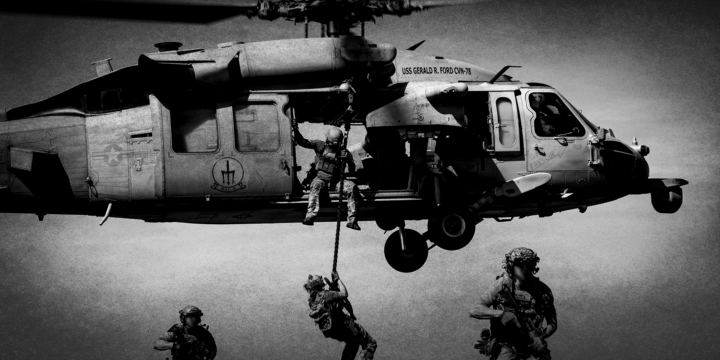
The Trump administration has made good on this threat by increasing the U.S. military’s role in the counter-drug fight. In September, the Pentagon announced Operation Southern Spear, a series of U.S. strikes against boats in the Caribbean and Eastern Pacific that allegedly were carrying drugs to the United States. According to the latest tally by The New York Times, the U.S. has conducted a total of 57 strikes, killing approximately 200 people in the process. Trump alleges, falsely, that the strikes have reduced seabound drug trafficking into the U.S. by an astounding 97%.

Read at The Chicago Tribune

Author

Photo of Daniel DePetris

Daniel
DePetris

Fellow

Defense Priorities

More on Western Hemisphere

In the mediaWestern Hemisphere, Venezuela

The ‘Donroe Doctrine’ Divide

Featuring Jennifer Kavanagh

May 24, 2026

In the mediaCuba, Western Hemisphere

Trump administration eyes Cuba as possible military victory as Iran talks stall

Featuring Rosemary Kelanic

May 23, 2026

Op-edCuba, Western Hemisphere

Could Trump be about to attack Cuba?

By Daniel DePetris

May 21, 2026

In the mediaCuba, Western Hemisphere

Cuba Girds for Invasion as Trump Launches Raúl Castro Indictment Amid Punishing Blockade

May 20, 2026

In the mediaCuba, China, Western Hemisphere

Cuban drone crisis: U.S. fears Russia-China Caribbean threat

Featuring Daniel DePetris

May 17, 2026

Op-edMexico, Western Hemisphere

An indictment of Sinaloa’s governor could roil U.S.-Mexico ties

By Daniel DePetris

May 5, 2026

Events on Western Hemisphere

See All Events
virtualWestern Hemisphere, Military analysis

Assessing the 2026 NDS: Toward Western Hemisphere dominance?

February 9, 2026
virtualWestern Hemisphere

What’s next for U.S. foreign policy in 2026? Western Hemisphere Edition

January 14, 2026
virtualVenezuela, Western Hemisphere

Perils of regime change in Venezuela and beyond

October 28, 2025

Receive expert foreign policy analysis

Join the hub of realism and restraint

Expert updates and analysis to enhance your understanding of vital U.S. national security issues

Defense Priority Mono Logo

Our mission is to inform citizens, thought leaders, and policymakers of the importance of a strong, dynamic military—used more judiciously to protect America’s narrowly defined national interests—and promote a realistic grand strategy prioritizing restraint, diplomacy, and free trade to ensure U.S. security.

  • Research
  • Experts
  • About
  • For Media
  • Jobs
  • Donate
  • Privacy Policy
  • Terms and Conditions
  • Contact
© 2026 Defense Priorities Foundation. All rights reserved.