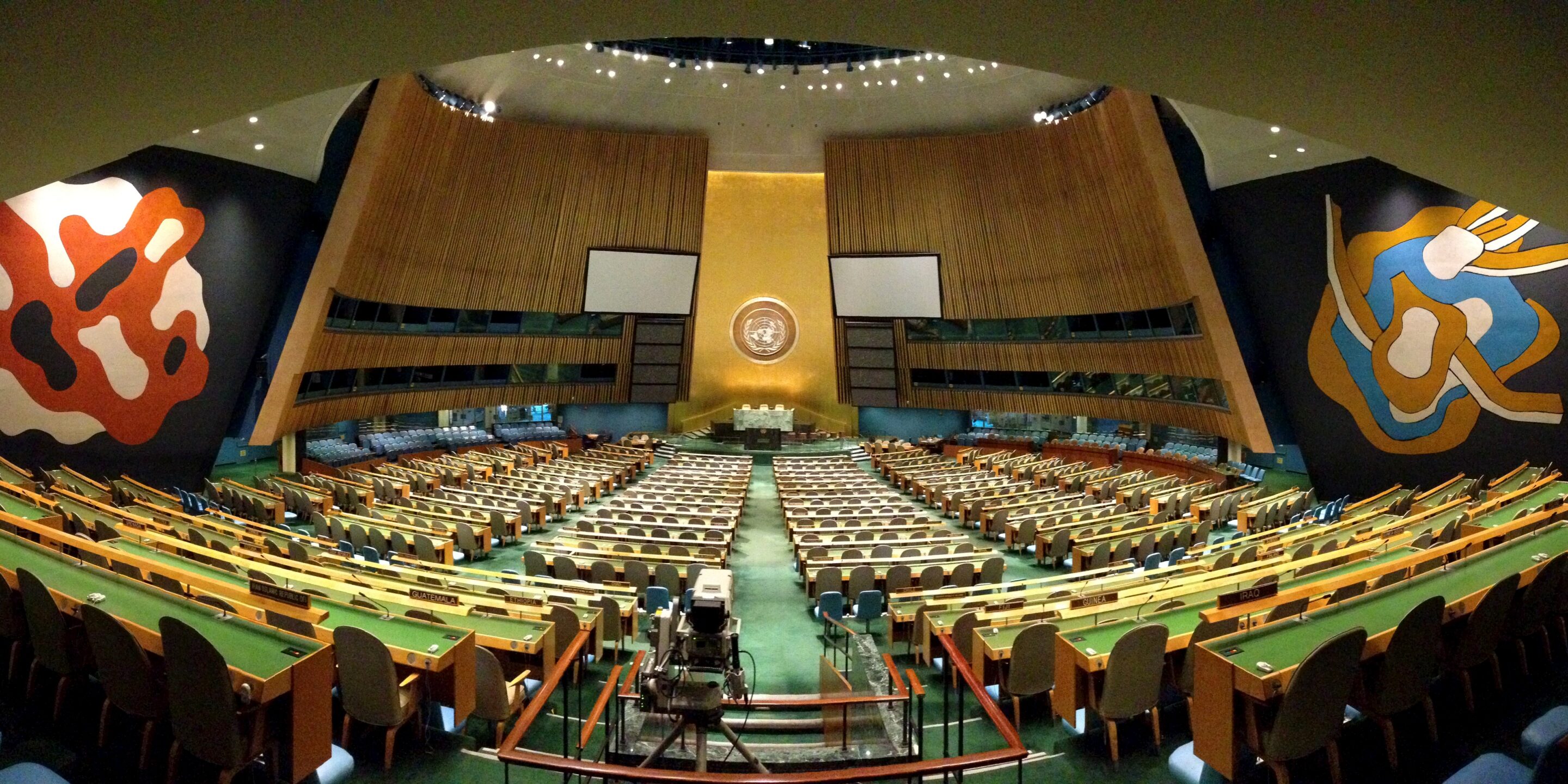
This week, thousands of diplomats and dozens of prime ministers, presidents, and kings were holed up in Manhattan for the annual UN General Assembly meetings. Typically, UN week is a relatively monotonous, predictable affair: high-powered politicians make grandiose speeches at the UN lectern, organize a few side meetings with their fellow heads-of-state, and zoom around New York for various conferences, where they relitigate what they said just a few hours or days before.
But this year’s event was different because there was a newcomer to the party: Ahmed al-Sharaa. The former Al Qaeda fighter and U.S. military prisoner, whose militia outfit Hayat Tahrir al-Sham shocked the world last December by deposing the half-century-old Assad regime in a matter of weeks, is now an ordinary politician in a suit crowing about his nation’s historical achievements. Sharaa, who up until last year was still designated by the United States as a terrorist with a $10 million bounty on his head, is now a free man giving speeches, meeting with Western officials in the hope of earning their support, and doing everything in his power to present himself as a moderate, responsible statesman who wants nothing more than to rebuild his country after a 14-year civil war. And he’s saying all the right things: Extremism won’t be tolerated, Syria has no gripes with any other nation and the country’s post-Assad leadership would like nothing more than to have good relations with everybody.
Sharaa was the talk of the town. His 10-minute speech to the UN assembly—the first time a Syrian president was at the annual confab since the late 1960s—was designed to earn the international community’s confidence and underscore that Syria has returned to the community of nations after five decades of harsh dictatorial rule. But the speech was just an appetizer to the main-event; Sharaa did a full-court press, sharing some laughs with Gen. David Petraeus (Ret.), who commanded U.S. forces in Iraq during the 2007–2008 troop surge, doing a talk hosted by the Middle East Institute (where Trump administration officials Tom Barrack and Morgan Ortagus were in attendance), and sitting for a 60 Minutes interview before he left town. The man was everywhere.
Author

More on Middle East
Events on Syria