Defense Priorities Defense Priorities
  • Policy Topics
    • US-Israel-Iran
    • Ukraine-Russia
    • Western Hemisphere
    • NATO
    • China
  • Analysis
    • Policy Papers
    • Symposia
    • Q&A
    • Polls
    • Grand Strategy Explained
    • Target Taiwan
  • Programs
    • Grand Strategy Program
    • Military Analysis Program
    • Asia Program
    • Middle East Program
  • Experts
  • Events
  • Media
  • About
    • Mission & Vision
    • People
    • Jobs
    • Contact
  • Donate
Select Page
Home / Middle East / It’s Time to Pull U.S. Troops from the Middle East
Middle East

August 19, 2026

It’s Time to Pull U.S. Troops from the Middle East

By Alexander Langlois

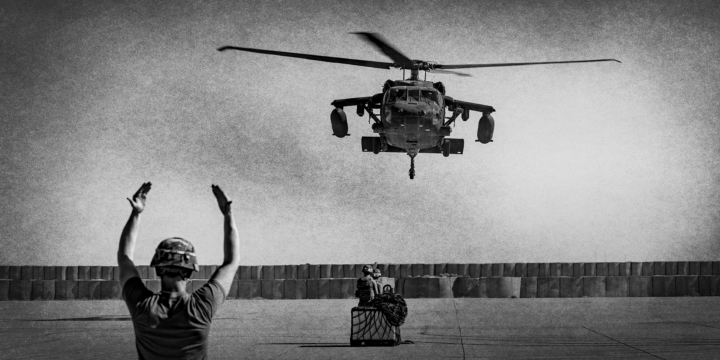
On July 17, an Iranian missile strike killed three U.S. servicemembers at the Muwaffaq Salti Air Base in Jordan, a stark reminder of the cost of President Donald Trump’s war of choice in the Middle East. Their deaths were avoidable, just as the strategy that put them in harm’s way was and remains reversible. Such forward deployments are always a “safe” option until missiles and drones rain down, highlighting the importance of withdrawing American troops from the region and ending this disastrous war.

The Trump administration is reportedly moving assets and troops further from its forward bases lining the Persian Gulf, which have faced the brunt of Iranian attacks. That includes Jordan and Israel. However, as the strike on Muwaffaq Salti highlights, these bases hardly present a more secure option for such deployments.

The United States has at least 32 major military installations and at least 50,000 troops positioned throughout the Middle East, with many more locations not disclosed to the public. Notable sites include Central Command’s regional headquarters at the Al Udeid Air Base in Qatar, the Navy’s Fifth Fleet headquarters at the Naval Support Activity base in Bahrain, and Al Dhafra Air Base in the United Arab Emirates. Kuwait hosts the Ali Al Salem Air Base and Camp Arifjan, while Saudi Arabia hosts the Prince Sultan Air Base. All have been regularly targeted in the war, with Kuwait and the UAE sites of particular focus for Iran.

These security partnerships, which have largely secured the rule of repressive dictatorships in the Gulf and in countries like Jordan while providing a shield to Israel by pressuring Iran, generally gave Washington a degree of influence over the energy markets that helped drive economic growth.

Read at Real Clear Defense

Author

Alexander
Langlois

Contributing Fellow

Defense Priorities

More on Middle East

In the mediaUS‑Israel‑Iran, Basing and force posture, Iran, Middle East, Military analysis

Pentagon weighing smaller U.S. military presence in Gulf once Iran war ends

Featuring Jennifer Kavanagh and Dan Caldwell

August 18, 2026

Op-edIsrael, Middle East

Israel can no longer deny the shift in U.S. politics

By Daniel DePetris

August 18, 2026

In the mediaUS‑Israel‑Iran, Iran, Middle East

Rosemary Kelanic explains how shippers decide whether to transit the Strait of Hormuz: CNN

Featuring Rosemary Kelanic

August 18, 2026

In the mediaUS‑Israel‑Iran, Iran, Israel‑Iran, Middle East

Can Washington’s economic sanctions squeeze Iran into a deal?

Featuring Jennifer Kavanagh

August 17, 2026

Op-ed

Five Years Later, Biden Was Proven Right in Withdrawing From Afghanistan

By Gil Barndollar

August 17, 2026

In the mediaUS‑Israel‑Iran, Iran, Middle East

Trump indicates U.S. won’t seek memorandum of understanding extension following conclusion of 60-day ceasefire

Featuring Rosemary Kelanic

August 17, 2026

Events on Middle East

See All Events
virtualMiddle East

What’s Next for U.S. Foreign Policy in 2026? Middle East Edition

January 14, 2026
virtualGreat power competition, Balance of power, China, Grand strategy, Middle East

U.S.-China competition and the value of Middle East influence

June 10, 2025
virtualMiddle East, Basing and force posture, Diplomacy, Houthis, Iran, Iraq, Israel, Israel‑Hamas, Military analysis, Syria

Trump in the Middle East: Impacts, implications, and alternatives

May 16, 2025

Receive expert foreign policy analysis

Join the hub of realism and restraint

Expert updates and analysis to enhance your understanding of vital U.S. national security issues

Defense Priority Mono Logo

Our mission is to inform citizens, thought leaders, and policymakers of the importance of a strong, dynamic military—used more judiciously to protect America’s narrowly defined national interests—and promote a realistic grand strategy prioritizing restraint, diplomacy, and free trade to ensure U.S. security.

  • Experts
  • Papers
  • Symposia
  • Q&A
  • Polls
  • Events
  • Media
  • Terms and Conditions
  • Privacy Policy
  • About
  • Jobs
  • Contact
  • Donate
© 2026 Defense Priorities Foundation. All rights reserved.