Defense Priorities Defense Priorities
  • Policy Topics
    • US-Israel-Iran
    • Ukraine-Russia
    • Western Hemisphere
    • NATO
    • China
  • Analysis
    • Policy Papers
    • Symposia
    • Q&A
    • Polls
    • Grand Strategy Explained
    • Target Taiwan
  • Programs
    • Grand Strategy Program
    • Military Analysis Program
    • Asia Program
    • Middle East Program
  • Experts
  • Events
  • Media
  • About
    • Mission & Vision
    • People
    • Jobs
    • Contact
  • Donate
Select Page
Home / China / China evaluates Russia’s use of hypersonic ‘daggers’ in the Ukraine War
China, Russia

January 11, 2024

China evaluates Russia’s use of hypersonic ‘daggers’ in the Ukraine War

By Lyle Goldstein

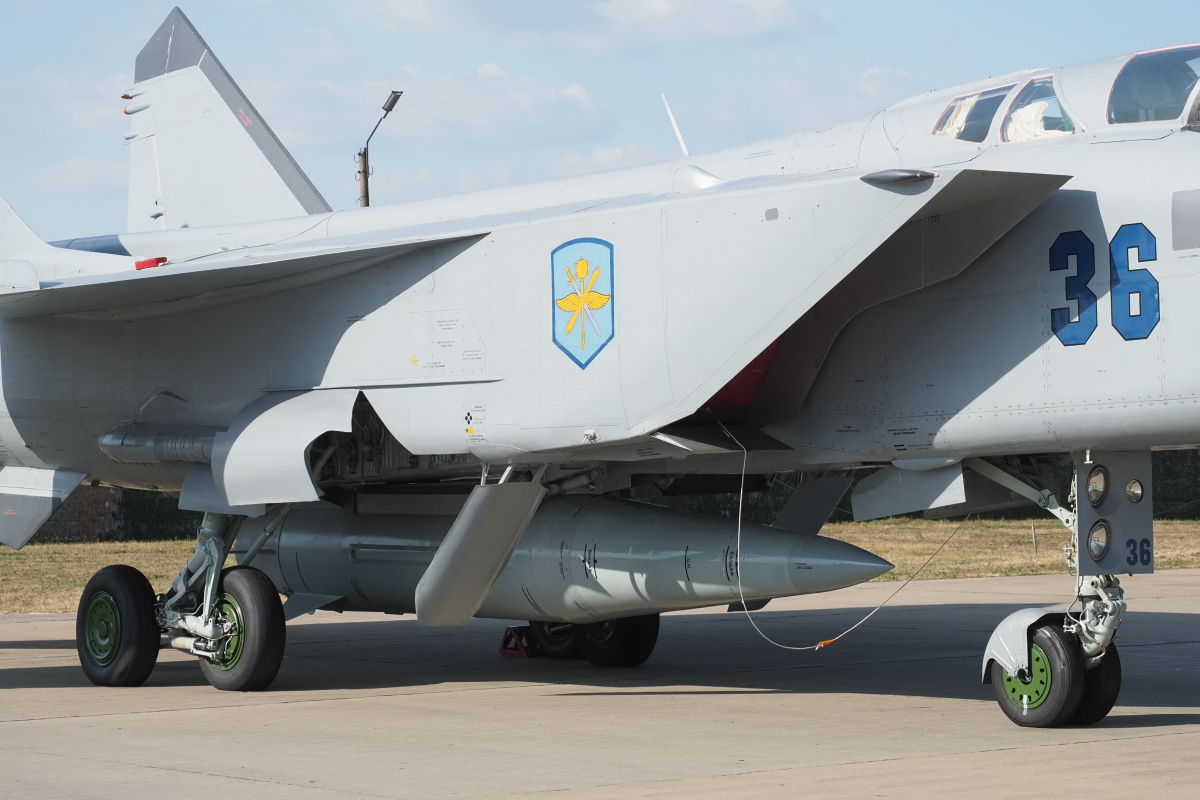
Among many firsts, Russia’s invasion of Ukraine witnessed the first use of hypersonic weapons on the battlefield. Russia has employed the air launched Kh-47M2 Kinzhal hypersonic missile, also referred to as the “Dagger,” to strike targets in Ukraine on many occasions.

Hypersonic missiles travel at high speeds of Mach 5 or greater, fly at lower altitudes, and are maneuverable; they are thus considered to be difficult for current air defense systems to intercept. While the United States is still working to develop its own hypersonic weapon, China has already developed and deployed ground-, air– and sea-launched hypersonic variants.

As the People’s Liberation Army (PLA) has yet to use these weapons in combat, Chinese analysts are likely keen to absorb lessons from Russia’s war in Ukraine. This piece will review an article from a leading Chinese defense magazine entitled: “The Dagger Wielding Platypus: A Brief Discussion of the Su-34 Launching the Dagger Hypersonic Missile.” (The article, published in 《兵工科技》, is currently only available in print form.) While the Kinzhal was initially launched from Mig-31 fighter jets, Russia has recently outfitted the Su-34 “Platypus” (referred to in the West as the “Fullback”) with the ability to carry and launch the Kinzhal as well. This Chinese analysis discusses both the development of the Su-34 as a Kinzhal carrier and the actual performance of the Kinzhal in combat.

Read at The Diplomat

Author

Photo of Lyle Goldstein

Lyle
Goldstein

Director, Asia Program

Defense Priorities

More on Asia

In the mediaChina‑Taiwan, Asia, Military analysis, Military strategy and budget, Taiwan

Is this the best time for U.S. strategists to push for abandoning ambiguity on Taiwan?

Featuring Jennifer Kavanagh

October 13, 2026

In the mediaChina, Asia, China‑Taiwan, Grand strategy, Middle East

Great power cooperation in a fragmented world

Featuring Jennifer Kavanagh

October 8, 2026

Op-edChina‑Taiwan, Asia, Taiwan

America’s commitment to Taiwan is a liability

By Jennifer Kavanagh

October 7, 2026

In the mediaChina, Asia, Russia

Turkmenistan grows its arsenal of Chinese air defenses as Russia’s role shrinks

Featuring Lyle Goldstein

October 6, 2026

Op-edChina‑Taiwan, Asia, Basing and global posture, China, Military analysis

The case for pulling U.S. military back from the first island chain

By Jennifer Kavanagh

October 5, 2026

In the mediaChina, Asia, China‑Taiwan

Trump, China and the question of selling arms to Beijing

Featuring Lyle Goldstein

September 29, 2026

Events on China

See All Events
virtualGreat power competition, Balance of power, China, Grand strategy, Middle East

U.S.-China competition and the value of Middle East influence

June 10, 2025
virtualChina, Alliances and commitments, Balance of power, Diplomacy, Grand strategy, Russia

China-Russia: Cooperation or a no-limits alliance?

April 3, 2025
virtualAsia, Basing and global posture, Burden sharing, China, Grand strategy

Rethinking U.S. strategy in East Asia: do more bases mean more deterrence?

January 24, 2024

Receive expert foreign policy analysis

Join the hub of realism and restraint

Expert updates and analysis to enhance your understanding of vital U.S. national security issues

Defense Priority Mono Logo

Our mission is to inform citizens, thought leaders, and policymakers of the importance of a strong, dynamic military—used more judiciously to protect America’s narrowly defined national interests—and promote a realistic grand strategy prioritizing restraint, diplomacy, and free trade to ensure U.S. security.

Defense Priorities Foundation is a 501(c)(3) non-profit organization supported entirely by American individuals and foundations—no funding comes from the U.S. government or any foreign government. Donations are unlimited and deductible for Federal Income Tax purposes.

  • Experts
  • Papers
  • Symposia
  • Q&A
  • Polls
  • Events
  • Media
  • Terms and Conditions
  • Privacy Policy
  • About
  • Jobs
  • Contact
  • Donate
© 2026 Defense Priorities Foundation. All rights reserved.