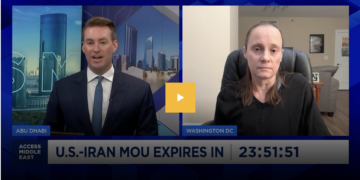
“The war will continue because both Iran and the United States want things they cannot achieve either by agreement or on the battlefield,” Jennifer Kavanagh, director of Military Analysis at the think tank Defense Priorities, writes in an email. Contrary to theories suggesting that Israeli and U.S. attacks would spur citizens to rise up against a deeply unpopular regime, the Islamic Republic has not only endured but believes its position has been strengthened compared with the period before the bombing campaign began, when it was under severe pressure following the crackdown on the January protests.
The military analyst argues that Iran can continue its current battlefield strategy because its operations are relatively inexpensive. The United States, by contrast, has few viable military options. A ground invasion would entail enormous risks and obvious political costs, while limited strikes against selected targets are not enough to achieve Trump’s objectives. “As a result, the war has reached a stalemate. Both sides can continue as they are now, but that will only prolong the conflict,” Kavanagh concludes.
At this crossroads, what is now the least bad option? Analyst Jennifer Kavanagh sees two possible paths. One would be to accept a settlement that acknowledges a shift in the balance of power in Iran’s favor and at the expense of the United States. That could involve conceding Tehran a degree of influence over the Strait of Hormuz or compensating it through sanctions relief in exchange for relinquishing such leverage. The alternative would be for Washington to withdraw and leave the international community to deal with the consequences of the war.
Featuring

More on Middle East