Key points
- The United States has few core interests at stake in the Middle East. The region contains only minor threats to the United States and its prosperity.
- To safeguard its interests in the Middle East, the United States needs to be able to do two things militarily: identify and respond to the unlikely possibility of terrorist threats to the U.S. homeland and maintain the capability to respond to unlikely challenges to U.S. economic interests, especially severe or extended disruptions to energy markets.
- Neither of those tasks requires a significant, permanent military presence or a network of bases. The United States can meet its military objectives by retaining only a small footprint of intelligence assets and the basing access needed to facilitate a rotational air and naval presence.
- In choosing operating locations, the United States should opt for safer and more defensible bases, including Muwaffaq Salti Air Base in Jordan as a hub for any air operations and Duqm in Oman as a naval hub. Both locations can host intelligence assets while a small presence of logistics and support forces could remain. All bases in Bahrain, the United Arab Emirates, Saudi Arabia, Qatar, and Kuwait should be closed.
- U.S. security commitments that require or expect American military responses to attacks on regional partners work against U.S. interests and should be ended. Informal security partnerships could remain.
The Middle East sometimes seems like quicksand, pulling the United States deeper into its conflicts and rivalries, even when American leaders aim for disengagement. In reality, U.S. policymakers have agency, and it is their broad definition of U.S. interests and decades-long addiction to hegemony that explain America’s repeated military interventions in the region, including those in Iraq and Afghanistan, which lasted for more than 20 years.
Today, there are about 50,000 U.S. military personnel and dozens of aircraft and warships spread across the region in support of the latest American military adventure, Operation Epic Fury, which started in February 2026. This war has been devastating for the United States, resulting in what can only be called a strategic defeat by Iran, a much weaker adversary.
This defeat underscores several lessons for the United States. It has revealed, for one, the vulnerability of U.S. military bases to drones and missiles. It has also shown that the United States relies much less on traffic through the Strait of Hormuz than previously assumed and that its military presence can do little to fully reopen the strait once it is closed, at least at a reasonable cost. Finally, it demonstrated that U.S. entanglement in the Middle East is a liability, not an asset, and an unnecessary drain on U.S. resources.
Regardless of how the war in Iran ends, the United States should begin a systematic withdrawal from the region, retaining only a small footprint of intelligence assets and the basing access to support a rotational air and naval presence when needed. This would be sufficient to protect U.S. interests in the Middle East while shifting to regional countries the responsibility for their own defense. Many countries in the region may even welcome a U.S. pullback, viewing the U.S. military presence as both unreliable and destabilizing.
This paper will consider what U.S. military posture—including forces, bases, and agreements—is necessary to support U.S. interests in the Middle East. It will describe how a transition to a smaller U.S. footprint can take place and the steps needed to minimize risks and maximize benefits.
The U.S. military footprint in the Middle East
After heavy involvement in the Middle East during World War II, the United States maintained only a minor footprint in the region during the Cold War, with permanent bases only in Bahrain and Turkey.1Ray Takeyh and Steven Simon, The Pragmatic Superpower: Winning the Cold War in the Middle East (New York: W. W. Norton, 2016); Mike Sweeney, “Considering the ‘Zero Option,’” Defense Priorities, March 3, 2020, https://www.defensepriorities.org/reports/considering-the-zero-option/. It was only with the articulation of the Carter Doctrine, amid intensifying fear of Soviet control of oil resources in the late 1970s, that military intervention in the Middle East (and support to America’s Persian Gulf partners) became a pillar of U.S. foreign policy. This was seen as necessary to maintain regional stability and ensure access to cheap oil and gas coming from the Gulf, yet even then the permanent U.S. military presence remained relatively small.2“Document 45: Editorial Note,” in Foreign Relations of the United States, 1977–1980, vol. 18, Middle East Region, Arabian Peninsula, U.S. Department of State, https://history.state.gov/historicaldocuments/frus1977-80v18/d45.
It was the 1991 Gulf War that made the U.S. military presence a nearly ubiquitous feature of the Persian Gulf region. To support this operation, the United States deployed over half a million service members and built up bases.3Hillel Fradkin and Lewis Libby, “The First Gulf War and Its Aftermath,” Hudson Institute, October 14, 2015, https://www.hudson.org/national-security-defense/the-first-gulf-war-and-its-aftermath; Sami G. Hajjar, U.S. Military Presence in the Persian Gulf: Challenges and Prospects (Carlisle, PA: U.S. Army War College Press, 2002), https://press.armywarcollege.edu/monographs/827. Some of these forces returned to the United States at the end of the war, but much of the basing infrastructure and a substantial military footprint stayed behind, with thousands of personnel remaining in the United Arab Emirates (UAE), Qatar, Kuwait, Saudi Arabia, and Bahrain.4Fradkin and Libby, “The First Gulf War and Its Aftermath”; Hajjar, U.S. Military Presence in the Persian Gulf.
This presence had various negative and few positive consequences. U.S. military bases in Saudi Arabia famously became one of the motivations for Osama bin Laden’s fatwa against the United States and the attacks of September 11, 2001.5“Jihad against Jews and Crusaders,” accessed through the Federation of American Scientists, February 23, 1998, https://irp.fas.org/world/para/docs/980223-fatwa.htm. These bases also eased the way for subsequent U.S. military actions.6Benjamin Denison, “Bases, Logistics, and the Problem of Temptation in the Middle East,” Defense Priorities, May 12, 2022, https://www.defensepriorities.org/explainers/bases-logistics-and-the-problem-of-temptation-in-the-middle-east/. A large U.S. naval and air presence in the region was used throughout the 1990s to put pressure on Iraq’s leader Saddam Hussein, operations that continued right up to the 2003 U.S. invasion of Iraq.7Joseph Stieb, “Why Did the United States Invade Iraq? The Debate at 20 Years,” Texas National Security Review 6, no. 3 (Summer 2023), https://tnsr.org/wp-content/uploads/2023/06/TNSR-Journal-Vol-6-Issue-3-Stieb.pdf; Jourden Travis Moger, “Between Desert Storm and Iraqi Freedom: U.S. Army Operations in the Middle East, 1991–2001,” Center of Military History, U.S. Army, accessed October 17, 2026, https://history.army.mil/portals/143/Images/Publications/catalog/57-1-1.pdf.
The 50,000 or so U.S. military personnel based in the region today represent a large decrease from the 300,000 at the height of the 2003 Iraq war, but that is still a substantial number.8Mariel Ferragamo et al., “U.S. Forces in the Middle East: Mapping the Military Presence,” Council on Foreign Relations, updated June 23, 2025, https://www.cfr.org/articles/us-forces-middle-east-mapping-military-presence; “Mapping U.S. Troops and Military Bases in the Middle East,” Al Jazeera, June 12, 2025, https://www.aljazeera.com/news/2025/6/12/mapping-us-troops-and-military-bases-in-the-middle-east. The U.S. footprint includes about 13,000 personnel in Kuwait, 10,000 in Qatar, 9,000 in Bahrain, 4,000 in Jordan, 2,500 in Saudi Arabia, 3,000 in the UAE, and a rotational presence in Oman. The United States has one permanent base in nearby Djibouti, which hosts about 5,000 personnel and a secondary site that is used mostly as a hub for U.S. drone operations. These numbers represent the steady state presence prior to the outbreak of war in 2026. Since then, surge forces have been added to support the ongoing contingency, though these have been primarily air and naval.9Michael Ramsey and Steven Joachim, “Where Are U.S. Forces in Middle East? A Breakdown of Assets,” NewsNation, March 1, 2026, https://www.newsnationnow.com/us-news/military/us-forces-in-middle-east-bases/.
Notably, the United States has recently ended its long-time deployments in Syria and Iraq. This amounts to a reduction of only about 2,500 personnel, but it is still an important step because forces in these two locations have been involved in combat operations for up to two decades.10“U.S. Military Begins Withdrawing from Key Base in Northeastern Syria,” Al Jazeera, February 23, 2026, https://www.aljazeera.com/news/2026/2/23/us-military-begins-withdrawing-from-key-base-in-northeastern-syria; Amberin Zaman, “U.S. Nears Full Withdrawal from Iraq as Bases in Kurdistan Region Face Attacks from Iran, Proxies,” Al-Monitor, accessed October 17, 2026, https://www.al-monitor.com/originals/2026/07/us-nears-full-withdrawal-iraq-bases-kurdistan-region-face-attacks-iran-proxies.
Existing U.S. bases in the Middle East
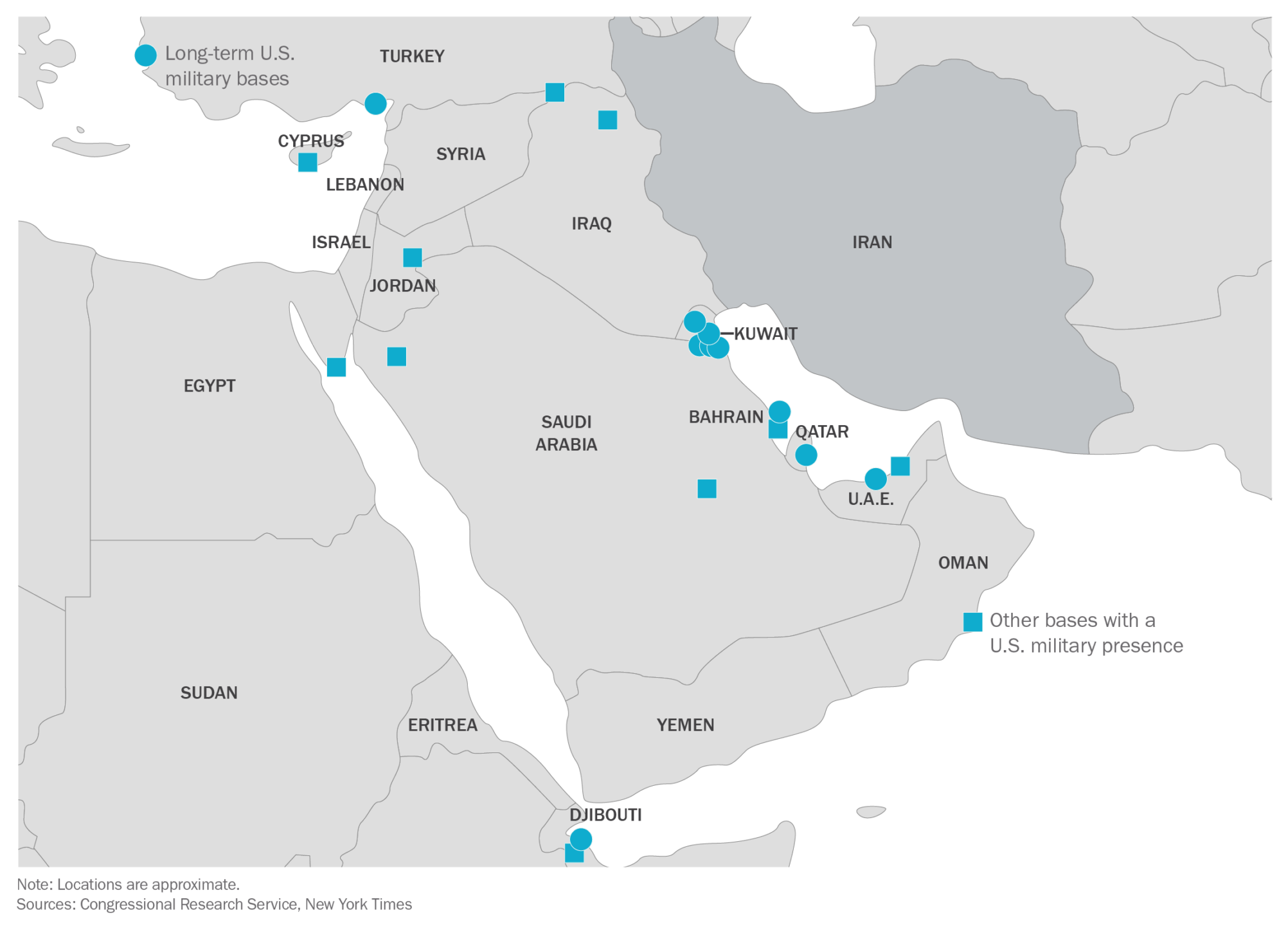
The United States has an extensive base presence in the Middle East that hosts around 50,000 military personnel, far more than is needed to defend its interests.
The Middle East region is also home to a range of valuable U.S. military assets, including at least four of the U.S. military’s seven deployed THAAD batteries, multiple Patriot systems, and usually four to six rotational fighter squadrons (though this number might increase to eight).11Stephen Losey, “Here Are the Fighter Squadrons Currently in the Middle East,” Air Force Times, February 4, 2020, https://www.airforcetimes.com/news/your-air-force/2020/02/04/here-are-the-fighter-squadrons-currently-in-the-middle-east/; “Here’s a Look at the U.S. Military Presence in the Middle East,” Arab News, September 30, 2024, https://www.arabnews.com/node/2573426/middle-east; Andrew Feickert, “The Terminal High Altitude Area Defense (THAAD) System,” Congressional Research Service, CRS no. IF12645, June 23, 2026, https://www.congress.gov/crs-product/IF12645. There is also usually a carrier strike group operating in the Middle East region, sometimes two or even three on rare occasions, which can add 7,500 or more personnel each. Additional warships executing the naval blockade against Iran will temporarily inflate these numbers.12Ferragamo et al., “U.S. Forces in the Middle East”; “Here’s a Look at the U.S. Military Presence in the Middle East”; Joe Costa, Theresa Luetkefend, and Moss Gillespie, “Tracking U.S. Military Assets in the Iran War,” Atlantic Council, updated May 15, 2026, https://www.atlanticcouncil.org/commentary/trackers-and-data-visualizations/tracking-us-military-assets-in-the-iran-war/.
The United States thus has a large military presence in the Middle East even during peacetime. Yet unlike in other regions where it has a web of codified security treaties, in the Middle East the United States has only security commitments formed through executive agreements, executive orders, or memoranda of understanding. These commitments are generally more flexible and less binding. They are easier to break or change, and what they demand of the United States is generally less extensive.
The U.S. security commitment to Israel, for instance, originated in a Memorandum of Agreement signed in 1975 (alongside the Sinai II agreement), which states that the United States has a “commitment to the survival and security of Israel” and will “make every effort to be fully responsive” to Israel’s security needs. It pledges to “consult promptly” with Israel’s government to determine how to respond to a threat from another world power as long as the response accords with U.S. “constitutional practices.”13“Memoranda of Agreement,” in Foreign Relations of the United States, 1969–1976, vol. 26, Arab-Israeli Dispute, 1974–1976, U.S. Department of State, https://history.state.gov/historicaldocuments/frus1969-76v26/d227. This is, at best, a vague commitment to assist Israel if it is attacked, which is far from a meaningful guarantee of military action. In recent decades, the United States and Israel have signed Memoranda of Understanding, which leave intact the original, limited U.S. commitment while laying out details of U.S. military assistance over the subsequent 10 years.14“U.S. Relations with Israel,” U.S. Department of State, January 20, 2021, https://2021-2025.state.gov/u-s-relations-with-israel/. While Israel today arguably has a U.S. security guarantee more robust than that enjoyed by NATO allies, that is a function of U.S. politics, not of any formal agreement.15“U.S. Security Cooperation with Israel,” U.S. Department of State, April 25, 2025, https://www.state.gov/u-s-security-cooperation-with-israel.
The United States also has executive agreements (with foreign governments) and executive orders (instructions to other U.S. government agencies) extending security commitments to Bahrain, signed in 2023, and Qatar, signed in 2025. Under the Bahrain executive agreement, the United States promises to work with Bahrain to “deter and confront any external aggression against the territorial integrity of any of the Parties.”16“U.S.-Bahrain Comprehensive Security Integration and Prosperity Agreement,” U.S. Embassy in Bahrain, September 13, 2023, https://bh.usembassy.gov/u-s-bahrain-comprehensive-security-integration-and-prosperity-agreement/. This falls far short of an Article 5-style commitment, and as an executive agreement, could be repealed by a president at any time; it has never been codified by Congress. In the Qatar executive order, the United States promises to “guarantee the security and territorial integrity of the State of Qatar against external attack” and in the event of an attack to take “all lawful and appropriate measures—including diplomatic, economic, and, if necessary, military—to defend the interests of the United States and of the State of Qatar.”17“Assuring the Security of the State of Qatar,” Executive Order 14353, White House, September 29, 2025, https://www.whitehouse.gov/presidential-actions/2025/09/assuring-the-security-of-the-state-of-qatar/. This is rhetorically more expansive than the commitment offered to Bahrain, but again it was not approved by Congress. In practice, U.S. support to Qatar has been much narrower.
Beyond these commitments, the United States has defense cooperation agreements and access and basing permissions from other countries across the region and sells billions of dollars in defense equipment each year to its Gulf State partners.18Jeremy M. Sharp, “The United Arab Emirates (UAE): Issues for U.S. Policy,” Congressional Research Service, CRS no. RS21852, September 30, 2026, https://www.congress.gov/crs-product/RS21852; Christopher M. Blanchard, “Saudi Arabia: Background and U.S. Relations,” Congressional Research Service, CRS no. RL33533, October 2, 2023, https://www.everycrsreport.com/reports/RL33533.html. Many of these countries view bases on their soil as a kind of security guarantee, hoping that if they are attacked, the United States will defend them, if only to defend U.S. bases.
This notion was punctured when Operation Epic Fury began. Though U.S. forces continued to defend U.S. personnel and bases from Iranian drone and missile attacks, America’s Gulf partners often received limited help in countering Iranian drones and missiles aimed at other targets, including energy and civilian infrastructure. They also received little or no resupply of critical air defense missiles.19Adam Rasgon, “Gulf Countries Confront Questions about Relying on U.S. for Protection,” New York Times, June 15, 2026, https://www.nytimes.com/2026/06/15/world/middleeast/gulf-iran-war-us.html. Some countries in the region are hopeful they might eventually get a more binding security guarantee from the United States. Saudi Arabia has been after one for years but has been unwilling to meet the U.S. demand that it first normalize ties with Israel in the absence of a clear roadmap for Palestinian statehood.20William Walldorf, “Just Stay Out: Rejecting the Saudi-Israeli Grand Bargain,” Defense Priorities, November 26, 2024, https://www.defensepriorities.org/explainers/just-stay-out-rejecting-the-saudi-israeli-grand-bargain/.
The U.S. military footprint in the Middle East is thus extensive. Its presence has endured and is central to the region’s security architecture. However, as the first half of 2026 showed (and as has been demonstrated repeatedly in recent decades), the United States is not always a stabilizing force in the region, nor do U.S. military activities in the region always serve U.S. interests. It is well past time for a change.
U.S. interests in the Middle East
In general, the United States should aim for a Middle East posture that is minimally sufficient to protect its core interests. But what are those interests?
As in other regions, the use of U.S. military power in the Middle East should support two primary objectives. The first is to ensure the physical security of the U.S. homeland. The second is to protect U.S. economic prosperity by making sure the United States has access to key waterways and markets when required and that no other country can dictate the terms of U.S. economic activity in the region. In practice, this means the United States prefers a situation in which no other power (within or outside of the region) can shut it out of regional markets and supply chains.
Notably, this list does not include the defense of allies or partners in the region. U.S. interests may sometimes overlap with those of these countries, but they are not the same. The United States does not need Israel to be secure to protect its core interests, for example.
The list also does not include a U.S. interest in regional stability per se. Advocates of maintaining the U.S. military presence in the Middle East often argue that U.S. forces are necessary to prevent regional rivalries from erupting into conflicts or to deter the emergence of violent militant groups. There is little evidence that U.S. military forces directly prevent these outcomes or that they are stabilizing in a more general sense. Most types of instability in the Middle East are irrelevant to U.S. interests. The U.S. response to any crisis should thus rest on whether one of its two primary interests is at stake.
Protecting these two primary U.S. interests is an achievable goal that requires very little U.S. military power. For starters, there are no real threats to the U.S. homeland in the Middle East. Policymakers have long held up the risk of international terrorism aimed at the United States, but while groups like ISIS and al-Qaeda may once have posed a threat, they are not currently capable of launching coordinated attacks on the U.S. homeland.21Alexander Palmer et al., “Global Terrorism Threat Assessment 2026,” Center for Strategic and International Studies, May 26, 2026, https://www.csis.org/analysis/global-terrorism-threat-assessment-2026.
Moreover, a review of past military-led counterterror operations suggests that they are largely ineffective at rooting out or controlling the spread of militant groups. In Africa, for instance, the United States has spent 20 years and billions of dollars chasing terrorist organizations, only to see terrorism across the continent increase.22A. Trevor Thrall and Erik Goepner, “Step Back: Lessons for U.S. Foreign Policy from the Failed War on Terror,” Cato Institute, Policy Analysis No. 814, June 26, 2017, https://www.cato.org/policy-analysis/step-back-lessons-us-foreign-policy-failed-war-terror. Afghanistan is another case in point. Opponents of the plan to withdraw U.S. forces from Afghanistan argued that it would lead to a surge in terrorism directed at the United States. It did not.23Rosemary Kelanic, “Turns Out Leaving Afghanistan Did Not Unleash Terror on U.S. or Region,” Responsible Statecraft, August 28, 2025, https://responsiblestatecraft.org/taliban-isis-k-attacks/.
For two decades now, the United States has successfully managed terrorism as a law enforcement challenge, relying on intelligence to uncover plots and arrest would-be perpetrators before serious attacks occur. In many cases, these intelligence operations and arrests occur in cooperation with foreign governments, a helpful type of partnership that should continue.24James Carafano, Jessica Zuckerman, and Jena Baker McNeill, “39 Terror Plots Foiled Since 9/11: Examining Counterterrorism’s Success Stories,” Heritage Foundation, May 20, 2011, https://www.heritage.org/terrorism/report/39-terror-plots-foiled-911-examining-counterterrorisms-success-stories; Erik J. Dahl, “The Plots that Failed: Intelligence Lessons Learned from Unsuccessful Terrorist Attacks Against the United States,” Studies in Conflict & Terrorism 34, no. 8 (2011): 621–648, https://doi.org/10.1080/1057610X.2011.582628; William Braniff, “From 9/11 to Today: The Evolution of U.S. Terrorism Prevention,” Homeland Security Today, September 11, 2025, https://www.hstoday.us/featured/terrorism-prevention-in-the-united-states-since-9-11/. This is the right way to approach the problem and does not create demands for a large military presence abroad.
When the United States has identified a terrorist cell or leader overseas that it deems a real threat to its interests, the U.S. military has usually been able to eliminate the problem through targeted operations. Arguably, it has relied on this tool too often and in cases where U.S. interests were not really at risk, but the broader point holds. Local partners in places like Iraq and Syria have also become adept at managing challenges posed by isolated violent actors without U.S. assistance and again as a law enforcement challenge.25Charles Lister, “The Collapse of ISIS in Syria,” Middle East Institute, June 8, 2026, https://mei.edu/publication/the-collapse-of-isis-in-syria/; Daniel DePetris, “Leaving Iraq Serves U.S. Interest,” Defense Priorities, June 9, 2021, https://www.defensepriorities.org/briefs/leaving-iraq-serves-us-interest/. The United States simply does not need large numbers of military forces stationed in the Middle East to protect its homeland against terrorism.
The other commonly mentioned threat to the U.S. homeland is Iran. The argument is that the United States needs a presence in the Middle East to deter Iran from attacking directly or through its proxies.
The relationship between Tehran and Washington is antagonistic, but Iran does not pose a direct threat to the U.S. homeland.26Rosemary Kelanic, “A Security Dilemma Made Worse: How War With Iran Backfired,” Defense Priorities, August 5, 2026, https://www.defensepriorities.org/explainers/a-security-dilemma-made-worse-how-war-with-iran-backfired/; Matthew Levitt, “Between Intent and Capability: Assessing the Lack of Iranian Attacks on the U.S. Homeland,” War on the Rocks, May 6, 2026, https://warontherocks.com/between-intent-and-capability-assessing-the-lack-of-iranian-attacks-on-the-u-s-homeland/. Its missiles cannot range the United States. Its proxies are unable to attack the United States.27Levitt, “Between Intent and Capability.” Some U.S. citizens and military personnel have been killed by Iranian proxies like Hezbollah, but most civilian deaths have been collateral damage in attacks aimed at Israel or other targets, while military deaths have resulted from U.S. interference in wars in Lebanon or Iraq. This does not, of course, justify violence against Americans, but it does suggest that the U.S. presence creates security challenges rather than solving them.
Members of the Trump administration have asserted that Iran is a threat to the United States because it can strike U.S. military bases in the region, but this is only a valid argument if those bases are required for the protection of core U.S. interests. It is not clear this is the case, and this paper argues it is not. If Iran does not pose a threat to the U.S. homeland, then the bases are not necessary to “deter Iran from striking the homeland” and should be closed. Similarly, if the presence of U.S. military forces intended to deter Iran instead ends up becoming a target for Iran that requires U.S. military protection (as has occurred in 2026), this suggests a strategic failure and the need for a new approach.
U.S. intelligence has indicated repeatedly that Iran does not have a nuclear weapon and is not actively pursuing one but rather has used latency as a tool of deterrence.28Kelanic, “A Security Dilemma Made Worse”; Matthew Lee, “U.S. Intelligence Assessment Says Iran Not Currently Developing Nuclear Weapons,” Associated Press, July 10, 2023, https://apnews.com/article/us-iran-nuclear-intelligence-b506d130e474c00f6bd653d3d5a8d31a. If Iran did try to race for a bomb, which it might after the 2026 war, it would likely take several years, and even then Iran would not have a launch vehicle to strike the United States.29Kelanic, “A Security Dilemma Made Worse”; Lee, “U.S. Intelligence Assessment Says.” Iranian leaders also would not use a nuclear weapon in this way, given that the much larger U.S. nuclear arsenal would ensure their country’s destruction.
Iranian cyberattacks against the United States could pose a threat, especially those that target critical infrastructure, as is suspected to have happened in the summer of 2026. But then the solution is better defenses at home. A forward military presence does not stop cyberattacks.30Emily Harding et al., “Mapping Iranian Cyberattacks on U.S. Water Systems,” Center for Strategic and International Studies, August 18, 2026, https://www.csis.org/analysis/mapping-iranian-cyberattacks-us-water-systems.
When pressed, many Iran hawks will eventually admit that the focus on Iran is not about defending U.S. national security but helping Israel’s self-defense. Secretary of State Marco Rubio himself has made this argument.31“Secretary of State Marco Rubio Remarks to Press,” U.S. Department of State, March 2, 2026, https://www.state.gov/releases/office-of-the-spokesperson/2026/03/secretary-of-state-marco-rubio-remarks-to-press-6. However, Israeli and U.S. interests are not the same, as Operation Epic Fury showed.32Jim Zanotti, “Israel: Major Issues and U.S. Relations,” Congressional Research Service, CRS no. R44245, July 2, 2026, https://www.congress.gov/crs-product/R44245. Throughout the war, it has been clear that while Israel was aiming at regime and even state collapse, U.S. interests and goals were narrower. The two countries sometimes clashed, such as when Israel expanded its attacks on Iranian leadership and oil infrastructure.33Eric Lob, “The Diverging U.S. and Israeli Goals in Iran Are Making the Endgame Even Murkier,” Carnegie Endowment for International Peace, March 20, 2026, https://carnegieendowment.org/emissary/2026/03/iran-us-israel-goals-diverge-oil-leaders.
A threat to Israel is not a threat to the U.S. homeland, and U.S. national security does not depend on Israel’s security. By the criteria set out in this paper, the defense of Israel is not a legitimate reason to keep U.S. military forces in the Middle East. In any case, Israel has plenty of capability to defend itself, including a nuclear deterrent.
If threats to the U.S. homeland from the Middle East are few, what about threats to U.S. economic interests? Here, the picture is more complex, but the answer is largely the same. The biggest potential threat in this area would be the rise of a hegemon able to control the region in ways that affect U.S. economic interests, including dictating the terms of trade (such as oil prices) or shutting off the United States from key supply chains or resources. A similar set of threats might emerge if a regional war resulted in the shutdown of oil production for an extended period or caused a global price spike that threatened U.S. economic interests.
But both of these outcomes are unlikely for a number of reasons. First, U.S. economic interests in the region are very limited, so crises that would require military intervention are unlikely. The United States is still affected by changes in oil supply that can drive up gas prices and cause recessions (even if it imports less oil and gas than in the past).34Charles L. Glaser and Rosemary A. Kelanic, “Getting Out of the Gulf: Oil and U.S. Military Strategy,” Foreign Affairs 96, no. 1 (January/February 2017): 122–131, https://www.jstor.org/stable/44823237. The United States still looks to the Gulf States for fertilizer and other commodities, and has shown interest in investing more heavily in the region’s technology and AI sectors.35Rosemary Kelanic, “Trump Is Making Jimmy Carter’s Mistake on Iran and Oil,” New York Times, March 9, 2026, https://www.nytimes.com/2026/03/09/opinion/iran-war-trump-oil-prices.html; Nicolas Loris, “Does the United States Still Need Middle East Oil?,” Heritage Foundation, January 17, 2020, https://www.heritage.org/energy/commentary/does-the-united-states-still-need-middle-east-oil. Still, even in a worst-case scenario, the United States could likely find replacements for these commodities and opportunities. The United States can also mitigate its vulnerability to oil supply shocks and price increases by investing in alternative pipelines, deepening reserves, or diversifying its energy at home.36David B. Roberts, “What Alternatives Do Gulf States Have to the Strait of Hormuz?,” The Conversation, April 30, 2026, https://theconversation.com/what-alternatives-do-gulf-states-have-to-the-strait-of-hormuz-281805.
Second, and more to the point, the rise of a regionally dominant power that forecloses U.S. economic access is extremely unlikely. There is simply no viable contender within the region. Some have argued that Israel aims for a position of regional hegemony, but its ability to achieve this status is questionable.37Stephen M. Walt, “Israel Can’t Be a Hegemon,” Foreign Policy, June 16, 2025, https://foreignpolicy.com/2025/06/16/israel-iran-war-middle-east-hegemon/; Hamza Meddeb and Mohamed Ali Adraoui, “The Tragedy of Middle Eastern Politics,” Carnegie Endowment for International Peace, December 22, 2025, https://carnegieendowment.org/research/2025/12/the-tragedy-of-middle-eastern-politics. Israel may have the strongest military in the region, but its ability to act with impunity exists only due to its backing from the United States. It is far too small (its population is around 10 million, its economy only half the size of those of regional leaders like Saudi Arabia and Turkey, and its military depth insufficient) to take on a coalition of regional rivals, even if it does have some latitude vis-à-vis its neighbors.38Walt, “Israel Can’t Be a Hegemon”; Meddeb and Adraoui, “The Tragedy of Middle Eastern Politics”; Aaron David Miller and Steven Simon, “The U.S. Must Now Reckon with a Hegemon in the Mideast: Israel,” New York Times, April 14, 2025, https://www.nytimes.com/2025/04/14/opinion/israel-palestinians-syria-lebanon.html.
Iran has one of the strongest military forces in the region (behind Israel and probably Turkey), but it seems an unlikely hegemonic contender, especially after the 2026 war significantly set back its capabilities. Iran’s economy has historically been one of the largest in the region, but U.S. sanctions have taken their toll, and the country faces massive inflation and growing debt. Iran’s regional rivals like Saudi Arabia and the UAE are also unlikely to accept its regional dominance, pushing back against any attempt by Tehran to assert it.39Ali Fathollah-Nejad, “The Iranian-Saudi Hegemonic Rivalry,” German Council on Foreign Relations, October 26, 2017, https://dgap.org/en/research/publications/iranian-saudi-hegemonic-rivalry; “The Middle East’s New Battle Lines,” European Council on Foreign Relations, May 2018, https://ecfr.eu/special/battle_lines/uae.
Some have suggested that Iran’s ability to disrupt traffic through the Strait of Hormuz will allow it to become the region’s most powerful country, but this too seems unlikely.40Yaroslav Trofimov, “Aspiring to Regional Domination, Iran Is Ready to Escalate Over Hormuz,” Wall Street Journal, July 11, 2026, https://www.wsj.com/world/middle-east/https-www-wsj-com-world-middle-east-iran-deal-strait-of-hormuz-b027c30f-580ee99f; Robert A. Pape, “Iran and the New Rules of Global Power,” Foreign Affairs, July 24, 2026, https://www.foreignaffairs.com/united-states/iran-and-new-rules-global-power-pape. Iran’s geographic position is advantageous when it comes to control of the strait, and Tehran may be able to use this advantage for leverage or economic gain in the near and medium terms. But Hormuz’s strategic value has a limited shelf life. Already, countries are diversifying away from their dependence on the strait. U.S. support is allowing tankers to move through the strait, if at higher cost than before.41K. L. Viswanathan, “Iran’s Hormuz Card Has a Shelf Life: Energy Diversification Will Reduce Its Strategic Leverage over Time,” South Asia Monitor, July 12, 2026, https://www.southasiamonitor.org/geoeconomics-trade-and-development/irans-hormuz-card-has-shelf-life-energy-diversification-will; “How Long Can Iran Weaponize Hormuz?” The Economist, August 3, 2026, https://www.economist.com/middle-east-and-africa/2026/08/03/how-long-can-iran-weaponise-hormuz; Dario Sabaghi, “The Middle East’s Race to Bypass the Strait of Hormuz,” New Arab, September 17, 2026, https://www.newarab.com/analysis/middle-easts-race-bypass-strait-hormuz. Over time, Iran’s leverage will decrease. Control of the Strait of Hormuz alone, then, cannot serve as a viable avenue for hegemony.
Turkey is another possible contender for hegemon, with a large economy and sophisticated military, but here the question is one of intent. Ankara has shown little interest in dominating the Middle East and seems more focused on solidifying its role as a hedger, able to work with Europe, Russia, Iran, and others. Though its new agreement with Saudi Arabia and Pakistan stands to increase its regional influence (and ability to balance Israel and Iran), Turkey is unlikely to act as a security provider. Instead, the agreement suggests a coalition-based approach.42“Saudi Arabia, Turkey, and Pakistan Agree to Establish Secretariat under Joint Defense,” Reuters, August 31, 2026, https://www.reuters.com/world/middle-east/saudi-arabia-turkey-pakistan-agree-establish-secretariat-under-joint-defence-2026-08-31/; Steven A. Cook, “The U.S.-Led Middle East Order Is Over. The Mecca Agreement Proves It,” Council on Foreign Relations, August 13, 2026, https://www.cfr.org/articles/the-u-s-led-middle-east-order-is-over-the-mecca-agreement-proves-it.
Just as there are no real hegemonic contenders inside the Middle East, there are also no real contenders outside of it. Russia, still tied up in Ukraine, does not have the military power or diplomatic bandwidth to make a play for regional dominance now, and after the war its focus will be on reconstitution and rebuilding its political influence in its near abroad.43“A Sideshow: How the War in Ukraine Has Undermined Russia’s Influence in the Middle East,” New Eurasian Strategies Centre, October 17, 2025, https://nestcentre.org/a-sideshow/; Nikolay Kozhanov, “Russia Is Weakened, but Its Influence in the Middle East Should Not Be Underestimated,” Chatham House, December 11, 2025, https://www.chathamhouse.org/2025/12/russia-weakened-its-influence-middle-east-should-not-be-underestimated. China, on the other hand, has an interest in increased trade in the Middle East, and Chinese firms compete with U.S. ones there. But China has limited capability and no evident intent to become the region’s security guarantor.44Rosemary Kelanic, “China Can’t Dominate the Middle East,” Defense Priorities, May 5, 2025, https://www.defensepriorities.org/explainers/china-cant-dominate-the-middle-east/. The United States might find ways to better compete for Middle East markets, but it does not need military power for that, let alone to forestall the rise of a Chinese hegemon.45Jon Hoffman, “Aimless Rivalry,” Cato Institute, Policy Analysis no. 1000, July 10, 2025, https://www.cato.org/policy-analysis/aimless-rivalry.
Even without a hegemonic contender, there is still the possibility that weak actors could cut off access to trade routes and maritime chokepoints in the Middle East, as the Houthis did to the Bab el-Mandeb in 2023–2024, causing disruptions to oil and commodity markets.46Noam Raydan and Farzin Nadimi, “Are the Houthis Attacking Ships in the Mediterranean?,” Washington Institute for Near East Policy, July 3, 2024, https://www.washingtoninstitute.org/policy-analysis/are-houthis-attacking-ships-mediterranean; “Conflict in Yemen and the Red Sea,” Council on Foreign Relations, updated October 12, 2026, https://www.cfr.org/global-conflict-tracker/conflict/war-yemen. For the United States, such obstructions would pose a challenge but not an existential threat. The United States was able to weather the Red Sea disruptions both because there was an alternative route and because it does not rely heavily on that chokepoint for commercial trade.47Thibault Denamiel et al., “The Global Economic Consequences of the Attacks on Red Sea Shipping Lanes,” Center for Strategic and International Studies, January 22, 2024, https://www.csis.org/analysis/global-economic-consequences-attacks-red-sea-shipping-lanes; Peter Eavis, “Why the Shipping Industry Isn’t Rushing Back to the Red Sea,” New York Times, March 21, 2025, https://www.nytimes.com/2025/03/21/business/economy/red-sea-shipping-houthis.html. The near-closure of the Strait of Hormuz has been more damaging, driving up oil prices due to disruptions in the global market, but the U.S. economy has been largely robust to this shock.48Lutz Kilian, Michael Plante, and Alexander W. Richter, “U.S. Economy Less Vulnerable to Geopolitical Oil Price Shocks than in the Past,” Federal Reserve Bank of Dallas, June 23, 2026, https://www.dallasfed.org/research/economics/2026/0623; Danilo Leiva-León et al., “Reassessing the U.S. Economy’s Vulnerability to Oil Shocks,” Federal Reserve Bank of Boston, June 4, 2026, https://www.bostonfed.org/publications/current-policy-perspectives/2026/reassessing-us-economys-vulnerability-oil-shocks.aspx; Rebecca Geldard, “The Strait of Hormuz Crisis Affects More than Just Oil. Here Are 9 Other Commodities,” World Economic Forum, April 1, 2026, https://www.weforum.org/stories/supply-chains-and-transportation/beyond-oil-lng-commodities-impacted-closure-hormuz-strait/.
It is certainly in U.S. interests to keep these waterways open, and it might make sense to keep the capacity to rotate military forces into the region if needed to support the security of maritime transit. However, the goal of any operation would be narrowly focused on U.S. interests, securing windows of control that allow for the movement of cargoes core to the U.S. economy, rather than unconditional freedom of navigation for all states.
U.S. trade with global regions (in billions of dollars)
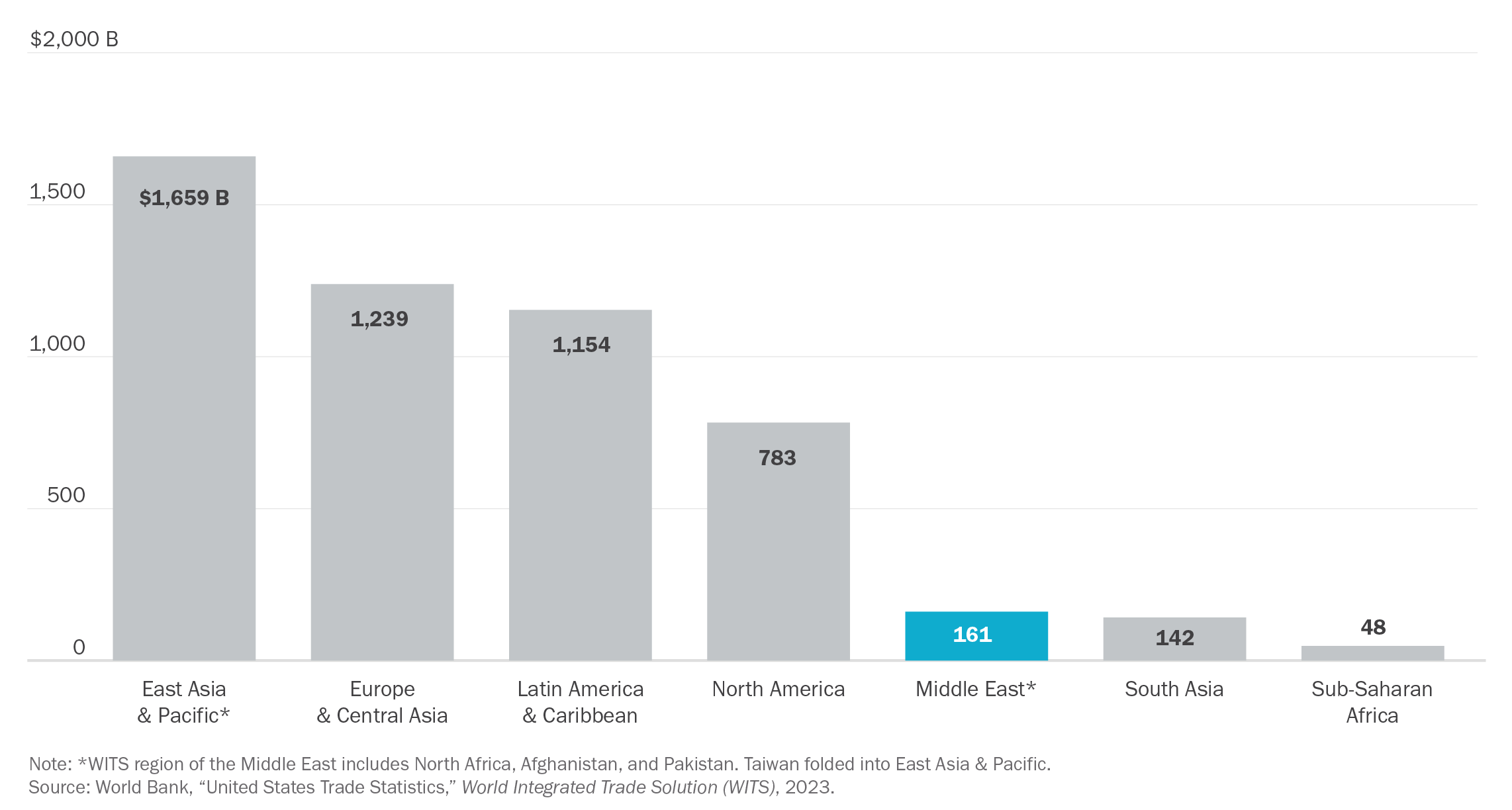
The United States has an interest in maintaining open trade routes in the Middle East, but it does the vast majority of its trade elsewhere, meaning economic obstructions are not existential threats.
There are two plausible situations in which a U.S. intervention might be needed. First, if an obstruction so disrupted oil markets that Washington decided it was necessary to conduct limited escort operations, as it has done in the Strait of Hormuz since April 2026, to ease pressure on supply and prices.49Barak Ravid, “U.S. Conducting Stealth Operation to Transport Oil Through Hormuz,” Axios, August 19, 2026, https://www.axios.com/2026/08/19/hormuz-iran-oil-gulf-trump. Such an operation would likely be sustainable on a temporary basis and would require access to some bases in the region. A better long-term strategy would, of course, be to reduce U.S. dependence on oil. Second, interdiction of other key commodities could become so acute as to pose challenges for U.S. industry, including fertilizer for farming or helium for medical use. The United States is resilient to such shocks, but it is possible that in an extreme case, a president might see the need for some limited U.S. intervention.50Isaac Kardon, “How America Lost Command of the Commons,” Foreign Affairs, June 9, 2026, https://www.foreignaffairs.com/united-states/how-america-lost-command-commons; Jennifer Kavanagh, “The U.S. Shouldn’t Rule the Seas Forever,” Foreign Policy, April 27, 2026, https://foreignpolicy.com/2026/04/27/iran-us-war-hormuz-strait-blockade-trade-maritime-navy-strategy/.
Still, in either case, the military forces required would be small in number. They could conduct operations from a few regional operating locations rather than permanent bases, and even from the U.S. homeland in the case of bomber flights. Aircraft carriers and other naval assets rotated into the region could support this goal but would not replace regional basing access entirely. Naval forces would need a local logistics and resupply hub, and although carrier-based airpower benefits from the mobility of the carrier itself, carrier runways cannot be easily repaired once damaged.
Most importantly, as demonstrated in 2026, the presence of large numbers of U.S. military forces and bases in the Middle East does not guarantee that sea lanes will remain open nor does it provide an easy way to re-open them following an interdiction. Arguments that U.S. personnel must stay to ensure open waterways are thus unwarranted. In fact, some might argue it is the presence of U.S. military forces that has caused these interdictions of traffic. Military forces can act to relieve pressure, but only diplomatic approaches can keep these commercial routes accessible. The United States should reduce its dependence on the Strait of Hormuz, diversify suppliers for key inputs to the U.S. economy, and encourage regional exporters to build redundancy by relying more heavily on alternative transport routes.51Huzeir Ezekiel Dzulhisham, “Alternatives to Hormuz: How to Export Oil and Gas from the Persian Gulf,” S. Rajaratnam School of International Studies, RSIS Commentary CO26093, April 29, 2026, https://rsis.edu.sg/rsis-publication/rsis/co26093/; Shannon K. O’Neil, “The Globalization Myth,” interview by James M. Lindsay, President’s Inbox, podcast, Council on Foreign Relations, October 18, 2022, https://www.cfr.org/podcasts/presidents-inbox/globalization-myth-shannon-k-oneil.
For the same reason, arguments that the U.S. military presence is needed in the region to provide “stability” fall flat.52Mike Sweeney, “A Plan for U.S. Withdrawal from the Middle East,” Defense Priorities, December 21, 2020, https://www.defensepriorities.org/reports/a-plan-for-us-withdrawal-from-the-middle-east/. There is little evidence that the United States has been a stabilizing force in the region or helps to manage regional rivalries. The United States has instead been responsible for at least two wars (Iraq in 2003 and Iran in 2026) and the rise of several terrorist groups, including ISIS (which resulted in a U.S. intervention of its own). It seems likely the region can do at least as well on its own.
The bottom line is that what is required in the Middle East to protect core U.S. interests is quite limited. There are few if any major threats to the U.S. homeland from the Middle East and there are few threats to limited U.S. economic interests. The next section will consider the U.S. military alliances, basing, and posture required to support these narrow tasks.
What military commitments are needed to protect U.S. interests?
The limited scope of U.S. interests at stake in the Middle East suggests that U.S. commitments and posture in the region must also be changed.
Partners
The narrow U.S. interests defined here mean that none of the informal commitments the United States has in the Middle East should be maintained. The most substantial, and controversial, U.S. partner, Israel, is no exception. U.S. financial and military support for Israel is unnecessary to protect U.S. economic interests and counter terrorism. One could argue that U.S. relations with Israel are now counterproductive in both areas, since support for Israel may encourage terrorism directed at the United States while U.S.-funded or supported Israeli wars have led to Houthi and Iranian attacks on shipping and produced a near-closure of the Strait of Hormuz.
The United States therefore should end its security commitment to Israel, eliminating the $3.8 billion in aid it gives each year and making clear that in the future, U.S. military support, direct and indirect, will depend entirely on U.S. interests. This would mean terminating and not renewing the current MOU with Israel without replacing it with other forms of aid or defense integration. It would also mean communicating to Israel the limits of U.S. support and making clear that Jerusalem should not assume that the United States will provide direct military assistance in the future.53Ellen Ioanes, “House-Passed Bill Includes Controversial U.S.-Israel Defense Measure,” Military Times, July 29, 2026, https://www.militarytimes.com/news/pentagon-congress/2026/07/29/house-passed-defense-bill-includes-controversial-us-israel-tech-measure/. Of course, this would not rule out the possibility of a crisis in which U.S. leaders decided there was a U.S. interest worth offering Israel assistance. But a step back from Israel would set more rigid boundaries on the bilateral relationship.
While providing for Israel’s security is not a goal that should drive U.S. force posture, it should be noted that this shift would not endanger Israel. It is true that Israel relies heavily on the U.S. for air defense, weapons, and intelligence sharing, and for access to specialized U.S. capabilities, including refueling. But Israel needs U.S. support most for offensive operations at a distance, as against Iran, rather than defense against aggression. And Israel, with a sophisticated military built with hundreds of billions of dollars in U.S. assistance and a nuclear triad to deter attacks, is quite capable of defending its territory.54“Israel,” Center for Arms Control and Non-Proliferation, accessed October 18, 2026, https://armscontrolcenter.org/countries/israel/; “U.S. Security Cooperation with Israel.”
Without U.S. backing, Israel would struggle to maintain the aggressive military operations it has favored in recent years. Reduced U.S. support could provide an incentive for Israel to seek détente with nearby states rather than trying to destabilize them and create buffer zones of failed states on its borders. This would decrease the demands of its self-defense and reduce Israel’s appeals for support from the United States. Limiting U.S. support to Israel might be self-reinforcing.
This constrained U.S. approach to military partnerships in the region should not be limited to Israel. The United States should end executive agreements that include promises (no matter how empty) of U.S. support to a country’s national defense, including to Bahrain and Qatar, as well as tacit commitments made by current and past administrations. That the United States does not actually intend to fight for Saudi Arabia, the UAE, or other Gulf States should be obvious since, as noted above, Washington did little to help these countries defend their civilian and energy infrastructure from Iranian missile attacks. Similarly, when the Houthis resumed their attacks on Saudi Arabia in the fall of 2026, the United States refused pleas to get directly involved.55Nahal Toosi, “Why Trump May Want to Avoid Messing with the Houthis,” Politico Magazine, October 3, 2026, https://www.politico.com/news/magazine/2026/10/03/trump-houthis-restraint-01104880. Formalizing this position would be in U.S. interests as it recalibrates its posture in the region.
Most importantly, Washington will need to communicate to all regional players that it will no longer serve as the region’s security guarantor or balancer of last resort. This means that the Gulf States and Israel will be better off arming themselves and working to build diplomatic ties with Iran to prevent war—that is, to balance defense and accommodation. This will take time, as it will mean overcoming long-lasting regional rivalries, but there are already signs that countries like Saudi Arabia are engaging with Iran with an eye toward future regional stability.56“Saudi Arabia Intensifies Engagement with Iran to Defuse War,” Bloomberg, March 6, 2026, https://www.bloomberg.com/news/articles/2026-03-06/saudi-arabia-has-intensified-direct-line-to-iran-to-defuse-war. The United States does not need to wait to adjust its commitments or posture until the region fully adapts to this new reality. In fact, changes to the U.S. military footprint may be required to convince countries that the United States is serious about leaving.
Posture and basing
With changes in commitments, changes in posture and basing will also be both possible and necessary. Currently, U.S. military forces based forward offer more risk than reward. In the 12-Day War and Operation Epic Fury, the United States found that its bases in the region were not that useful because they could not be properly defended, were too damaged, or regional partners denied access permissions.57Jennifer Kavanagh and Dan Caldwell, “The Iran Strike Shows We Don’t Need Bases in the Middle East,” Washington Post, June 28, 2025, https://www.washingtonpost.com/opinions/2025/06/28/iran-strike-american-military-vulnerability/; Helene Cooper and Eric Schmitt, “Iran’s Attacks Force U.S. Troops to Work Remotely,” New York Times, March 25, 2026, https://www.nytimes.com/2026/03/25/us/politics/iran-us-bases.html. During Operation Midnight Hammer, which saw U.S. forces strike Iranian facilities in 2025, many Gulf States restricted how Washington could use bases, forcing the United States to rely on fighter jets from Europe and bombers based in the homeland. Though this may not have measurably affected U.S. operations in this short campaign, it was a reminder that bases in the region offer fewer operational benefits but create significant liabilities when adversaries like Iran look to retaliate.58Benjamin Friedman, “The Proliferation of Accuracy and Vulnerability of Military Bases,” Defense Priorities, September 24, 2026, https://www.defensepriorities.org/explainers/the-proliferation-of-accuracy-and-vulnerability-of-military-bases/.
In Operation Epic Fury, U.S. bases in countries across the Middle East came under heavy Iranian fire, forcing operations to move to hotels and elsewhere. CENTCOM had to move assets like aircraft and warships out of Bahrain, the UAE, and Kuwait, positioning them farther west in Jordan and Saudi Arabia.59Steve Walsh, “Months after Being Evacuated from Bahrain, Military Families Await Their Next Move,” NPR, August 12, 2026, https://www.npr.org/2026/08/12/nx-s1-5921392/months-after-being-evacuated-from-bahrain-military-families-await-their-next-move; Noah Robertson, John Hudson, and Susannah George, “Pentagon Weighing Smaller U.S. Military Presence in Gulf Once Iran War Ends,” Washington Post, August 18, 2026, https://www.washingtonpost.com/national-security/2026/08/18/pentagon-evaluating-smaller-us-military-presence-persian-gulf-after-iran-war/. Even these bases have since come under attack, as Iranian missiles and targeting have improved.60“Iran Sets Pace in War with Donald Trump,” Financial Times, August 1, 2026, https://www.ft.com/content/a29819ef-ffb9-4d2a-9925-e3d6e6e6e797?syn-25a6b1a6=1; David S. Cloud, “Jordan Is Learning Its U.S. Alliance Has a Price in the Iran War,” Wall Street Journal, August 2, 2026, https://www.wsj.com/world/middle-east/jordan-is-learning-its-u-s-alliance-has-a-price-in-the-iran-war-7ce9fd8b. This trend will likely continue both due to indigenous development and assistance from Russia and China.61Miles Johnson, Max Seddon, and Charles Clover, “Russia Secretly Helping Iran Develop Supersonic Cruise Missiles,” Financial Times, September 1, 2026, https://www.ft.com/content/6cf367bc-95b0-4f1f-b149-a25684adefc3?syn-25a6b1a6=1.
Bases that become missile targets during a conflict cannot help protect U.S. interests, especially if they are so vulnerable as to be largely unusable. Similarly, bases that must constantly be reinforced do more to harm U.S. security, by creating new burdens and requirements, than they do to advance it. The vulnerability of regional bases can be lessened by investing in hardening and better air defense or by dispersing forces, but doing so is costly. In the Middle East, this cost seems unjustified because the U.S. interests in the region are so narrow. Simply closing the bases is a better approach.
Neither of the tasks necessary to protect U.S. interests in the Middle East—responding to terrorist threats to the homeland and preserving limited U.S. economic interests—requires a large military footprint or extensive military bases. For the first objective, some intelligence assets based forward in the region for signals collection along with a small number of personnel would suffice for threat identification and tracking. These personnel might include several small Army units, or the United States could rely entirely on contractors or civilians from a domestic intelligence agency.
For the second objective, the United States might not need to keep military forces in the region on a permanent basis. A periodic air and naval presence should be sufficient to support limited escort operations for commercial ships or at least to provide intelligence and air defense support to oil tankers or other cargoes moving through contested waters in the case that a severe threat to U.S. interests emerged (at other points, no major operational presence would be required). The operation might look similar to what the United States is doing in the Strait of Hormuz, though regional powers might be more directly involved and take on greater roles.
To ensure this type of power projection and military support is possible, it would be useful to have at least some combat support and logistics personnel and systems based forward in the region and a few access locations (though not permanent U.S. bases) to serve as operational hubs. Having a very limited footprint of this type on a rotational basis could shorten the time to establish supply and communications lines in case they are needed. For both air and naval operations, the forward deployed element could be small, at most a few hundred personnel. These deployments could be rotational, increasing or decreasing slightly based on need. At some point, these forces might not be needed at all, and the United States could rely more heavily on regional partners. For now, they would serve as a useful hedge during a period of transition.
No bases in the region are “safe” from Iranian missiles, but there are locations that are relatively secure. When choosing which facilities to retain as access locations for operations, the United States should lean toward bases that are easier to defend.
U.S. forces should be removed from and bases closed in locations that are most vulnerable to Iranian strikes. This would include all bases in Kuwait, Qatar, the UAE, and Bahrain.62Jennifer Kavanagh and Dan Caldwell, “Aligning Global Military Posture with U.S. Interests,” Defense Priorities, July 9, 2025, https://www.defensepriorities.org/explainers/aligning-global-military-posture-with-us-interests/. These moves will be politically controversial, especially in the host countries, but they are strategically correct for the United States. During Operation Epic Fury in 2026, these bases suffered extensive damage and made the countries hosting them less safe rather than more. There may be specific objections to leaving Bahrain, which hosts the headquarters of the U.S. Fifth Fleet. However, during major crises in the region, the United States has been forced to move its ships out of Bahrain to other locations in the region. During Operation Epic Fury, the United States was forced to go further, relocating logistics all the way to Diego Garcia in the Indian Ocean.63John Ismay, “Navy Carrier’s Problems Are Tied to Attacks on U.S. Base Early in War,” New York Times, August 14, 2026, https://www.nytimes.com/2026/08/14/us/politics/uss-abraham-lincoln-trump-supplies-diego-garcia.html. Since these bases account for about 70 percent of U.S. personnel deployed in the region, closing them and redeploying personnel elsewhere would mark a substantial reduction in the U.S. military footprint.
Bases in Saudi Arabia are easier to defend but have still suffered significant damage and the loss of aircraft stationed on runways. These facilities host small numbers of personnel during peacetime and could be easily closed.
In contrast, bases in Jordan and Oman have been among the least targeted by Iranian missiles (though both have been struck and Jordan has seen U.S. casualties), Jordan because it is farther away and Oman because it hosts few personnel (which would remain true under the plan proposed here). Both offer strategic benefits geographically, with Oman sitting near but not inside the Persian Gulf and Jordan located in the far west of the Middle East.
Recommended U.S. access locations in the Middle East
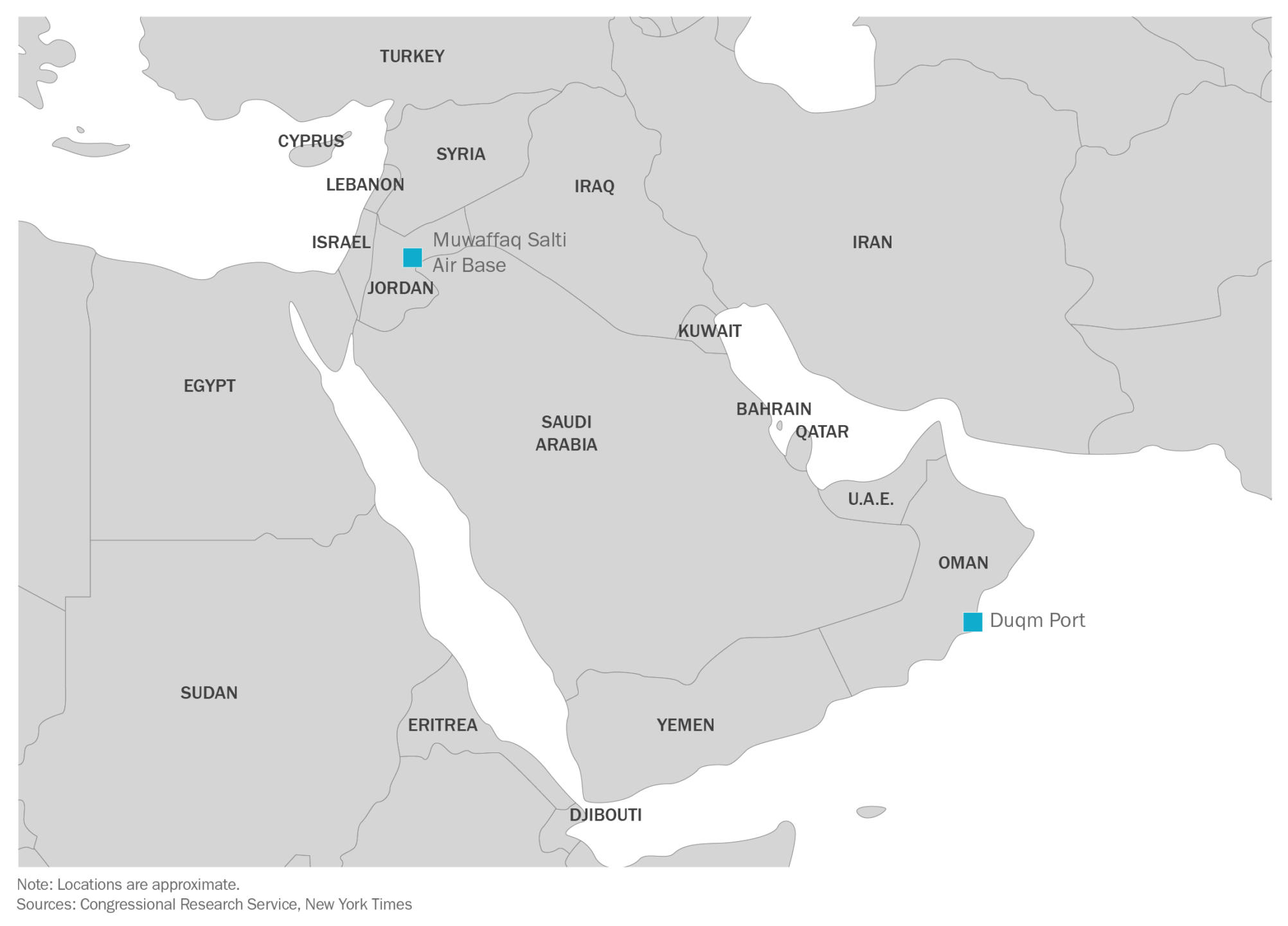
The United States needs to retain only two access points in the Middle East to protect its interests, at Muwaffaq Salti Air Base in Jordan and Duqm port in Oman.
To be useful in the future, any access location would need to be hardened, but the costs of these investments for just two bases would be reasonable. This would include building hardened aircraft shelters, protection for ships in port, and both counter-drone defenses and additional air defense assets (or at least moving these systems into the region when required). It would also mean thinking carefully about how and when to use these access locations, which assets to keep there, and when to rely on bombers flying from the United States and carrier-based airpower.
Carrier-based airpower comes with advantages and disadvantages for the missions outlined here. Because carriers are mobile, they may be more defensible than stationary bases, allowing for easier air support to escort operations. However, over time, as missiles get more accurate, this advantage may diminish.64Tim Griffiths, “The Survivability of the Aircraft Carrier,” Navy Lookout, May 12, 2025, https://www.navylookout.com/the-survivability-of-the-aircraft-carrier/; Daniel Cochran, “Will the Aircraft Carrier Survive? Future Air Threats to the Carrier (and How to Defend It),” Journal of the JAPCC 27 (December 2018), https://www.japcc.org/articles/will-the-aircraft-carrier-survive/. Runways on fixed bases can be repaired in a matter of hours, whereas carriers must be removed from the theater and can take months or years to re-enter service once they are damaged.65Armas Laupa, “Time Estimates to Repair Cratered Runways,” RAND Corporation, Report no. D-19937, 1970, https://www.rand.org/pubs/documents/D19937.html. For now, the U.S. military should keep both options open for the Middle East, with carriers available for temporary deployments and access options.
To meet the military requirements outlined above, the United States could retain two access locations:
- Oman’s Duqm port would become the new center of naval operations with a small command and logistical presence and the capabilities to support rotational deployments from U.S. warships, including resupply. This would be a much smaller command presence than is in the region today, at most a few hundred personnel during peacetime, to match the reduced scope of U.S. naval operations. Some intelligence assets could be based at this location as well.
- Muwaffaq Salti Air Base in Jordan would serve as the hub for U.S. air operations in the region, hosting intelligence and reconnaissance aircraft and capabilities, combat support, air defense, and other key assets. It could also host fighter squadrons when appropriate. Drone operations could be coordinated out of this location. Investments in hardening could help reduce the risk of damage from future Iranian attacks.
The United States would also close its drone base and drone location in Djibouti, which would no longer be necessary for operations in the Middle East and would not be needed in Africa given the limited U.S. security and economic interests in that region.
Some might argue that instead of Jordan and Oman, the United States should make use of bases inside Israel, which is farther west and better protected by air defenses.66Michael Makovsky et al., “Shifting the Center of Gravity: Transforming the U.S.-Israel Security Partnership,” Jewish Institute for National Security of America, August 2026, https://jinsa.org/jinsa_report/shifting-the-center-of-gravity/. This is a bad idea. First, it would work against efforts to reduce U.S. military involvement in Israel’s defense by further linking the two militaries and forcing the United States to continue defending Israel because U.S. troops are stationed there. Second, it could encourage risk-taking by giving the Israeli government confidence that it has American backing. Finally, as Iranian missiles become more precise, Israel will not be any safer than the locations recommended here.
In total, under the proposal outlined here, the United States might keep around 500 personnel spread across Jordan and Oman, which could also host necessary intelligence assets and missions. This presence might increase if U.S. warships or fighter aircraft rotate through the region, but that would be on a temporary basis only. There would be no plan, however, to have a rotational aircraft carrier strike group in the region, as this is unnecessary. A carrier could always return if it were needed to rapidly increase air power and other naval vessels are highly mobile.
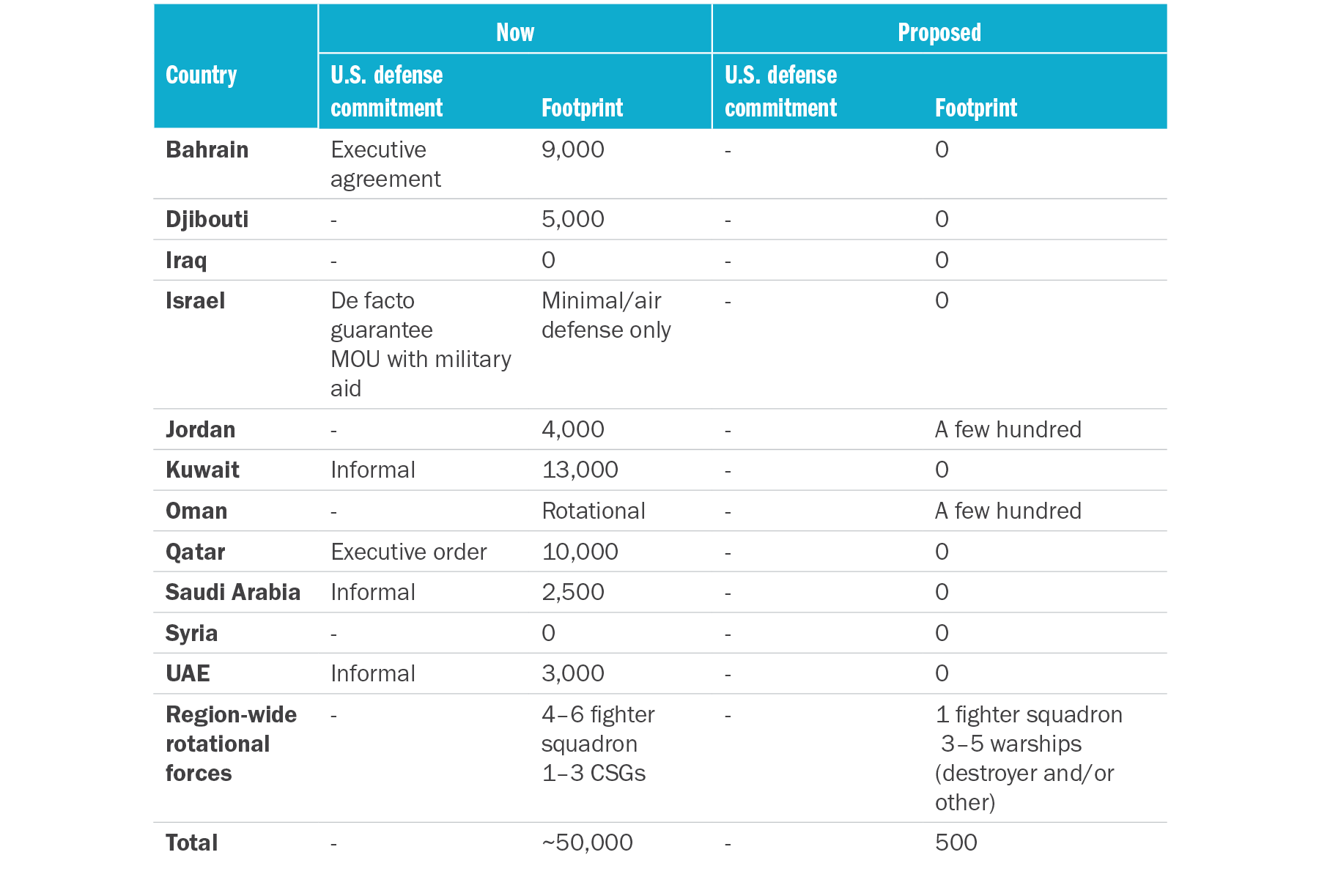
Table 1 compares U.S. posture and commitments today with those proposed here.
Table 1: U.S. defense commitments now vs. proposed
Implementation: Timeline and risks
The changes proposed here are substantial. They will require unwinding bases and commitments that have been in place for decades. Retrenchment can occur in phases over a period of several years following the end of combat operations against Iran. The process will be helped by the fact that the 2026 war has forced a partial U.S. withdrawal from some bases close to Iran. Additionally, many bases have been severely damaged by Iranian attacks, offering the option of simply not rebuilding or repairing them. (However, it is worth noting that the scope of damage is unknown as the United States government has restricted access to real-time satellite data.)
The biggest obstacles to retrenchment will be political. A full discussion of these issues is not the subject of this report, but they do not rule out the changes recommended here. Of all the political challenges, changing the U.S. relationship with Israel will likely be hardest of all, as it will require overcoming resistance in Congress and elsewhere. However, a committed executive can make the change and would have public opinion behind them. Polls show that younger Americans have a more negative opinion of Israel and support a shift in U.S.-Israel policy.67Becka A. Alper and Laura Silver, “Americans’ Views of Israelis Have Grown Increasingly Negative, but Views of Palestinians Have Held Fairly Steady,” Pew Research Center, July 9, 2026, https://www.pewresearch.org/short-reads/2026/07/09/americans-views-of-israelis-have-grown-increasingly-negative-but-views-of-palestinians-have-held-fairly-steady/; Laura Silver, “Younger Americans Stand Out in Their Views of the Israel-Hamas War,” Pew Research Center, April 2, 2024, https://www.pewresearch.org/short-reads/2024/04/02/younger-americans-stand-out-in-their-views-of-the-israel-hamas-war/.
Pushback from other Middle Eastern states may pose additional obstacles, though with less domestic political intensity. Having U.S. bases on their territory may give the Gulf States a degree of security, acting as a deterrent to attacks by stronger neighbors. Many U.S. political figures have close personal relationships with the leaders of the Gulf States, and these countries also have powerful Washington lobbies.68Dania Koleilat Khatib, “Arab Gulf Lobbying in the United States: What Makes Them Win and What Makes Them Lose and Why,” Contemporary Arab Affairs 9, no. 1 (January 2016): 68–81, https://www.jstor.org/stable/48600008; “Gulf Influence in Washington (2015–2025),” Center for the Study of Islam and Democracy, accessed October 18, 2026, https://csid-online.org/post/gulf-influence-washington-2015-2025.
However, attitudes are shifting. Countries across the region are questioning the reliability and benefits of the U.S. commitment. They’ve come to see U.S. bases as a liability because those facilities have become the favorite targets of Iranian missiles. States that have cooperated with the United States have borne the costs of that cooperation.69Frank Gardner, “Allies of U.S. in Gulf Bear Brunt of Iran Attacks,” BBC, March 1, 2026, https://www.bbc.com/news/articles/c1jk922dgjgo. This does not mean they are ready to kick out U.S. military forces, but they may not push back much if the United States declares its intention to leave.
The United States can ease the region’s transition to a new security order by conducting its withdrawal gradually. To some extent, this is required no matter what, as it will take time to reposition U.S. assets and find new locations for deployed personnel. With a much-reduced set of regional commitments, the United States should not be afraid to cut force structure (especially ground units) that is no longer needed.70Stephen Losey, “U.S. Air Force to Retire All A-10s, Cancel E-7 under 2026 Spending Plan,” Defense News, June 27, 2025, https://www.defensenews.com/air/2025/06/27/us-air-force-to-retire-all-a-10s-cancel-e-7-under-2026-spending-plan/.
A phased U.S. retrenchment should move from the east of the region to the west. The first bases closed and the first personnel moved should be the most vulnerable, including in Qatar, Bahrain, Kuwait, and the UAE. Some of these personnel may already have been moved to safer locations in their host countries or to other bases, but any that remain can be returned to the United States and relocated personnel could quickly follow.
In other cases, forces might be shifted to the west, including to Prince Sultan Air Base, which could serve as a temporary location for some of the U.S. air, logistics, and support personnel, along with other smaller facilities in Saudi Arabia and Jordan. In a first phase, it might make sense, for instance, to cut the number of fighter squadrons from four-to-six down to two-to-three, with one located in Jordan and one or two in Saudi Arabia. Additionally, some of the current force structure, maybe 15,000 personnel, could be spread to bases across these two countries. Naval assets could also be consolidated gradually, with aircraft carriers and their associated ships leaving over time. The second phase could include the rest of the necessary reductions, excepting the small naval and air support and intelligence presence left behind.
Of course, any change in U.S. posture and the U.S. role in the region comes with risks. The first is the risk of escalation or even conflict without U.S. forces. Countries used to U.S. support (especially Israel) may react to U.S. retrenchment by speeding their own military buildups. This is a potentially good thing, especially if it contributes to balancing, but it could be dangerous if investment focuses only on offensive capabilities such as ballistic or hypersonic missiles, which could lead to arms races that risk miscalculation and war. If rearmament does not occur alongside dialogue, it could result in escalation rather than deterrence and stability. There is also the risk of preemptive war, especially by Israel if it fears that rearmament by its Arab neighbors will create future security threats.
The risk of nuclear proliferation in the event of a U.S. pullback is also nonzero. Without U.S. support, no matter how minimal, countries like Saudi Arabia may turn to nuclear weapons as the best way to guarantee their security. Riyadh already has been pushing for a nuclear deal with the United States that would offer some opportunities for domestic nuclear enrichment.71Michael R. Gordon and Stephen Kalin, “Trump Approves Landmark Nuclear Deal with Saudi Arabia in Big Win for Kingdom,” Wall Street Journal, July 22, 2026, https://www.wsj.com/world/middle-east/trump-approves-landmark-nuclear-deal-with-saudi-arabia-in-big-win-for-kingdom-2ed77584. Iran, too, may continue to pursue a nuclear program in the future. These are risks to be grappled with, but they should not prevent U.S. retrenchment. The reality is that even if the United States remains invested in the Middle East, there is a significant potential—perhaps even greater potential—for nuclear proliferation.
The U.S. presence and involvement in the Middle East have not been stabilizing forces. In recent decades, the United States has started wars, assassinated leaders, and fueled regional rivalries. Its military dominance has fostered dependency across the Gulf and stymied efforts at building an inclusive security architecture that might stabilize the region. Even the Abraham Accords, which have been effective at building ties between Israel and its Gulf State neighbors, have been counterproductive in the medium term by advancing a “security bloc” model that has deepened tensions between Iran and the rest of the region. It is possible that without U.S. interference, the Middle East might find a better balance, with conflict becoming less likely. Israel, for instance, might be less empowered and act less aggressively without unconditional U.S. backing.72Michael Fuchs, “America Must Let Go of the Middle East,” Foreign Affairs, August 6, 2026, https://www.foreignaffairs.com/united-states/america-must-let-go-middle-east.
A second risk, often raised by critics of any plan to reduce U.S. force posture, is that new threats will emerge and the United States will be unprepared to address them, either because it does not have the forces in the region or it cannot operate effectively with regional partners without a constant presence. These concerns have little merit. For starters, the United States can surge air and naval power to the Middle East in relatively short order and has rapid reaction ground forces. Leaving sufficient U.S. intelligence assets in the region is one way to make sure the United States has ample warning of emerging threats and plenty of time to respond. The Pentagon can also rely on over-the-horizon tools, such as long-range bombers and drone strikes, to eliminate specific threats, as it has done frequently for several decades.
A final risk is that as they become independent in the security sphere, states in the region will become less susceptible to U.S. coercion and may act in ways inconsistent with U.S. preferences. To some extent, this is true even now. That the U.S. military presence ensures policy influence is something of a myth. States across the Middle East have shown their willingness to push back on the United States. Saudi Arabia has refused to join the Abraham Accords and, along with the UAE and Israel, is pursuing deeper economic ties with China despite U.S. protestations.73Henry Tugendhat, “China’s Middle East Ties Go Far Beyond Iran,” Washington Institute for Near East Policy, March 10, 2026, https://www.washingtoninstitute.org/policy-analysis/chinas-middle-east-ties-go-far-beyond-iran; John Calabrese, “China’s Model of Power Projection in the Middle East,” Middle East Institute, March 30, 2026, https://mei.edu/publication/chinas-model-of-power-projection-in-the-middle-east/. Several countries in the region have also declined U.S. requests to use their bases for operations against Iran.74Patrick Wintour, “Trump Shelved ‘Project Freedom’ after Saudis Refused Use of Bases and Airspace,” The Guardian, May 7, 2026, https://www.theguardian.com/world/2026/may/07/trump-project-freedom-saudi-arabia-strait-of-hormuz.
In an increasingly multipolar world, the United States will have to accept that even its traditional clients will become more independent. With more options available, they will have more freedom to maneuver and make their own decisions in the foreign policy space. The United States will still have ways to impact their choices, including economic tools and diplomatic outreach. On net, however, the reduced U.S. military footprint in the Middle East will offer benefits that far outweigh any lost influence.
The way ahead
Although major and formal changes to the U.S. military footprint in the Middle East are unlikely before the end of the war with Iran, some are already happening in a de facto sense. In the past year, the United States has left Syria and Iraq, and many forces and operations have been moved out of Bahrain and Kuwait. Even as the war with Iran continues, some forces and assets can be consolidated to reduce the number of locations that the United States has to defend. But the United States should also focus immediately on increasing investments in base hardening, including building more hardened aircraft shelters and reinforced intelligence and logistics centers, at locations that it might keep as forward operating locations.
The United States will be better off without its military presence in the Middle East. To date, U.S. involvement has brought more misery than good to both Americans and those in the region. Leaving the Middle East would go a long way toward correcting U.S. strategic overreach. It would remove the temptation every U.S. president feels to intervene in issues that are not core to U.S. interests.
The time is right to bring this cycle to an end.
Endnotes
- 1Ray Takeyh and Steven Simon, The Pragmatic Superpower: Winning the Cold War in the Middle East (New York: W. W. Norton, 2016); Mike Sweeney, “Considering the ‘Zero Option,’” Defense Priorities, March 3, 2020, https://www.defensepriorities.org/reports/considering-the-zero-option/. ↩︎
- 2“Document 45: Editorial Note,” in Foreign Relations of the United States, 1977–1980, vol. 18, Middle East Region, Arabian Peninsula, U.S. Department of State, https://history.state.gov/historicaldocuments/frus1977-80v18/d45. ↩︎
- 3Hillel Fradkin and Lewis Libby, “The First Gulf War and Its Aftermath,” Hudson Institute, October 14, 2015, https://www.hudson.org/national-security-defense/the-first-gulf-war-and-its-aftermath; Sami G. Hajjar, U.S. Military Presence in the Persian Gulf: Challenges and Prospects (Carlisle, PA: U.S. Army War College Press, 2002), https://press.armywarcollege.edu/monographs/827. ↩︎
- 4Fradkin and Libby, “The First Gulf War and Its Aftermath”; Hajjar, U.S. Military Presence in the Persian Gulf. ↩︎
- 5“Jihad against Jews and Crusaders,” accessed through the Federation of American Scientists, February 23, 1998, https://irp.fas.org/world/para/docs/980223-fatwa.htm. ↩︎
- 6Benjamin Denison, “Bases, Logistics, and the Problem of Temptation in the Middle East,” Defense Priorities, May 12, 2022, https://www.defensepriorities.org/explainers/bases-logistics-and-the-problem-of-temptation-in-the-middle-east/. ↩︎
- 7Joseph Stieb, “Why Did the United States Invade Iraq? The Debate at 20 Years,” Texas National Security Review 6, no. 3 (Summer 2023), https://tnsr.org/wp-content/uploads/2023/06/TNSR-Journal-Vol-6-Issue-3-Stieb.pdf; Jourden Travis Moger, “Between Desert Storm and Iraqi Freedom: U.S. Army Operations in the Middle East, 1991–2001,” Center of Military History, U.S. Army, accessed October 17, 2026, https://history.army.mil/portals/143/Images/Publications/catalog/57-1-1.pdf. ↩︎
- 8Mariel Ferragamo et al., “U.S. Forces in the Middle East: Mapping the Military Presence,” Council on Foreign Relations, updated June 23, 2025, https://www.cfr.org/articles/us-forces-middle-east-mapping-military-presence; “Mapping U.S. Troops and Military Bases in the Middle East,” Al Jazeera, June 12, 2025, https://www.aljazeera.com/news/2025/6/12/mapping-us-troops-and-military-bases-in-the-middle-east. ↩︎
- 9Michael Ramsey and Steven Joachim, “Where Are U.S. Forces in Middle East? A Breakdown of Assets,” NewsNation, March 1, 2026, https://www.newsnationnow.com/us-news/military/us-forces-in-middle-east-bases/. ↩︎
- 10“U.S. Military Begins Withdrawing from Key Base in Northeastern Syria,” Al Jazeera, February 23, 2026, https://www.aljazeera.com/news/2026/2/23/us-military-begins-withdrawing-from-key-base-in-northeastern-syria; Amberin Zaman, “U.S. Nears Full Withdrawal from Iraq as Bases in Kurdistan Region Face Attacks from Iran, Proxies,” Al-Monitor, accessed October 17, 2026, https://www.al-monitor.com/originals/2026/07/us-nears-full-withdrawal-iraq-bases-kurdistan-region-face-attacks-iran-proxies. ↩︎
- 11Stephen Losey, “Here Are the Fighter Squadrons Currently in the Middle East,” Air Force Times, February 4, 2020, https://www.airforcetimes.com/news/your-air-force/2020/02/04/here-are-the-fighter-squadrons-currently-in-the-middle-east/; “Here’s a Look at the U.S. Military Presence in the Middle East,” Arab News, September 30, 2024, https://www.arabnews.com/node/2573426/middle-east; Andrew Feickert, “The Terminal High Altitude Area Defense (THAAD) System,” Congressional Research Service, CRS no. IF12645, June 23, 2026, https://www.congress.gov/crs-product/IF12645. ↩︎
- 12Ferragamo et al., “U.S. Forces in the Middle East”; “Here’s a Look at the U.S. Military Presence in the Middle East”; Joe Costa, Theresa Luetkefend, and Moss Gillespie, “Tracking U.S. Military Assets in the Iran War,” Atlantic Council, updated May 15, 2026, https://www.atlanticcouncil.org/commentary/trackers-and-data-visualizations/tracking-us-military-assets-in-the-iran-war/. ↩︎
- 13“Memoranda of Agreement,” in Foreign Relations of the United States, 1969–1976, vol. 26, Arab-Israeli Dispute, 1974–1976, U.S. Department of State, https://history.state.gov/historicaldocuments/frus1969-76v26/d227. ↩︎
- 14“U.S. Relations with Israel,” U.S. Department of State, January 20, 2021, https://2021-2025.state.gov/u-s-relations-with-israel/. ↩︎
- 15“U.S. Security Cooperation with Israel,” U.S. Department of State, April 25, 2025, https://www.state.gov/u-s-security-cooperation-with-israel. ↩︎
- 16“U.S.-Bahrain Comprehensive Security Integration and Prosperity Agreement,” U.S. Embassy in Bahrain, September 13, 2023, https://bh.usembassy.gov/u-s-bahrain-comprehensive-security-integration-and-prosperity-agreement/. ↩︎
- 17“Assuring the Security of the State of Qatar,” Executive Order 14353, White House, September 29, 2025, https://www.whitehouse.gov/presidential-actions/2025/09/assuring-the-security-of-the-state-of-qatar/. ↩︎
- 18Jeremy M. Sharp, “The United Arab Emirates (UAE): Issues for U.S. Policy,” Congressional Research Service, CRS no. RS21852, September 30, 2026, https://www.congress.gov/crs-product/RS21852; Christopher M. Blanchard, “Saudi Arabia: Background and U.S. Relations,” Congressional Research Service, CRS no. RL33533, October 2, 2023, https://www.everycrsreport.com/reports/RL33533.html. ↩︎
- 19Adam Rasgon, “Gulf Countries Confront Questions about Relying on U.S. for Protection,” New York Times, June 15, 2026, https://www.nytimes.com/2026/06/15/world/middleeast/gulf-iran-war-us.html. ↩︎
- 20William Walldorf, “Just Stay Out: Rejecting the Saudi-Israeli Grand Bargain,” Defense Priorities, November 26, 2024, https://www.defensepriorities.org/explainers/just-stay-out-rejecting-the-saudi-israeli-grand-bargain/. ↩︎
- 21Alexander Palmer et al., “Global Terrorism Threat Assessment 2026,” Center for Strategic and International Studies, May 26, 2026, https://www.csis.org/analysis/global-terrorism-threat-assessment-2026. ↩︎
- 22A. Trevor Thrall and Erik Goepner, “Step Back: Lessons for U.S. Foreign Policy from the Failed War on Terror,” Cato Institute, Policy Analysis No. 814, June 26, 2017, https://www.cato.org/policy-analysis/step-back-lessons-us-foreign-policy-failed-war-terror. ↩︎
- 23Rosemary Kelanic, “Turns Out Leaving Afghanistan Did Not Unleash Terror on U.S. or Region,” Responsible Statecraft, August 28, 2025, https://responsiblestatecraft.org/taliban-isis-k-attacks/. ↩︎
- 24James Carafano, Jessica Zuckerman, and Jena Baker McNeill, “39 Terror Plots Foiled Since 9/11: Examining Counterterrorism’s Success Stories,” Heritage Foundation, May 20, 2011, https://www.heritage.org/terrorism/report/39-terror-plots-foiled-911-examining-counterterrorisms-success-stories; Erik J. Dahl, “The Plots that Failed: Intelligence Lessons Learned from Unsuccessful Terrorist Attacks Against the United States,” Studies in Conflict & Terrorism 34, no. 8 (2011): 621–648, https://doi.org/10.1080/1057610X.2011.582628; William Braniff, “From 9/11 to Today: The Evolution of U.S. Terrorism Prevention,” Homeland Security Today, September 11, 2025, https://www.hstoday.us/featured/terrorism-prevention-in-the-united-states-since-9-11/. ↩︎
- 25Charles Lister, “The Collapse of ISIS in Syria,” Middle East Institute, June 8, 2026, https://mei.edu/publication/the-collapse-of-isis-in-syria/; Daniel DePetris, “Leaving Iraq Serves U.S. Interest,” Defense Priorities, June 9, 2021, https://www.defensepriorities.org/briefs/leaving-iraq-serves-us-interest/. ↩︎
- 26Rosemary Kelanic, “A Security Dilemma Made Worse: How War With Iran Backfired,” Defense Priorities, August 5, 2026, https://www.defensepriorities.org/explainers/a-security-dilemma-made-worse-how-war-with-iran-backfired/; Matthew Levitt, “Between Intent and Capability: Assessing the Lack of Iranian Attacks on the U.S. Homeland,” War on the Rocks, May 6, 2026, https://warontherocks.com/between-intent-and-capability-assessing-the-lack-of-iranian-attacks-on-the-u-s-homeland/. ↩︎
- 27Levitt, “Between Intent and Capability.” ↩︎
- 28Kelanic, “A Security Dilemma Made Worse”; Matthew Lee, “U.S. Intelligence Assessment Says Iran Not Currently Developing Nuclear Weapons,” Associated Press, July 10, 2023, https://apnews.com/article/us-iran-nuclear-intelligence-b506d130e474c00f6bd653d3d5a8d31a. ↩︎
- 29Kelanic, “A Security Dilemma Made Worse”; Lee, “U.S. Intelligence Assessment Says.” ↩︎
- 30Emily Harding et al., “Mapping Iranian Cyberattacks on U.S. Water Systems,” Center for Strategic and International Studies, August 18, 2026, https://www.csis.org/analysis/mapping-iranian-cyberattacks-us-water-systems. ↩︎
- 31“Secretary of State Marco Rubio Remarks to Press,” U.S. Department of State, March 2, 2026, https://www.state.gov/releases/office-of-the-spokesperson/2026/03/secretary-of-state-marco-rubio-remarks-to-press-6. ↩︎
- 32Jim Zanotti, “Israel: Major Issues and U.S. Relations,” Congressional Research Service, CRS no. R44245, July 2, 2026, https://www.congress.gov/crs-product/R44245. ↩︎
- 33Eric Lob, “The Diverging U.S. and Israeli Goals in Iran Are Making the Endgame Even Murkier,” Carnegie Endowment for International Peace, March 20, 2026, https://carnegieendowment.org/emissary/2026/03/iran-us-israel-goals-diverge-oil-leaders. ↩︎
- 34Charles L. Glaser and Rosemary A. Kelanic, “Getting Out of the Gulf: Oil and U.S. Military Strategy,” Foreign Affairs 96, no. 1 (January/February 2017): 122–131, https://www.jstor.org/stable/44823237. ↩︎
- 35Rosemary Kelanic, “Trump Is Making Jimmy Carter’s Mistake on Iran and Oil,” New York Times, March 9, 2026, https://www.nytimes.com/2026/03/09/opinion/iran-war-trump-oil-prices.html; Nicolas Loris, “Does the United States Still Need Middle East Oil?,” Heritage Foundation, January 17, 2020, https://www.heritage.org/energy/commentary/does-the-united-states-still-need-middle-east-oil. ↩︎
- 36David B. Roberts, “What Alternatives Do Gulf States Have to the Strait of Hormuz?,” The Conversation, April 30, 2026, https://theconversation.com/what-alternatives-do-gulf-states-have-to-the-strait-of-hormuz-281805. ↩︎
- 37Stephen M. Walt, “Israel Can’t Be a Hegemon,” Foreign Policy, June 16, 2025, https://foreignpolicy.com/2025/06/16/israel-iran-war-middle-east-hegemon/; Hamza Meddeb and Mohamed Ali Adraoui, “The Tragedy of Middle Eastern Politics,” Carnegie Endowment for International Peace, December 22, 2025, https://carnegieendowment.org/research/2025/12/the-tragedy-of-middle-eastern-politics. ↩︎
- 38Walt, “Israel Can’t Be a Hegemon”; Meddeb and Adraoui, “The Tragedy of Middle Eastern Politics”; Aaron David Miller and Steven Simon, “The U.S. Must Now Reckon with a Hegemon in the Mideast: Israel,” New York Times, April 14, 2025, https://www.nytimes.com/2025/04/14/opinion/israel-palestinians-syria-lebanon.html. ↩︎
- 39Ali Fathollah-Nejad, “The Iranian-Saudi Hegemonic Rivalry,” German Council on Foreign Relations, October 26, 2017, https://dgap.org/en/research/publications/iranian-saudi-hegemonic-rivalry; “The Middle East’s New Battle Lines,” European Council on Foreign Relations, May 2018, https://ecfr.eu/special/battle_lines/uae. ↩︎
- 40Yaroslav Trofimov, “Aspiring to Regional Domination, Iran Is Ready to Escalate Over Hormuz,” Wall Street Journal, July 11, 2026, https://www.wsj.com/world/middle-east/https-www-wsj-com-world-middle-east-iran-deal-strait-of-hormuz-b027c30f-580ee99f; Robert A. Pape, “Iran and the New Rules of Global Power,” Foreign Affairs, July 24, 2026, https://www.foreignaffairs.com/united-states/iran-and-new-rules-global-power-pape. ↩︎
- 41K. L. Viswanathan, “Iran’s Hormuz Card Has a Shelf Life: Energy Diversification Will Reduce Its Strategic Leverage over Time,” South Asia Monitor, July 12, 2026, https://www.southasiamonitor.org/geoeconomics-trade-and-development/irans-hormuz-card-has-shelf-life-energy-diversification-will; “How Long Can Iran Weaponize Hormuz?” The Economist, August 3, 2026, https://www.economist.com/middle-east-and-africa/2026/08/03/how-long-can-iran-weaponise-hormuz; Dario Sabaghi, “The Middle East’s Race to Bypass the Strait of Hormuz,” New Arab, September 17, 2026, https://www.newarab.com/analysis/middle-easts-race-bypass-strait-hormuz. ↩︎
- 42“Saudi Arabia, Turkey, and Pakistan Agree to Establish Secretariat under Joint Defense,” Reuters, August 31, 2026, https://www.reuters.com/world/middle-east/saudi-arabia-turkey-pakistan-agree-establish-secretariat-under-joint-defence-2026-08-31/; Steven A. Cook, “The U.S.-Led Middle East Order Is Over. The Mecca Agreement Proves It,” Council on Foreign Relations, August 13, 2026, https://www.cfr.org/articles/the-u-s-led-middle-east-order-is-over-the-mecca-agreement-proves-it. ↩︎
- 43“A Sideshow: How the War in Ukraine Has Undermined Russia’s Influence in the Middle East,” New Eurasian Strategies Centre, October 17, 2025, https://nestcentre.org/a-sideshow/; Nikolay Kozhanov, “Russia Is Weakened, but Its Influence in the Middle East Should Not Be Underestimated,” Chatham House, December 11, 2025, https://www.chathamhouse.org/2025/12/russia-weakened-its-influence-middle-east-should-not-be-underestimated. ↩︎
- 44Rosemary Kelanic, “China Can’t Dominate the Middle East,” Defense Priorities, May 5, 2025, https://www.defensepriorities.org/explainers/china-cant-dominate-the-middle-east/. ↩︎
- 45Jon Hoffman, “Aimless Rivalry,” Cato Institute, Policy Analysis no. 1000, July 10, 2025, https://www.cato.org/policy-analysis/aimless-rivalry. ↩︎
- 46Noam Raydan and Farzin Nadimi, “Are the Houthis Attacking Ships in the Mediterranean?,” Washington Institute for Near East Policy, July 3, 2024, https://www.washingtoninstitute.org/policy-analysis/are-houthis-attacking-ships-mediterranean; “Conflict in Yemen and the Red Sea,” Council on Foreign Relations, updated October 12, 2026, https://www.cfr.org/global-conflict-tracker/conflict/war-yemen. ↩︎
- 47Thibault Denamiel et al., “The Global Economic Consequences of the Attacks on Red Sea Shipping Lanes,” Center for Strategic and International Studies, January 22, 2024, https://www.csis.org/analysis/global-economic-consequences-attacks-red-sea-shipping-lanes; Peter Eavis, “Why the Shipping Industry Isn’t Rushing Back to the Red Sea,” New York Times, March 21, 2025, https://www.nytimes.com/2025/03/21/business/economy/red-sea-shipping-houthis.html. ↩︎
- 48Lutz Kilian, Michael Plante, and Alexander W. Richter, “U.S. Economy Less Vulnerable to Geopolitical Oil Price Shocks than in the Past,” Federal Reserve Bank of Dallas, June 23, 2026, https://www.dallasfed.org/research/economics/2026/0623; Danilo Leiva-León et al., “Reassessing the U.S. Economy’s Vulnerability to Oil Shocks,” Federal Reserve Bank of Boston, June 4, 2026, https://www.bostonfed.org/publications/current-policy-perspectives/2026/reassessing-us-economys-vulnerability-oil-shocks.aspx; Rebecca Geldard, “The Strait of Hormuz Crisis Affects More than Just Oil. Here Are 9 Other Commodities,” World Economic Forum, April 1, 2026, https://www.weforum.org/stories/supply-chains-and-transportation/beyond-oil-lng-commodities-impacted-closure-hormuz-strait/. ↩︎
- 49Barak Ravid, “U.S. Conducting Stealth Operation to Transport Oil Through Hormuz,” Axios, August 19, 2026, https://www.axios.com/2026/08/19/hormuz-iran-oil-gulf-trump. ↩︎
- 50Isaac Kardon, “How America Lost Command of the Commons,” Foreign Affairs, June 9, 2026, https://www.foreignaffairs.com/united-states/how-america-lost-command-commons; Jennifer Kavanagh, “The U.S. Shouldn’t Rule the Seas Forever,” Foreign Policy, April 27, 2026, https://foreignpolicy.com/2026/04/27/iran-us-war-hormuz-strait-blockade-trade-maritime-navy-strategy/. ↩︎
- 51Huzeir Ezekiel Dzulhisham, “Alternatives to Hormuz: How to Export Oil and Gas from the Persian Gulf,” S. Rajaratnam School of International Studies, RSIS Commentary CO26093, April 29, 2026, https://rsis.edu.sg/rsis-publication/rsis/co26093/; Shannon K. O’Neil, “The Globalization Myth,” interview by James M. Lindsay, President’s Inbox, podcast, Council on Foreign Relations, October 18, 2022, https://www.cfr.org/podcasts/presidents-inbox/globalization-myth-shannon-k-oneil. ↩︎
- 52Mike Sweeney, “A Plan for U.S. Withdrawal from the Middle East,” Defense Priorities, December 21, 2020, https://www.defensepriorities.org/reports/a-plan-for-us-withdrawal-from-the-middle-east/. ↩︎
- 53Ellen Ioanes, “House-Passed Bill Includes Controversial U.S.-Israel Defense Measure,” Military Times, July 29, 2026, https://www.militarytimes.com/news/pentagon-congress/2026/07/29/house-passed-defense-bill-includes-controversial-us-israel-tech-measure/. ↩︎
- 54“Israel,” Center for Arms Control and Non-Proliferation, accessed October 18, 2026, https://armscontrolcenter.org/countries/israel/; “U.S. Security Cooperation with Israel.” ↩︎
- 55Nahal Toosi, “Why Trump May Want to Avoid Messing with the Houthis,” Politico Magazine, October 3, 2026, https://www.politico.com/news/magazine/2026/10/03/trump-houthis-restraint-01104880. ↩︎
- 56“Saudi Arabia Intensifies Engagement with Iran to Defuse War,” Bloomberg, March 6, 2026, https://www.bloomberg.com/news/articles/2026-03-06/saudi-arabia-has-intensified-direct-line-to-iran-to-defuse-war. ↩︎
- 57Jennifer Kavanagh and Dan Caldwell, “The Iran Strike Shows We Don’t Need Bases in the Middle East,” Washington Post, June 28, 2025, https://www.washingtonpost.com/opinions/2025/06/28/iran-strike-american-military-vulnerability/; Helene Cooper and Eric Schmitt, “Iran’s Attacks Force U.S. Troops to Work Remotely,” New York Times, March 25, 2026, https://www.nytimes.com/2026/03/25/us/politics/iran-us-bases.html. ↩︎
- 58Benjamin Friedman, “The Proliferation of Accuracy and Vulnerability of Military Bases,” Defense Priorities, September 24, 2026, https://www.defensepriorities.org/explainers/the-proliferation-of-accuracy-and-vulnerability-of-military-bases/. ↩︎
- 59Steve Walsh, “Months after Being Evacuated from Bahrain, Military Families Await Their Next Move,” NPR, August 12, 2026, https://www.npr.org/2026/08/12/nx-s1-5921392/months-after-being-evacuated-from-bahrain-military-families-await-their-next-move; Noah Robertson, John Hudson, and Susannah George, “Pentagon Weighing Smaller U.S. Military Presence in Gulf Once Iran War Ends,” Washington Post, August 18, 2026, https://www.washingtonpost.com/national-security/2026/08/18/pentagon-evaluating-smaller-us-military-presence-persian-gulf-after-iran-war/. ↩︎
- 60“Iran Sets Pace in War with Donald Trump,” Financial Times, August 1, 2026, https://www.ft.com/content/a29819ef-ffb9-4d2a-9925-e3d6e6e6e797?syn-25a6b1a6=1; David S. Cloud, “Jordan Is Learning Its U.S. Alliance Has a Price in the Iran War,” Wall Street Journal, August 2, 2026, https://www.wsj.com/world/middle-east/jordan-is-learning-its-u-s-alliance-has-a-price-in-the-iran-war-7ce9fd8b. ↩︎
- 61Miles Johnson, Max Seddon, and Charles Clover, “Russia Secretly Helping Iran Develop Supersonic Cruise Missiles,” Financial Times, September 1, 2026, https://www.ft.com/content/6cf367bc-95b0-4f1f-b149-a25684adefc3?syn-25a6b1a6=1. ↩︎
- 62Jennifer Kavanagh and Dan Caldwell, “Aligning Global Military Posture with U.S. Interests,” Defense Priorities, July 9, 2025, https://www.defensepriorities.org/explainers/aligning-global-military-posture-with-us-interests/. ↩︎
- 63John Ismay, “Navy Carrier’s Problems Are Tied to Attacks on U.S. Base Early in War,” New York Times, August 14, 2026, https://www.nytimes.com/2026/08/14/us/politics/uss-abraham-lincoln-trump-supplies-diego-garcia.html. ↩︎
- 64Tim Griffiths, “The Survivability of the Aircraft Carrier,” Navy Lookout, May 12, 2025, https://www.navylookout.com/the-survivability-of-the-aircraft-carrier/; Daniel Cochran, “Will the Aircraft Carrier Survive? Future Air Threats to the Carrier (and How to Defend It),” Journal of the JAPCC 27 (December 2018), https://www.japcc.org/articles/will-the-aircraft-carrier-survive/. ↩︎
- 65Armas Laupa, “Time Estimates to Repair Cratered Runways,” RAND Corporation, Report no. D-19937, 1970, https://www.rand.org/pubs/documents/D19937.html. ↩︎
- 66Michael Makovsky et al., “Shifting the Center of Gravity: Transforming the U.S.-Israel Security Partnership,” Jewish Institute for National Security of America, August 2026, https://jinsa.org/jinsa_report/shifting-the-center-of-gravity/. ↩︎
- 67Becka A. Alper and Laura Silver, “Americans’ Views of Israelis Have Grown Increasingly Negative, but Views of Palestinians Have Held Fairly Steady,” Pew Research Center, July 9, 2026, https://www.pewresearch.org/short-reads/2026/07/09/americans-views-of-israelis-have-grown-increasingly-negative-but-views-of-palestinians-have-held-fairly-steady/; Laura Silver, “Younger Americans Stand Out in Their Views of the Israel-Hamas War,” Pew Research Center, April 2, 2024, https://www.pewresearch.org/short-reads/2024/04/02/younger-americans-stand-out-in-their-views-of-the-israel-hamas-war/. ↩︎
- 68Dania Koleilat Khatib, “Arab Gulf Lobbying in the United States: What Makes Them Win and What Makes Them Lose and Why,” Contemporary Arab Affairs 9, no. 1 (January 2016): 68–81, https://www.jstor.org/stable/48600008; “Gulf Influence in Washington (2015–2025),” Center for the Study of Islam and Democracy, accessed October 18, 2026, https://csid-online.org/post/gulf-influence-washington-2015-2025. ↩︎
- 69Frank Gardner, “Allies of U.S. in Gulf Bear Brunt of Iran Attacks,” BBC, March 1, 2026, https://www.bbc.com/news/articles/c1jk922dgjgo. ↩︎
- 70Stephen Losey, “U.S. Air Force to Retire All A-10s, Cancel E-7 under 2026 Spending Plan,” Defense News, June 27, 2025, https://www.defensenews.com/air/2025/06/27/us-air-force-to-retire-all-a-10s-cancel-e-7-under-2026-spending-plan/. ↩︎
- 71Michael R. Gordon and Stephen Kalin, “Trump Approves Landmark Nuclear Deal with Saudi Arabia in Big Win for Kingdom,” Wall Street Journal, July 22, 2026, https://www.wsj.com/world/middle-east/trump-approves-landmark-nuclear-deal-with-saudi-arabia-in-big-win-for-kingdom-2ed77584. ↩︎
- 72Michael Fuchs, “America Must Let Go of the Middle East,” Foreign Affairs, August 6, 2026, https://www.foreignaffairs.com/united-states/america-must-let-go-middle-east. ↩︎
- 73Henry Tugendhat, “China’s Middle East Ties Go Far Beyond Iran,” Washington Institute for Near East Policy, March 10, 2026, https://www.washingtoninstitute.org/policy-analysis/chinas-middle-east-ties-go-far-beyond-iran; John Calabrese, “China’s Model of Power Projection in the Middle East,” Middle East Institute, March 30, 2026, https://mei.edu/publication/chinas-model-of-power-projection-in-the-middle-east/. ↩︎
- 74Patrick Wintour, “Trump Shelved ‘Project Freedom’ after Saudis Refused Use of Bases and Airspace,” The Guardian, May 7, 2026, https://www.theguardian.com/world/2026/may/07/trump-project-freedom-saudi-arabia-strait-of-hormuz. ↩︎
Author

More on Middle East

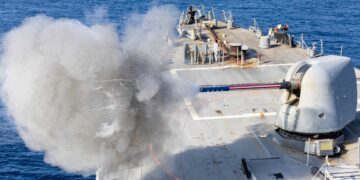
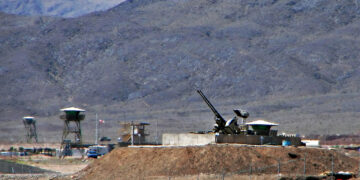
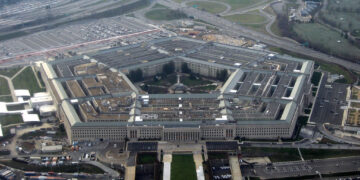
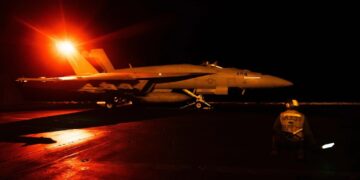
Events on Basing and global posture