

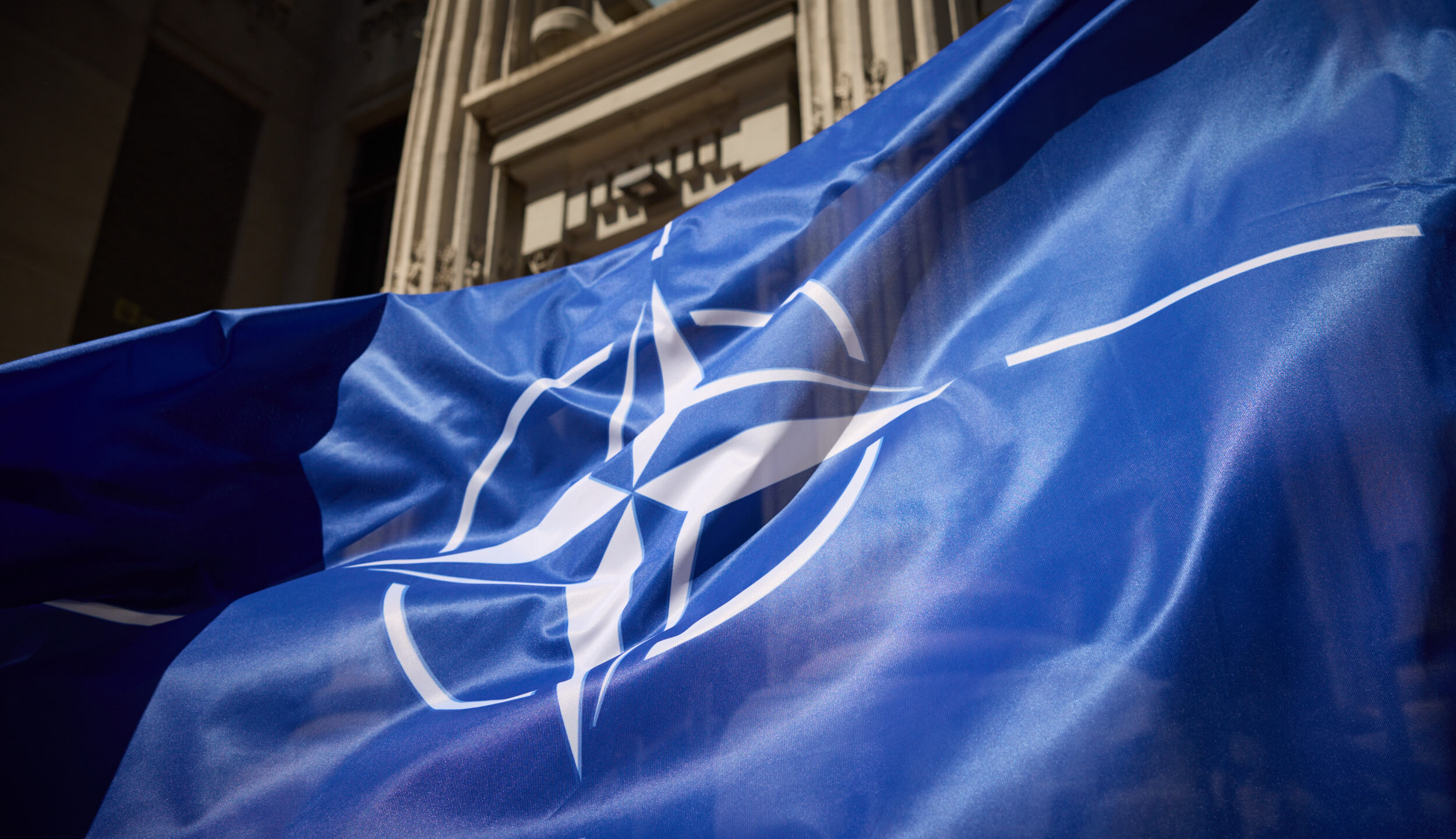
On 7 February 2020, French President Emmanuel Macron floated an idea that has long percolated in European foreign policy circles: bringing Europe closer to France’s nuclear umbrella. “Let’s be clear: France’s vital interests now have a European dimension,” Macron told his audience at the Ecole de Guerre. “In this spirit, I would like strategic dialogue to develop with our European partners, which are ready for it, on the role played by France’s nuclear deterrence in our collective security.”
Macron’s offer was met with eye-rolling. Much of the European continent saw it less as a genuine effort to bolster the region’s security than a ploy by the French president to inflate his self-importance. What was more, the security environment didn’t call for such a dramatic approach. Russian gas was still fuelling Europe, Moscow had yet to authorise its invasion of Ukraine and Vladimir Putin was still considered to be a president who could be reasoned with. In Washington DC, President Donald Trump slayed convention about as fast as he guzzled Diet Cokes, but the scenario that so many European policy elites were petrified of—the USA pulling out of NATO—seemed misplaced.
Author

More on Europe


Op-edEurope and Eurasia, Alliances and commitments


Events on Europe and Eurasia

virtualEurope and Eurasia