Defense Priorities Defense Priorities
  • Policy Topics
    • US-Israel-Iran
    • Ukraine-Russia
    • Western Hemisphere
    • NATO
    • China
    • Syria
  • Analysis
    • Research
    • Q&A
  • Programs
    • Grand Strategy Program
    • Military Analysis Program
    • Asia Program
    • Middle East Program
  • Experts
  • Events
  • Media
  • About
    • Mission & Vision
    • People
    • Jobs
    • Contact
  • Donate
Select Page
Home / China / China and Russia conduct joins submarine patrols—should America worry?
China, Asia, Military analysis, Naval power

September 22, 2025

China and Russia conduct joins submarine patrols—should America worry?

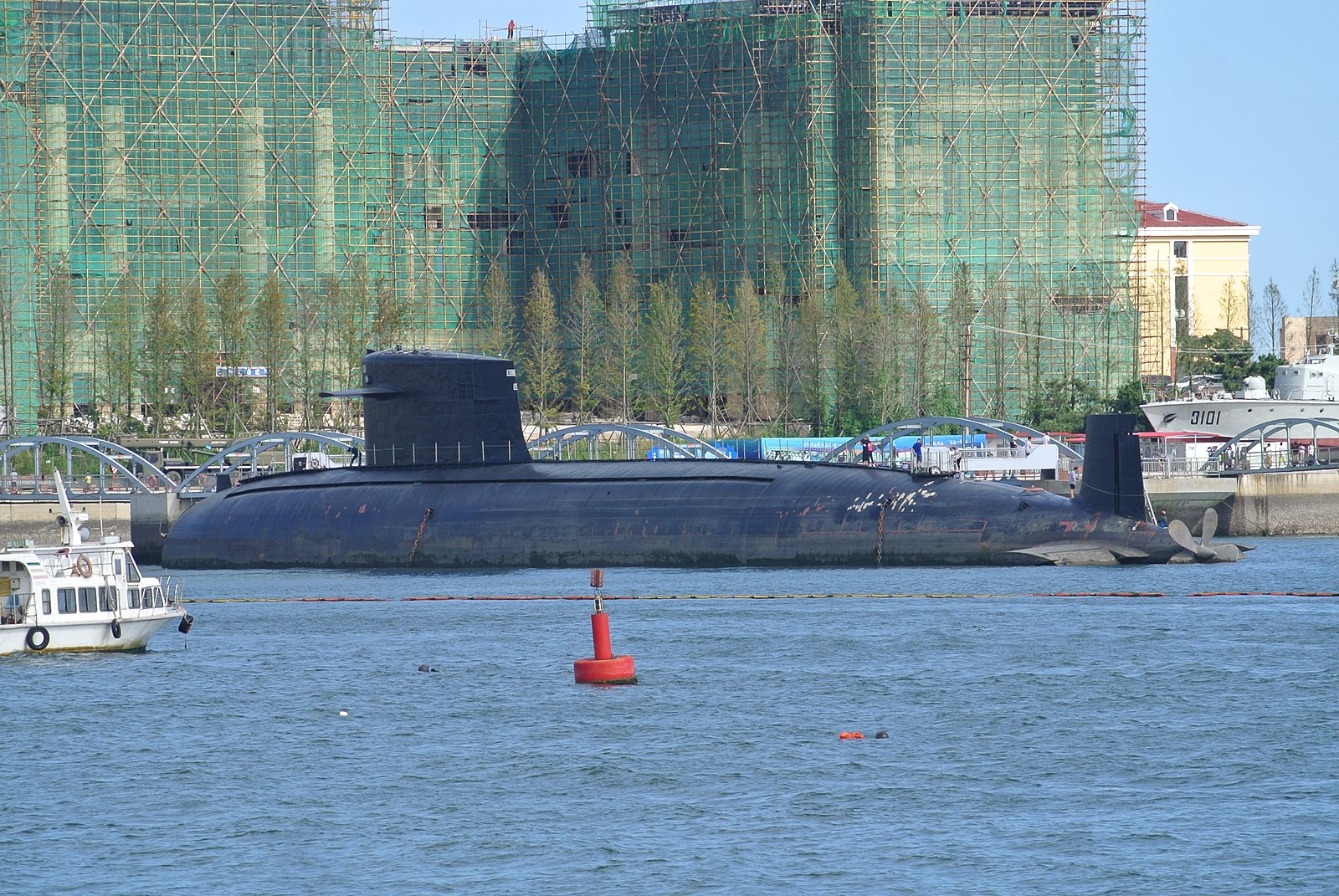
“I’d say this is simply an effort at deterrence,” Lyle Goldstein, director of the Asia Program at the Defense Priorities think tank in Washington, told Defense News. “While it is hard to conceive of a scenario where they would embark on a war with the West simultaneously, they may benefit from some impression that could be the case.” [. . .]

It’s a logical choice, since China imported this type of submarine from Russia, so they have very similar capabilities and could make easy exercise partners,” said Goldstein, whose new book on the China-Russia naval alliance will be published in January [. . .]

“I think this [the sub patrol] is quite consistent with the overall pattern,” said Goldstein. “It is repetitive, consistent, quite small in scale, and often features a new dimension, whether technological or geographical.”
Goldstein floats an intriguing possibility: The sub patrol was a warning shot against AUKUS, the Australia-U.K.-U.S. agreement that calls for Australia to acquire nuclear submarines with the help of America and Britain, and U.S. subs operating out of Australian bases.
“I have seen substantial evidence that Chinese naval strategists are tracking AUKUS developments extremely closely and, moreover, that their threat anxiety about this program is acute,” Goldstein said. “I have also seen Chinese strategists discussing how enhanced China-Russia cooperation in undersea warfare is a logical counter to AUKUS.”
A key indicator of the China-Russia relationship will be that their nuclear submarines operate together.
“If they do take that major step in the future, it could indicate a tighter and more worrisome development, as that could herald more high-tech sharing on the most cutting-edge warfighting platforms,” said Goldstein.
He argues against overreacting to these joint patrols.
“Ever greater deployments of U.S. forces, and ever more intense exercising with allies, often goes beyond our intention and provokes a counter-reaction — and this can be seen in the budding China-Russia quasi-alliance.”
How deep that alliance is remains to be seen.
“Both sides are somewhat chastened by the history of the Sino-Soviet dispute,” Goldstein said. “They seem to realize that there are dangers in being too close, and also in being too dependent on one another. Now, there is a certain maturity in the relationship, wherein it is fully realized that their interests will not always be identical.”

Read at Defense News

Featuring

Photo of Lyle Goldstein

Lyle
Goldstein

Director, Asia Program

Defense Priorities

More on Asia

Op-edChina, Asia, US‑Israel‑Iran

Why Donald Trump’s war could play into China’s hands

By Lyle Goldstein

March 17, 2026

In the mediaChina‑Taiwan, Asia, China

U.S. spent roughly $3.4 trillion in military competition with China between 2012 and 2024, Watson study estimates

Featuring Jennifer Kavanagh, Benjamin Friedman, and Lyle Goldstein

March 10, 2026

In the mediaChina, Asia, China‑Taiwan, Taiwan

Stability comes first: Chinese defence chief signals Beijing’s strategic caution

Featuring Lyle Goldstein

March 10, 2026

Op-edChina‑Taiwan, Asia, China

Trump-Xi Taiwan talks could defuse the tinderbox

By Thomas P. Cavanna

March 6, 2026

Op-edTaiwan, Asia, China‑Taiwan

Taiwan’s Defense Budget Dilemma

By Lyle Goldstein

March 2, 2026

Op-edAsia

U.S. missile deliveries to Philippines are pointless and escalatory

By Thomas P. Cavanna

February 27, 2026

Events on China

See All Events
virtualGreat power competition, Balance of power, China, Grand strategy, Middle East

U.S.-China competition and the value of Middle East influence

June 10, 2025
virtualChina, Alliances, Balance of power, Diplomacy, Grand strategy, Russia

China-Russia: Cooperation or a no-limits alliance?

April 3, 2025
virtualAsia, Basing and force posture, Burden sharing, China, Grand strategy

Rethinking U.S. strategy in East Asia: do more bases mean more deterrence?

January 24, 2024

Receive expert foreign policy analysis

Join the hub of realism and restraint

Expert updates and analysis to enhance your understanding of vital U.S. national security issues

Defense Priority Mono Logo

Our mission is to inform citizens, thought leaders, and policymakers of the importance of a strong, dynamic military—used more judiciously to protect America’s narrowly defined national interests—and promote a realistic grand strategy prioritizing restraint, diplomacy, and free trade to ensure U.S. security.

  • Research
  • Experts
  • About
  • For Media
  • Jobs
  • Donate
  • Privacy Policy
  • Terms and Conditions
  • Contact
© 2026 Defense Priorities Foundation. All rights reserved.