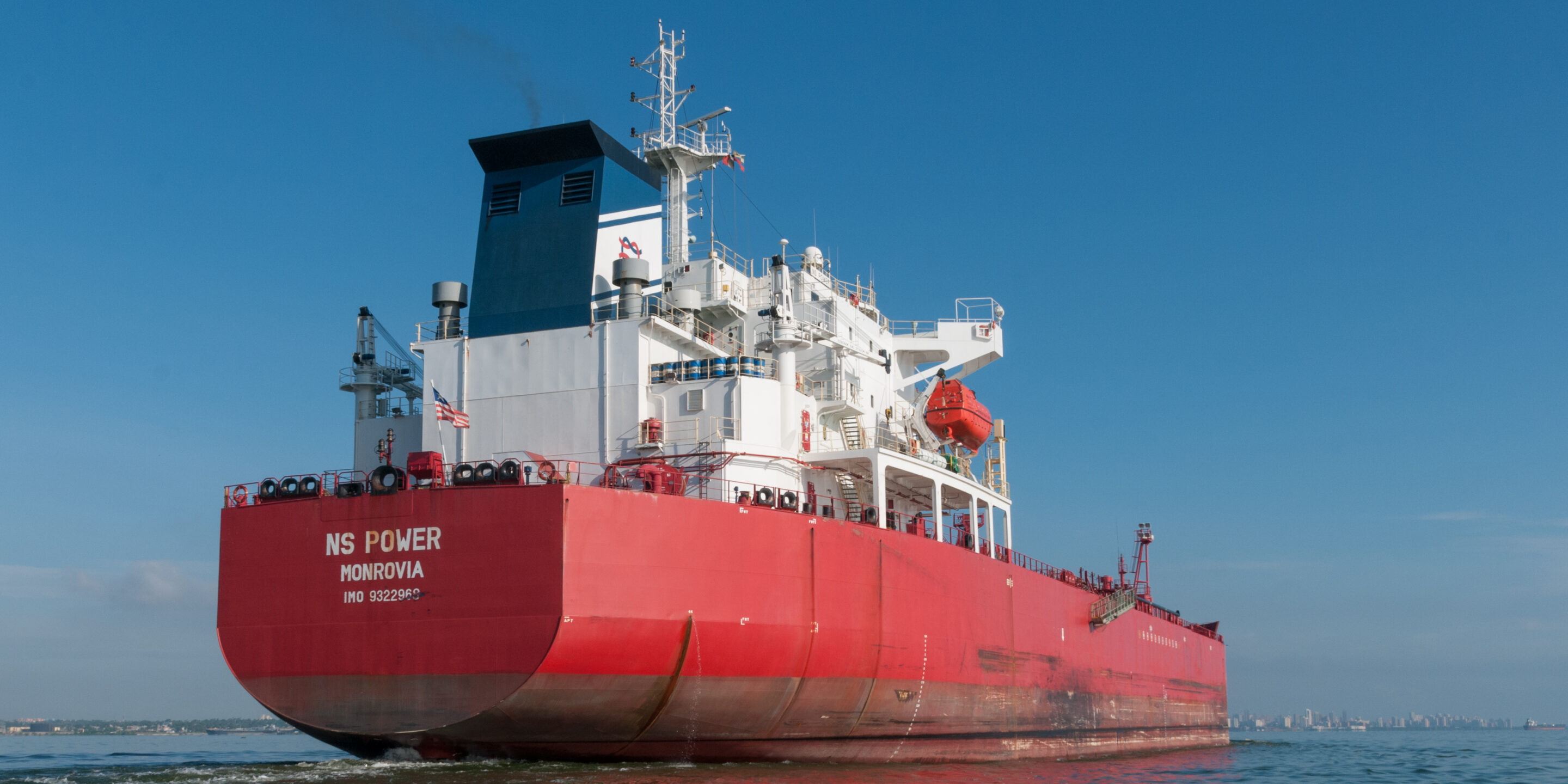
The U.S.-Israeli war on Iran and Tehran’s shutdown of the Strait of Hormuz have triggered the largest oil supply disruption in history. Washington’s blockade of Iranian shipping through the strait has only injected more uncertainty into an already volatile situation.
What has the war revealed about U.S. energy security strategies? What lessons can policymakers glean from this crisis to ensure U.S. energy security in the future?
In this DEFP Q&A, Middle East Program Director Rosemary Kelanic explains how the United States can address its energy vulnerabilities and end its dependence on the Middle East. (This interview has been lightly edited for clarity. Watch the full interview here.)
What misconceptions has the war in Iran revealed about global energy markets and weaknesses in U.S. energy security?
Kelanic: The biggest misconception is that oil is bought and sold in a global market. Imagine a giant bathtub with many spigots, representing all of the countries that put oil into the market. There are also many drains, one for every country that consumes oil from the market. Most countries that are spigots are also drains—for example, the U.S. puts oil in the global bathtub and also consumes it.
It doesn’t matter which molecules from which spigot go into a given drain. What matters is how much oil is in the bathtub and whether that level is rising or falling. If the total amount of oil available decreases, the price goes up for everyone drawing oil from the bathtub. It does not matter whether you produce more oil than you consume domestically, which is the case for the U.S. as a net petroleum exporter. We’re still connected to the bathtub, and American consumers are going to pay the bathtub market price for oil no matter what.
For that reason, the U.S. is just as vulnerable to spikes in global oil prices as everyone else. Unfortunately, the U.S. has not implemented effective strategies for addressing this. Two U.S. strategies are especially mistaken. One is the “drill, baby, drill” approach. Whatever the benefits of increased U.S. oil production—and there are some—it’s not going to take us out of the bathtub or insulate us from these kinds of supply shocks.
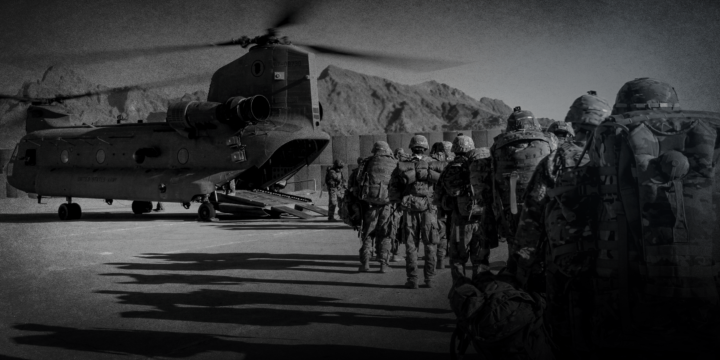
The other big mistake is keeping a large contingent of U.S. troops in the Middle East. The idea behind this strategy was to deter anyone from interfering with free access to Persian Gulf oil. That’s a commitment the U.S. made during the Cold War, when it was worried about the Soviet Union interfering with access to supply, and how that would hurt the free world.
The strategy of the U.S. Middle East military presence is mistaken in two ways. First, it doesn’t protect the U.S. from supply shocks that come from anywhere else. When Russia invaded Ukraine and oil prices spiked, having a bunch of troops in the Middle East did not help. Second, even in the current Iran conflict, where we thought it would be useful to have troops there, it is not helping. The U.S. military presence is what convinced Iran to attack U.S. bases in the region and to close the Strait of Hormuz. Having bases doesn’t make it any easier to reopen the strait, because whatever ships go through it are going to be subjected to attack from Iranian drones, mines, and missiles. Having a big forward military presence doesn’t help us very much with that.
This is the underpinning rationale for the U.S. presence in the region. And it turns out it’s not really helping us and may have hurt American interests in this scenario.
Is this crisis in global energy markets hitting the U.S. harder than Russia and China?
Kelanic: Even though the U.S. produces a lot of oil, we also consume way more oil than peer countries. We consume more oil per capita and more per unit of gross domestic product (GDP). The U.S. consumes twice as much oil per unit of GDP as European Union countries, 40 percent more than China, and 20 percent more than Russia, which is kind of amazing because Russia is a petrostate.
If you’re a company and you rely 40 percent more on a particular input for your production, if the price of that input goes up, you’re going to be hurt more than the other companies. Because the U.S. economy is so oil-intensive, it’s likewise hurt a lot more by this type of energy crisis.
The oil intensity of the U.S. economy comes, in part, from our car-loving culture. Many American households own two cars and rely on automobiles for transportation. We’ve also been slower than the rest of the world at adopting electric vehicles (EVs), which are significant because they don’t run on oil. They run on electricity generated by sources other than oil. If the U.S. switched to EVs—as China and the EU have at a faster rate—that would reduce our oil intensity.
Even if China didn’t get any oil from the Persian Gulf, less oil flowing out of the Strait of Hormuz reduces the amount of oil entering the bathtub, increasing prices for everybody, including China. It doesn’t really matter how much they get from the Middle East. That said, supply disruptions tend to hit Asia first because oil spends less time in transit from the Middle East to China than it does to the Western Hemisphere. So supply shortages will likely first appear in Asia, followed by Africa and Europe. They’re not showing up in the U.S. yet because laden tankers are still at sea en route to the United States and the Western Hemisphere. Over time, arbitrage of oil is going to change that, and you’re going to see fewer physical disruptions and more across-the-board price increases for everybody.
China has historically gotten a lot of Persian Gulf oil, especially from Iran. Iran was able to send its oil to China until the U.S. imposed a counterblockade. That meant more oil going into the bathtub for everyone. With the U.S. closing off that release valve of Iranian oil, we’re just lowering the level in the bathtub for everyone, the U.S. included.
What lessons should policymakers glean from this situation about U.S. energy security?
Kelanic: Clearly, the answer is that the United States needs to invest in de-risking from petroleum, and the easiest way to do that is with EVs. It’s unfortunate from a strategic standpoint that EVs have become so polarized and associated with left-wing causes. EVs and fossil fuels can work together. If you plug an EV into an electric grid that is more than 99 percent independent of oil—which the U.S. electric grid already is—then you have de-linked transportation away from this big source of price shocks. EVs can run on a grid powered by coal, for example. If you plug your EV into a coal-powered grid, you are still putting less carbon in the atmosphere than if you were driving an oil-fueled car.
This is the kind of situation where everyone can win, whether you care about climate or energy security, or both. From a strategic perspective, EVs could help the U.S. de-risk from oil—and that’s clearly something the United States needs to do.
Instead of spending billions or trillions of dollars on Middle East wars, we could invest in electrifying our transportation fleet. Then the Middle East just doesn’t matter to U.S. interests anymore. We can break our dependence on the Middle East by breaking our dependence on oil, and that’s clearly what we need to do. Some of that will happen naturally because of the price shock, which will make EVs more attractive to consumers. But there’s also a role for the government in encouraging EV adoption, and it should consider doing so going forward.
Author




Events on Iran