Since launching the war on Iran, President Donald Trump has heavily criticized NATO countries for not joining the fight more directly. Still, many European nations are playing critical supporting roles, raising questions about European autonomy and credibility.
In this DEFP Q&A, Non-Resident Fellow Thomas Cavanna discusses how the Iran war could impact the trajectory of U.S.-Europe relations and how it could leave Europe more dependent on the U.S. (This interview has been lightly edited for clarity.)
How have European countries responded to the Iran war and what interests do they have at stake?
Cavanna: Before the war, there was an overlap between the American and European positions on Iran in that the Europeans considered Iran a threat because of its nuclear program, its ballistic missile program, its support for “terrorist proxies,” and its ruthless regime. However, the Europeans have not been enthusiastic about the war.
The Europeans did not see an imminent threat coming from Iran and they resented the fact that the Trump administration did not consult them. European states are also concerned about international law and how the United States and Israel bypassed the United Nations. They are worried that there appears to be no endgame and that the lack of a clear plan could lead to a drawn-out conflict.
Many European leaders feel vulnerable, particularly on the economic front, amid energy supply disruptions and the inflation that will follow. European economies were not doing well before the war. There are also security concerns, especially related to connections between the war in Iran and the war in Ukraine. The Europeans fear that the U.S. will further reduce its support to Ukraine and neglect peace negotiations with Russia. Europe sees Russia benefiting from the war because of rising energy prices. There are also fears of refugee flows into Europe, as happened during past Middle Eastern crises.
The Europeans have been very clear that they do not want to intervene directly. They have refused the Trump administration’s demand that they intervene in the Strait of Hormuz. But I think it’s also important to emphasize that Europe’s response overall has been pretty weak. With some exceptions, like Spain, we have seen a great reluctance to condemn the war. The Europeans have expressed some reservations about the war’s illegality, but they have been very careful not to antagonize the Trump administration, fearing potential retaliation.
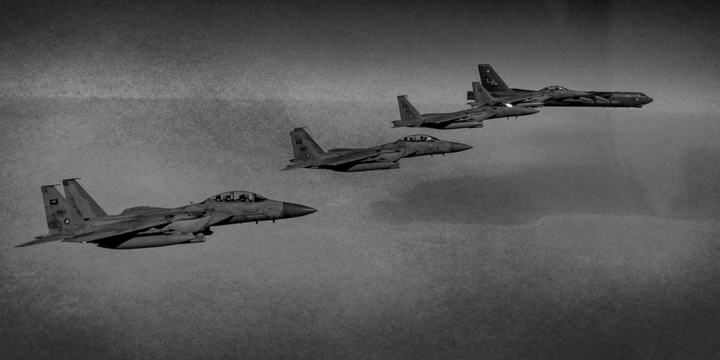
If we go beyond the rhetoric, many European leaders have enabled the U.S. war effort through logistics, command and control, and communications. The U.S. relies heavily on its network of bases in Europe. Even though the Europeans have so far not been directly involved in the war, this possibility cannot be completely ruled out. If the war continues, if the economic disruptions get worse, if the Trump administration is more persistent with its demands, if Iran retaliates against NATO countries more forcefully, we could see more direct European involvement.
Is the Trump administration contradicting its own strategy on Europe?
Cavanna: What the Trump administration has said is that it wants to break from how the relationship has worked for decades. For Trump, America’s allies have taken advantage of it for too long, especially NATO allies. He says it’s time for Europeans to step up. The United States will no longer treat them as a vassal. There will be greater burden-sharing, as mentioned in the 2026 National Defense Strategy. Europeans are supposed to assume primary responsibility for their own defense. The problem, though, is the implementation.
There have been some troop cuts in Europe. There are also important initiatives, such as the new NATO budget rule adopted at the last alliance summit, under which NATO members, except Spain, committed to spending at least 5 percent of their GDP on defense. That commitment was made in large part because the Trump administration was lobbying for it, and it shows the U.S. pushing the Europeans to be more independent. The Trump administration has not hesitated to be much more assertive, sometimes even aggressive, toward European countries and NATO allies. The Greenland controversy is a perfect example. President Trump has also expressed frustration with NATO’s reluctance to get involved in the war and has described NATO allies as “cowards.”
That could suggest that the U.S. no longer cares much about Europeans and is trying to be very assertive to push them out of their comfort zone and assume more responsibility for their own defense. I think it’s true that the Trump administration wants the Europeans to do more, but that doesn’t mean it wants to abandon America’s key levers of influence that have kept Europe dependent on the United States for decades.
The U.S. military footprint in Europe today is about the same as it was during the Biden presidency. The Trump administration has also imposed a number of economic policies on Europe related to energy and American weapon systems that are very detrimental to the emergence of an independent Europe. Under this administration, Washington has shown a willingness to interfere in domestic European politics and has a strong degree of hostility toward the European Union, which could be the main channel for the emergence of an independent Europe.
But this is nothing new. Previous American presidents have done similar things, at least to an extent, including a Europe-friendly president like Joe Biden. If we leave aside the rhetoric—and some policies here and there—I would argue that the fundamentals have not really changed.
How could the Iran war potentially make Europe more dependent on the United States?
Cavanna: Following the Greenland controversy and trade disputes, one could argue that the Iran war is another episode that should lead Europeans to realize they cannot trust the United States anymore and as a result they should push further toward strategic autonomy. However, I see the war in Iran exacerbating the two most fundamental factors that explain Europe’s persistent dependence on the United States.
First, it could deepen European military dependence on the United States. Second, it could lead to further division inside Europe at a time when the continent needs unity to make the reforms necessary for more autonomy. For example, European leaders are likely to invest less in defense budgets if the war in Iran continues to take its toll on their economies. Europe is falling behind in many technology sectors, largely because it doesn’t invest enough, and if the war in Iran continues to take its toll, that’s not going to get any better.
As the Europeans become more worried that the Iran war is going to make the United States less interested in supporting Ukraine and pushing for peace negotiations, and as Russia benefits increasingly from energy supply disruptions, the Europeans will find themselves in a position where Ukraine’s and Europe’s security more broadly could be jeopardized. They will face two options. Either unite and overcome their national differences and make big investments toward European strategic autonomy. Or fall back to their go-to option, which is the United States, and go along with the Trump administration to get as much as they can. I think it’s quite likely they take that second option.
The war could also create further tensions in Europe due to waves of refugees and economic difficulties. This could lead to divisions not just among European countries but within European societies. As we have seen before, it could result in the rise of far-right movements in Europe, which have distinct features but are not particularly pro-EU or pro-NATO. That would also be a source of division that would hurt the cause of European strategic autonomy.
On the Iran war, European leaders have neglected all of the things that they were supposed to stand for in international relations, such as international law, multilateralism, and support for the United Nations. This silence, or near-silence, hurts European credibility on the global stage. Washington closely follows the responses of European leaders. When the U.S. sees this display of weakness, it could further incentivize Washington to make more demands of Europe, because it will logically assess that European leaders will go along.
Author