Defense Priorities Defense Priorities
  • Policy Topics
    • US-Israel-Iran
    • Ukraine-Russia
    • Western Hemisphere
    • NATO
    • China
    • Syria
  • Analysis
    • Research
    • Q&A
  • Programs
    • Grand Strategy Program
    • Military Analysis Program
    • Asia Program
    • Middle East Program
  • Experts
  • Events
  • Media
  • About
    • Mission & Vision
    • People
    • Jobs
    • Contact
  • Donate
Select Page
Home / Western Hemisphere / Trump Is Getting His Way in Latin America. But Bully Tactics Have a Cost—and the Bill Is Coming Due
Western Hemisphere, Mexico, Venezuela

March 30, 2026

Trump Is Getting His Way in Latin America. But Bully Tactics Have a Cost—and the Bill Is Coming Due

By Daniel DePetris

Dressed in a navy-blue suit and a light blue tie, with Secretary of State Marco Rubio flanking him on one side and Defense Secretary Pete Hegseth on the other, President Donalf Trump strolled to the podium on January 3 to deliver a stark message: “Under our new national security strategy, American dominance in the Western Hemisphere will never be questioned again.”

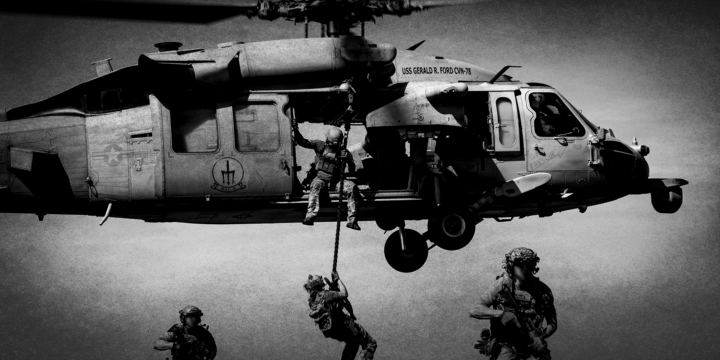
Trump had a reason for bragging. Hours earlier, U.S. special operations forces, with the support of U.S. air power, had nabbed Venezuelan dictator Nicolás Maduro and his wife from their residence.

Maduro, a former union boss and bus driver, had ascended to the presidency when his mentor, President Hugo Chávez, died from cancer in 2013. Maduro had been a constant irritant to the United States, and he informed anyone who listened that Washington was the region’s, if not the world’s, principal menace. For years, he had survived against all odds, despite an economic collapse that lopped off about three-quarters of Venezuela’s economy and caused about 20 percent of its population to migrate to greener pastures. The first Trump administration had tried to isolate Maduro diplomatically and economically by recognizing Juan Guaidó, the leader of the Venezuelan national assembly, as the country’s rightful interim president, and by instituting sanctions against Venezuela’s oil industry. That strategy failed. The Biden administration had taken a different tack by negotiating with Maduro on everything from prisoner releases to scheduling presidential elections, only to discover that Maduro pocketed the concessions and failed to meet his end of the bargain.

Trump’s decision to nab Maduro and prosecute him on drug trafficking charges wasn’t a given. In the first few months of his second term, Trump opted to send his senior envoy, Richard Grenell, to Caracas to determine whether a grand deal with the Venezuelan despot was possible. The early outreach produced some deliverables for the Trump administration, including freedom for six Americans. For Maduro, that decision was a low-cost, potentially high-reward move to ingratiate himself with the mercurial U.S. president. “President Donald Trump, we have made a first step, hopefully it can continue,” Maduro said on January 31, 2025. “We would like it to continue.”

Read at Reason

Author

Photo of Daniel DePetris

Daniel
DePetris

Fellow

Defense Priorities

More on Western Hemisphere

Q&AGrand strategy, Cuba, Western Hemisphere

Will U.S. pressure lead to regime collapse in Cuba?

By Daniel DePetris

March 27, 2026

In the mediaCuba, Western Hemisphere

¿Podría Cuba resistir una intervención militar de EE. UU.?

Featuring Daniel DePetris

March 24, 2026

Op-edCuba, Western Hemisphere

Pursue negotiations, not regime change, in Cuba

By Thomas P. Cavanna

March 18, 2026

Op-edCuba, Western Hemisphere

Trump’s Cuba strategy is straightforward. The outcome will be anything but.

By Daniel DePetris

March 15, 2026

Op-edCuba, Western Hemisphere

Trump can win in Cuba without regime change

By Daniel DePetris

March 10, 2026

Op-edMexico, Western Hemisphere

U.S.-Mexico Cooperation After El Mencho

By Daniel DePetris

March 8, 2026

Events on Western Hemisphere

See All Events
virtualWestern Hemisphere, Military analysis

Assessing the 2026 NDS: Toward Western Hemisphere dominance?

February 9, 2026
virtualWestern Hemisphere

What’s next for U.S. foreign policy in 2026? Western Hemisphere Edition

January 14, 2026
virtualVenezuela, Western Hemisphere

Perils of regime change in Venezuela and beyond

October 28, 2025

Receive expert foreign policy analysis

Join the hub of realism and restraint

Expert updates and analysis to enhance your understanding of vital U.S. national security issues

Defense Priority Mono Logo

Our mission is to inform citizens, thought leaders, and policymakers of the importance of a strong, dynamic military—used more judiciously to protect America’s narrowly defined national interests—and promote a realistic grand strategy prioritizing restraint, diplomacy, and free trade to ensure U.S. security.

  • Research
  • Experts
  • About
  • For Media
  • Jobs
  • Donate
  • Privacy Policy
  • Terms and Conditions
  • Contact
© 2026 Defense Priorities Foundation. All rights reserved.