Across the American political spectrum, many have deemed the U.S.-Iran ceasefire deal to be a humiliating surrender for the United States. But these accusations fundamentally miss the mark. The now-signed memorandum of understanding is not a failure for the United States; it is an acknowledgment that the United States lost the war because it could not achieve its maximalist aims at an acceptable cost.
Even though the terms are highly favorable to Iran, the Trump administration made the right move in reaching this agreement, which will hopefully permanently end this costly conflict, whether or not a comprehensive agreement is reached down the road. In the long term, the lessons from this war should lead to a better, more restrained U.S. foreign policy that actually serves Americans’ interests.
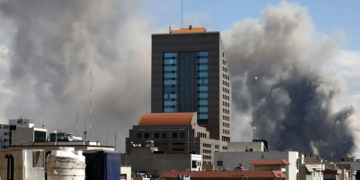
For decades, the United States, encouraged by Israel, has overhyped the threat posed by the Islamic Republic. If the United States hadn’t needlessly overextended itself in the Middle East, there was almost nothing Tehran could do to harm the United States. But the war has strengthened Iran’s strategic position, as Tehran now has a stranglehold over one of the world’s most important commodity chokepoints. Meanwhile, the conflict has been a disaster for the United States and the global economy.
By some estimates, the war may have cost the United States up to $200 billion. Washington now has the blood of thousands of Iranian and Lebanese civilians on its hands, and at least 13 American servicemembers have been killed. Meanwhile, the largest energy disruption in history has not only affected prices at American grocery stores and gas pumps but also had deleterious consequences for billions of people worldwide. China’s influence is ascendant, as it presents itself as a stable world power with a thriving green energy industry.
Author

More on Middle East