Defense Priorities Defense Priorities
  • Policy Topics
    • US-Israel-Iran
    • Ukraine-Russia
    • Western Hemisphere
    • NATO
    • China
  • Analysis
    • Policy Papers
    • Symposia
    • Q&A
    • Polls
    • Grand Strategy Explained
    • Target Taiwan
  • Programs
    • Grand Strategy Program
    • Military Analysis Program
    • Asia Program
    • Middle East Program
  • Experts
  • Events
  • Media
  • About
    • Mission & Vision
    • People
    • Jobs
    • Contact
  • Donate
Select Page
Home / North Korea / Seeking a New Normal on the Korean Peninsula
North Korea, Asia

September 12, 2026

Seeking a New Normal on the Korean Peninsula

By Lyle Goldstein

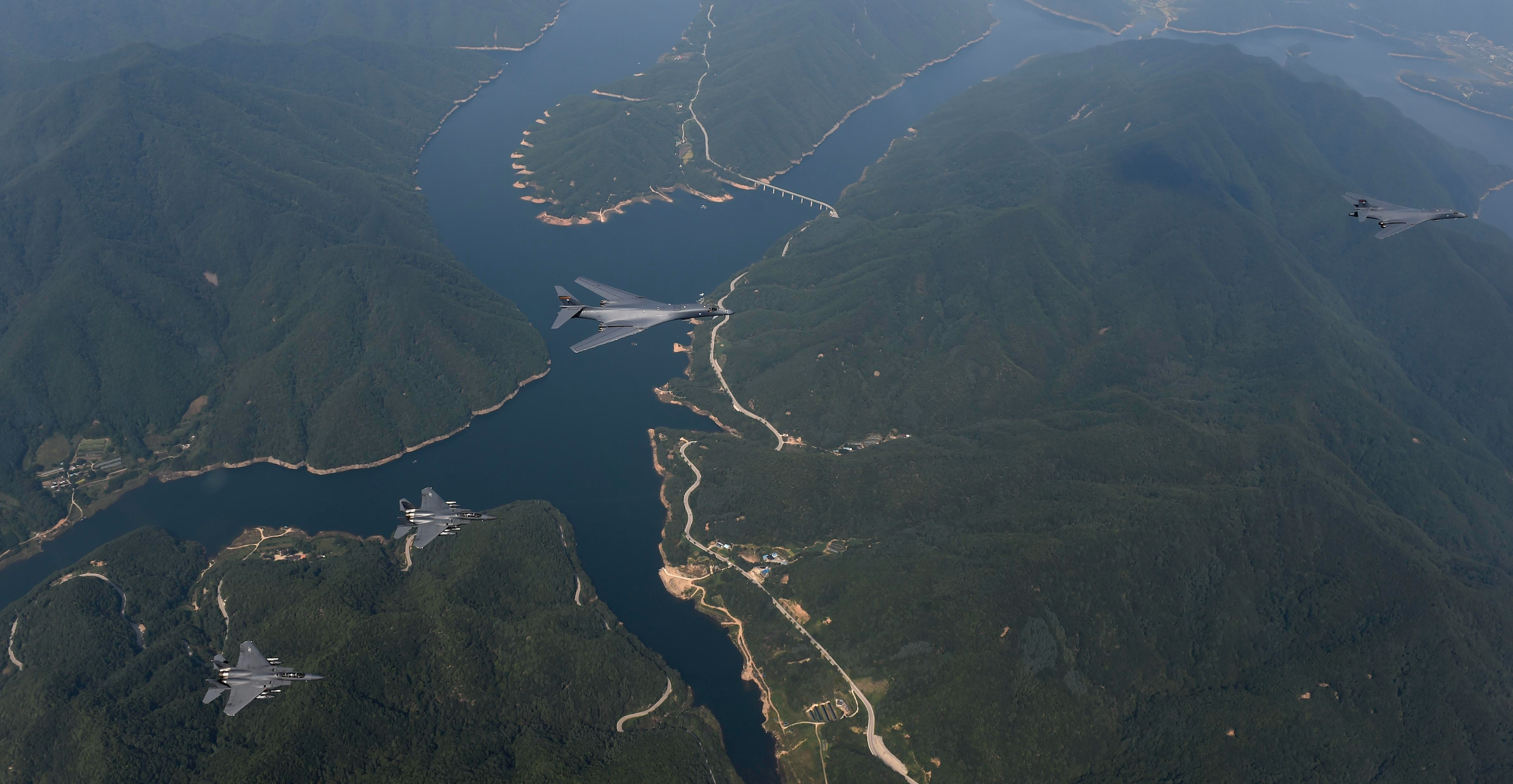
President Donald Trump recently sent a Truth Social post calling for a significant reduction in U.S.-South Korean military exercises. Trump linked the move to his friendly relationship with North Korean leader Kim Jong Un and Seoul’s refusal to get involved in the Iran war.

Naturally, this was taken as a grave affront by the Washington foreign policy establishment.

It’s unclear whether Trump’s message is intended to convey a new approach to alliances in the Pacific or just express his frustration over the ongoing war in the Persian Gulf. Whatever the case, his remarks are an opportunity to weigh the costs and benefits of an alliance that seems increasingly antiquated and in need of reform.

It wasn’t that long ago when Secretary of Defense Pete Hegseth touted the U.S. military relationship with South Korea as an illustration of successful burden-sharing. Hegseth praised the government of President Lee Jae Myung for raising defense spending and said other U.S. allies and partners in the region need to follow this example. Earlier in 2026, a senior Pentagon official called South Korea a “model ally.”

Advocates of the alliance say it amounts to even more than increased military spending and a shared dedication to deterring North Korean aggression. South Korea excels in certain industrial sectors where the U.S. has recently demonstrated weakness. For example, the country recently purchased a shipyard in Philadelphia with the aim of injecting new dynamism into American ship fabrication, including for naval vessels. And with Taiwan’s prized semiconductor manufacturing under ever-increasing threat from China, South Korea’s own vibrant microchip industry provides a valued reserve capacity.

Read at Real Clear Defense

Author

Photo of Lyle Goldstein

Lyle
Goldstein

Director, Asia Program

Defense Priorities

More on Asia

In the mediaChina, Asia, Naval power

U.S. Marine Stand-In Forces in the Pacific worry China, report details

Featuring Lyle Goldstein

September 15, 2026

In the mediaChina‑Taiwan, Asia, Basing and force posture, China, Military analysis

Trump has killed ‘strategic ambiguity’ over Taiwan

Featuring Jennifer Kavanagh

September 14, 2026

Op-edChina, Asia

How President Donald Trump’s summit with China’s Xi Jinping can yield dividends

By Lyle Goldstein

September 13, 2026

In the mediaChina‑Taiwan, Asia, Basing and force posture, China, Military analysis

Trump’s relations with China

Featuring Jennifer Kavanagh

September 13, 2026

In the mediaChina, Asia

U.S. coastguard sails into troubled waters with mission to counter China in Pacific

Featuring Lyle Goldstein

September 11, 2026

ExplainerAsia, Basing and force posture, Global posture, Military analysis

A second island chain strategy for Asia

By Jennifer Kavanagh

September 10, 2026

Events on North Korea

See All Events
in-personNorth Korea, Asia, Deterrence, Diplomacy, Nuclear weapons

Ending the North Korea standoff

March 5, 2018
in-personGrand strategy, Iran, North Korea, Nuclear weapons

Managing nuclear proliferation crises

October 30, 2017

Receive expert foreign policy analysis

Join the hub of realism and restraint

Expert updates and analysis to enhance your understanding of vital U.S. national security issues

Defense Priority Mono Logo

Our mission is to inform citizens, thought leaders, and policymakers of the importance of a strong, dynamic military—used more judiciously to protect America’s narrowly defined national interests—and promote a realistic grand strategy prioritizing restraint, diplomacy, and free trade to ensure U.S. security.

Defense Priorities Foundation is a 501(c)(3) non-profit organization supported entirely by American individuals and foundations—no funding comes from the United States government or any foreign government.

  • Experts
  • Papers
  • Symposia
  • Q&A
  • Polls
  • Events
  • Media
  • Terms and Conditions
  • Privacy Policy
  • About
  • Jobs
  • Contact
  • Donate
© 2026 Defense Priorities Foundation. All rights reserved.