Defense Priorities Defense Priorities
  • Policy Topics
    • US-Israel-Iran
    • Ukraine-Russia
    • Western Hemisphere
    • NATO
    • China
    • Syria
  • Analysis
    • Research
    • Q&A
  • Programs
    • Grand Strategy Program
    • Military Analysis Program
    • Asia Program
    • Middle East Program
  • Experts
  • Events
  • Media
  • About
    • Mission & Vision
    • People
    • Jobs
    • Contact
  • Donate
Select Page
Home / Europe and Eurasia / Europe’s best bet for protecting postwar Ukraine
Europe and Eurasia, NATO

March 19, 2025

Europe’s best bet for protecting postwar Ukraine

By Rajan Menon

The Trump administration has put Europeans on notice: Postwar Ukraine’s security is their responsibility, and they should not expect the United States to help. As U.S. President Donald Trump put it, the war in Ukraine “doesn’t have much of an effect on us because we have a big, beautiful ocean in between.” Geography hasn’t been as kind to Europe; its leaders believe that a renewed Russian attack on Ukraine could threaten their countries’ safety and that bolstering Ukraine’s capacity for self-defense is therefore a matter of self-interest, especially given increasing doubts about the U.S. commitment to defending Europe.

Bringing Ukraine into NATO is not a solution for this problem. The alliance has been divided on Ukraine’s membership ever since it accepted the idea, in noncommittal terms, at a 2008 summit in Bucharest, Romania. Trump effectively shut that door last month by affirming his defense secretary’s statement that “the United States does not believe that NATO membership for Ukraine is a realistic outcome of a negotiated settlement.”

One idea for a European role in defending Ukraine—which French President Emmanuel Macron and British Prime Minister Keir Starmer are trying to sell—involves the creation of a force with troops provided by a subset of willing (non-U.S.) NATO countries. Alas, this proposal is even more unrealistic than NATO membership for Ukraine.

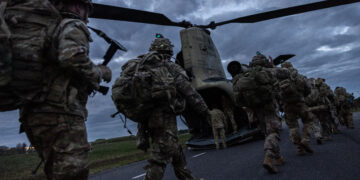
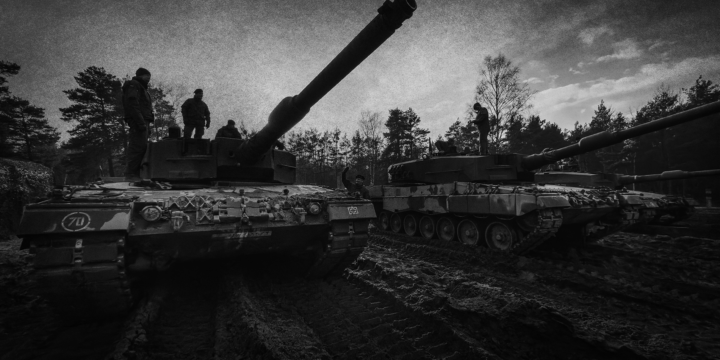
Ukrainian President Volodymyr Zelensky believes that a European peacekeeping force will require at least 200,000 soldiers to deter—or, failing that, foil—a future Russian invasion. But after more than three decades of prioritizing spending on economic and social programs over building up its military power, Europe lacks the ability to assemble a battle-capable army anywhere near as large as Zelensky proposes. The military-related spending of NATO’s European members has increased in recent years but, on average, as a proportion of GDP it barely budged since the late 1990s. Consequently, Europe’s armed forces remain heavily reliant on the United States in critical areas, including command and control, long-range targeting, logistics, surveillance, and airpower. What’s more, even if Europe had enough soldiers for the task, Russia has declared the presence of European troops in Ukraine as “completely unacceptable,” regardless of their number or mission.

Read at Foreign Policy

Author

Photo of Rajan Menon

Rajan
Menon

Former Non-Resident Senior Fellow

Defense Priorities

More on Europe

Op-edNuclear weapons, Europe and Eurasia, Russia

Russia Is Offering An Informal Nuclear Deal. Washington Should Take It.

By John Grover

February 25, 2026

Op-edNATO, Alliances, Europe and Eurasia

Breaking Europe’s Trans-Atlantic Habit: The End of the Senior Partner Myth

By Moritz Graefrath

February 24, 2026

Op-edNATO, Alliances, Ukraine‑Russia

Europe debates the bomb

By Daniel DePetris

February 19, 2026

Op-edNATO, Alliances, Europe and Eurasia

Marco Rubio’s Munich speech was an ultimatum to Europe

By Jennifer Kavanagh

February 15, 2026

Op-edUkraine‑Russia, Europe and Eurasia, Russia, Ukraine

Ukraine and Russia are both suffering as the war enters its fifth year

By Daniel DePetris

February 10, 2026

Op-edGrand strategy, Greenland, NATO, Western Hemisphere

Donald Trump is endangering U.S. alliances

By Christopher McCallion

January 30, 2026

Events on Europe and Eurasia

See All Events
virtualEurope and Eurasia, Asia, Grand strategy

Assessing the 2026 NDS: Alignment with restraint?

February 9, 2026
virtualNATO, Alliances, Burden sharing, Europe and Eurasia, Grand strategy

Assessing the 2026 NDS: Will it usher in burden shifting?

February 9, 2026
virtualEurope and Eurasia

What’s Next for U.S. Foreign Policy in 2026? Europe Edition

January 14, 2026

Receive expert foreign policy analysis

Join the hub of realism and restraint

Expert updates and analysis to enhance your understanding of vital U.S. national security issues

Defense Priority Mono Logo

Our mission is to inform citizens, thought leaders, and policymakers of the importance of a strong, dynamic military—used more judiciously to protect America’s narrowly defined national interests—and promote a realistic grand strategy prioritizing restraint, diplomacy, and free trade to ensure U.S. security.

  • Research
  • Experts
  • About
  • For Media
  • Jobs
  • Donate
  • Privacy Policy
  • Terms and Conditions
  • Contact
© 2026 Defense Priorities Foundation. All rights reserved.