Defense Priorities Defense Priorities
  • Policy Topics
    • US-Israel-Iran
    • Ukraine-Russia
    • Western Hemisphere
    • NATO
    • China
    • Syria
  • Analysis
    • Research
    • Q&A
  • Programs
    • Grand Strategy Program
    • Military Analysis Program
    • Asia Program
    • Middle East Program
  • Experts
  • Events
  • Media
  • About
    • Mission & Vision
    • People
    • Jobs
    • Contact
  • Donate
Select Page
Home / Grand strategy / Donald Trump’s cowboy diplomacy in the Western Hemisphere is succeeding, but has risks
Grand strategy, Alliances, Greenland, Western Hemisphere

February 6, 2025

Donald Trump’s cowboy diplomacy in the Western Hemisphere is succeeding, but has risks

By Daniel DePetris

Donald Trump has a special affinity for William McKinley, the former American president who was struck down by an assassin’s bullet in 1901, ending his second term before it really began. Trump has called his distant predecessor a “great but highly underrated” chief executive who made the United States wealthy by slapping tariffs on foreign goods. Whether or not this description is accurate, Trump genuinely believes it. Indeed, Trump feels so strongly about the man that he restored the name “Mount McKinley” to America’s highest peak during his first day in office.

Yet by the looks of it, Trump has more in common with another U.S. president who held court more than two centuries ago: James Monroe. While Monroe might not be in the same league as the George Washington’s and Abraham Lincoln’s of the world, he is best known for establishing the so-called Monroe Doctrine, which was designed to keep the Europeans out of the Western Hemisphere. The Monroe Doctrine has since been used as a shorthand for maintaining U.S. dominance in Latin America by ensuring no strategic competitors are able to get a permanent foothold in the region.

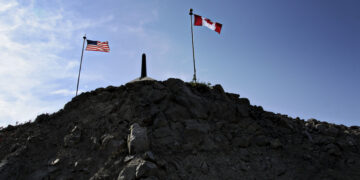
Trump, though, has taken the spirit of the Monroe Doctrine to the next level. He not only wants to keep China out; he aims to flaunt American power and coerce Washington’s allies and partners in the Western Hemisphere to meet his demands. The first two weeks of Trump’s presidency have been filled with bombastic threats of tariffs, sanctions and even military action if countries on the receiving end don’t submit. Whether it’s trying to convince Canada to become the 51st state, pressuring Denmark to sell Greenland to the United States or proclaiming that Panama Canal will soon be American property again, Trump’s browbeating has caused an immense amount of heartburn in the U.S. foreign policy establishment, which tends to view coercion over friendly states as bad optics and even worse policy.

But at the risk of stirring up a hornet’s nest, Trump’s tactics are actually working—so far. The tantrums on social media and stern, tough-guy prose from behind the resolute desk are getting results and moving various countries to cater to his whims or reassess their previous positions.

Read at The Chicago Tribune

Author

Photo of Daniel DePetris

Daniel
DePetris

Fellow

Defense Priorities

More on Western Hemisphere

In the mediaWestern Hemisphere, Venezuela

Budgetary Costs of U.S. Military Operations in Venezuela, the Caribbean, and the Eastern Pacific, August 1, 2025 – March 31, 2026

Featuring Jennifer Kavanagh

April 23, 2026

Op-edCuba, Western Hemisphere

Trump can get a win in Cuba, but not with military force

By Adam Gallagher

April 23, 2026

In the mediaWestern Hemisphere

Trump Has Already Spent at Least $4.7 Billion Attacking Latin America

Featuring Jennifer Kavanagh

April 23, 2026

Op-edWestern Hemisphere, Mexico, Venezuela

Trump Is Getting His Way in Latin America. But Bully Tactics Have a Cost—and the Bill Is Coming Due

By Daniel DePetris

March 30, 2026

Q&AGrand strategy, Cuba, Western Hemisphere

Will U.S. pressure lead to regime collapse in Cuba?

By Daniel DePetris

March 27, 2026

In the mediaCuba, Western Hemisphere

¿Podría Cuba resistir una intervención militar de EE. UU.?

Featuring Daniel DePetris

March 24, 2026

Events on Grand strategy

See All Events
virtualGlobal posture, Grand strategy, Military analysis

Assessing the 2026 NDS: What comes next?

February 9, 2026
virtualEurope and Eurasia, Asia, Grand strategy

Assessing the 2026 NDS: Alignment with restraint?

February 9, 2026
virtualNATO, Alliances, Burden sharing, Europe and Eurasia, Grand strategy

Assessing the 2026 NDS: Will it usher in burden shifting?

February 9, 2026

Receive expert foreign policy analysis

Join the hub of realism and restraint

Expert updates and analysis to enhance your understanding of vital U.S. national security issues

Defense Priority Mono Logo

Our mission is to inform citizens, thought leaders, and policymakers of the importance of a strong, dynamic military—used more judiciously to protect America’s narrowly defined national interests—and promote a realistic grand strategy prioritizing restraint, diplomacy, and free trade to ensure U.S. security.

  • Research
  • Experts
  • About
  • For Media
  • Jobs
  • Donate
  • Privacy Policy
  • Terms and Conditions
  • Contact
© 2026 Defense Priorities Foundation. All rights reserved.