Defense Priorities Defense Priorities
  • Policy Topics
    • Venezuela
    • China
    • Israel-Hamas
    • Ukraine-Russia
    • NATO
    • Syria
  • Analysis
    • Research
    • Q&A
  • Programs
    • Grand Strategy Program
    • Military Analysis Program
    • Asia Program
    • Middle East Program
  • Experts
  • Events
  • Media
  • About
    • Mission & Vision
    • People
    • Jobs
    • Contact
  • Donate
Select Page
Home / Russia / Does the alliance between Vladimir Putin and Kim Jong Un spell doom for the U.S.?
Russia, Alliances, Asia, Europe and Eurasia, North Korea

July 2, 2024

Does the alliance between Vladimir Putin and Kim Jong Un spell doom for the U.S.?

By Daniel DePetris

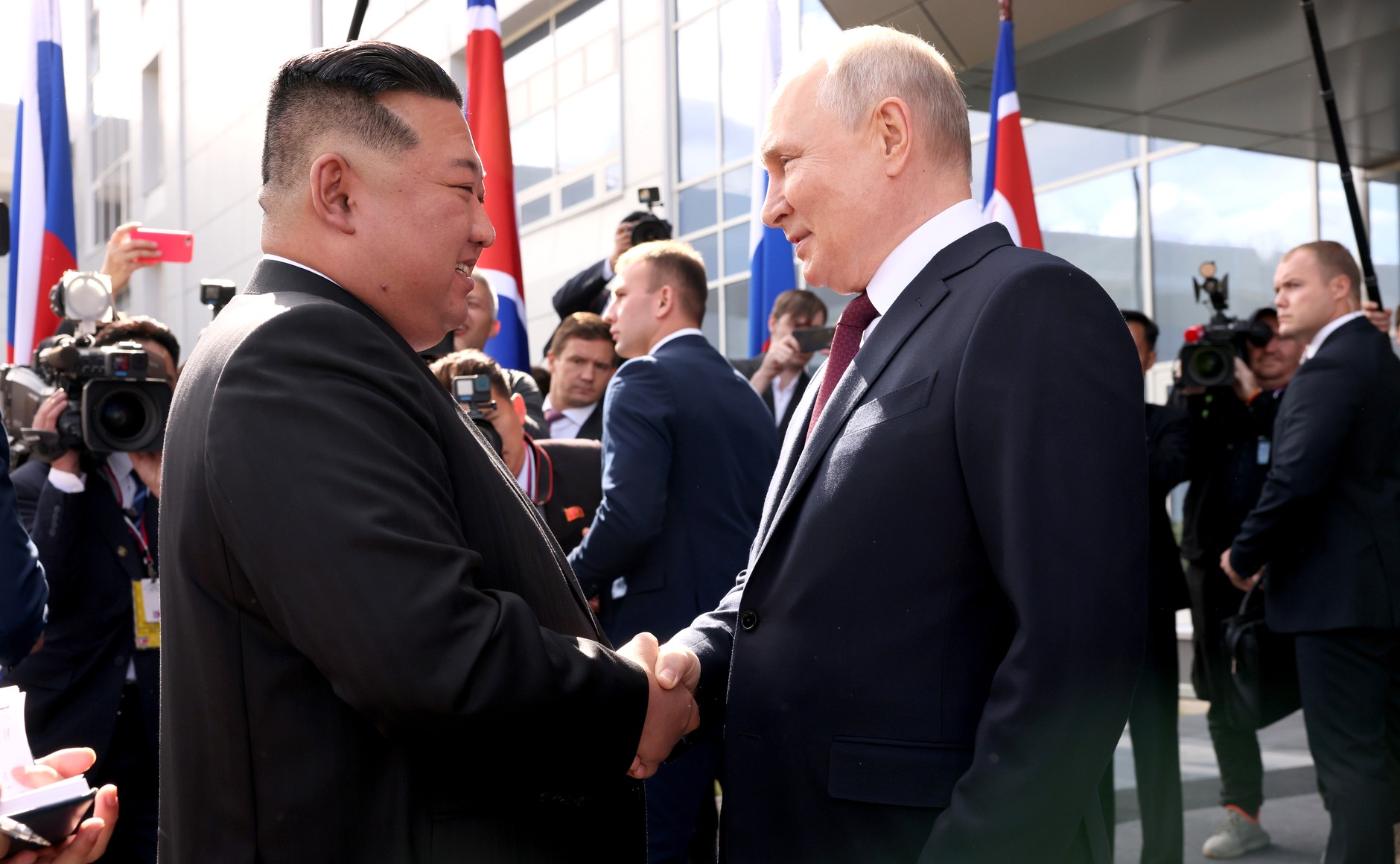
Even before Russian President Vladimir Putin landed in Pyongyang for his first trip to North Korea in nearly a quarter century, foreign policy observers were pontificating about what Putin and North Korean leader Kim Jong Un might have up their sleeves. Was the Putin-Kim summit an inflection point in the world order? Did the signing of the Comprehensive Strategic Partnership Agreement mean that Moscow and Pyongyang were now officially allies? And if so, how should the United States react?

The commentary thus far has taken on an almost hysterical turn. Victor Cha, a former National Security Council director for Asian affairs, has alleged that Russia and North Korea are now embarking on “a full-fledged military alliance” similar to what both countries had during the Cold War. President Joe Biden’s administration views the renewed Russia-North Korea partnership as an extremely dangerous arrangement that should be of concern to anybody who cares about stability on the Korean Peninsula or about saving Ukraine from Russian revanchism.

Some of these comments are justifiable. U.S. officials are right to raise concerns. But to be perfectly blunt, the sky isn’t falling.

Read at The Chicago Tribune

Author

Photo of Daniel DePetris

Daniel
DePetris

Fellow

Defense Priorities

More on Eurasia

op-edVenezuela, Europe and Eurasia, Russia

Venezuela has been introduced to supposed ally Vladimir Putin’s fickle side

By Daniel DePetris

January 13, 2026

op-edRussia, Ukraine‑Russia

Seizing empty Russian oil tanker doesn’t serve America’s interests

By Jennifer Kavanagh

January 8, 2026

op-edUkraine‑Russia, Europe and Eurasia, Russia, Ukraine

Zelensky-Trump meeting produced no winners

By Jennifer Kavanagh

December 29, 2025

op-edUkraine‑Russia, Europe and Eurasia, NATO, Russia, Ukraine

Trump’s security promise to Ukraine may be more dangerous than it looks

By Jennifer Kavanagh

December 26, 2025

Press ReleaseAfrica, Counterterrorism

Refrain from additional strikes in Nigeria

By Jennifer Kavanagh

December 25, 2025

op-edUkraine‑Russia, Europe and Eurasia, Russia, Ukraine

Ukraine’s own pragmatism demands ‘armed un-alignment’

By Jennifer Kavanagh

December 22, 2025

Events on Russia

See All Events
virtualUkraine‑Russia, Air power, Diplomacy, Drones, Europe and Eurasia, Land power, Military analysis, Russia, Ukraine

Ukraine’s critical choice: Pursue peace or fight on

April 16, 2025
virtualChina, Alliances, Balance of power, Diplomacy, Grand strategy, Russia

China-Russia: Cooperation or a no-limits alliance?

April 3, 2025
virtualUkraine‑Russia, Europe and Eurasia, Russia, Ukraine

Trump and Ukraine: Prolonging or ending the war

December 13, 2024

Receive expert foreign policy analysis

Join the hub of realism and restraint

Expert updates and analysis to enhance your understanding of vital U.S. national security issues

Defense Priority Mono Logo

Our mission is to inform citizens, thought leaders, and policymakers of the importance of a strong, dynamic military—used more judiciously to protect America’s narrowly defined national interests—and promote a realistic grand strategy prioritizing restraint, diplomacy, and free trade to ensure U.S. security.

  • Research
  • Experts
  • About
  • For Media
  • Jobs
  • Donate
  • Privacy Policy
  • Terms and Conditions
  • Contact
© 2026 Defense Priorities All Right Reserved