Defense Priorities Defense Priorities
  • Policy Topics
    • Iran
    • Ukraine-Russia
    • NATO
    • China
    • Venezuela
    • Syria
  • Analysis
    • Research
    • Q&A
  • Programs
    • Grand Strategy Program
    • Military Analysis Program
    • Asia Program
    • Middle East Program
  • Experts
  • Events
  • Media
  • About
    • Mission & Vision
    • People
    • Jobs
    • Contact
  • Donate
Select Page
Home / Syria / Biden is wrong to double down on Syria
Syria, Middle East

December 27, 2024

Biden is wrong to double down on Syria

By Alexander Langlois

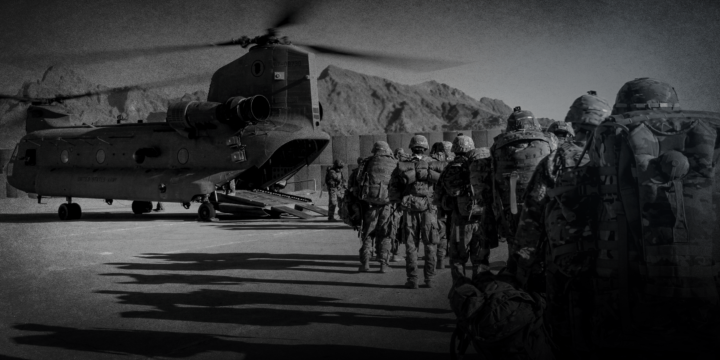
On December 19, the U.S. Department of Defense announced that there are roughly 2,000 troops stationed in Syria—1,100 more than previously shared with the public. Pentagon spokesperson Major General Patrick Ryder disclosed the new number almost off-handedly, without explanation for the shock news as Syria experiences a generational moment following former President Bashar al-Assad’s regime collapse on December 8. The announcement personifies the ongoing and widespread disdain of American political and military leaders for transparency on military operations abroad.

Indeed, the laxness with which Ryder announced the new deployment numbers is unacceptable. These forces are not, as the spokesperson claimed, simply “temporary rotational forces” but reflect the worst excesses of mission creep that have come to define U.S. military operations in the post-9/11 era. Ryder’s follow-on statements, in the same breath as his claims of the temporary nature of the deployment, highlight this bleak reality: “Right now, there are no plans to cease the defeat-ISIS mission.”

Rather, the Biden administration feels empowered to expand that mission and lie to the American people about what exactly it is doing in Syria. Such an outcome results from unchecked executive power in the U.S. government and Congressional reluctance to question support for anything labeled as counterterrorism (CT) operations. Worse, the announcement comes as news surfaces that U.S. President Joe Biden experienced “good days and bad days” as early as 2021 concerning his mental acuity—another inconvenient fact hidden from U.S. citizens, raising questions regarding who has actually been steering policy in the White House.

The inconvenient truth for Biden’s advisors is simple: U.S. forces continue to operate in a country that has not invited them to establish a presence and without any constitutionally mandated Authorization for the Use of Military Force (AUMF) required to make such military operations legal under U.S. law. Only Congress can pass an AUMF—the president cannot unilaterally declare one. Flimsy arguments connecting the Islamic State to Al-Qaeda – arguing that the former grew out of the latter—are another ugly expansion of unchecked executive power aimed at limiting U.S. citizen input on the critical decisions of their elected officials.

Read at Real Clear Defense

Author

Alexander
Langlois

Contributing Fellow

Defense Priorities

More on Middle East

op-edIran, Middle East, Nuclear weapons

All the reasons Trump should resist regime change in Iran

By Thomas P. Cavanna

January 20, 2026

op-edIsrael‑Hamas, Israel, Middle East

The Trump administration launches Phase 2 of the Gaza plan. Will peace materialize?

By Daniel DePetris

January 20, 2026

Thousands turn out in Melbourne to stand in solidarity with protests that have broken out in Iran following the death of 22-year old Mahsa Amini at the hands of the country’s brutal dictatorship and its ‘morality’ police.
Iran

Should the U.S. do anything about Iran’s protests?

By Rosemary Kelanic

January 19, 2026

op-edSyria, Middle East

What the recent clashes in Aleppo mean for Syria

By Alexander Langlois

January 16, 2026

op-edMiddle East

The Saudi-UAE schism could make Trump’s job even harder

By Daniel DePetris

January 2, 2026

op-edGrand strategy, Israel‑Hamas, Middle East

The foreign policy moves Donald Trump got right this year

By Daniel DePetris

December 30, 2025

Events on Syria

See All Events
virtualMiddle East, Basing and force posture, Diplomacy, Houthis, Iran, Iraq, Israel, Israel‑Hamas, Military analysis, Syria

Trump in the Middle East: Impacts, implications, and alternatives

May 16, 2025
virtualSyria, Balance of power, Basing and force posture, Counterterrorism, Middle East, Military analysis

Syria after Assad: Prospects for U.S. withdrawal

February 21, 2025
virtualMiddle East, Iran, Israel‑Hamas, Israel‑Iran, Syria, Yemen

Keeping the U.S. out of war in the Middle East

January 16, 2024

Receive expert foreign policy analysis

Join the hub of realism and restraint

Expert updates and analysis to enhance your understanding of vital U.S. national security issues

Defense Priority Mono Logo

Our mission is to inform citizens, thought leaders, and policymakers of the importance of a strong, dynamic military—used more judiciously to protect America’s narrowly defined national interests—and promote a realistic grand strategy prioritizing restraint, diplomacy, and free trade to ensure U.S. security.

  • Research
  • Experts
  • About
  • For Media
  • Jobs
  • Donate
  • Privacy Policy
  • Terms and Conditions
  • Contact
© 2026 Defense Priorities All Right Reserved