Defense Priorities Defense Priorities
  • Policy Topics
    • US-Israel-Iran
    • Ukraine-Russia
    • Western Hemisphere
    • NATO
    • China
  • Analysis
    • Policy Papers
    • Symposia
    • Q&A
    • Polls
    • Grand Strategy Explained
    • Target Taiwan
  • Programs
    • Grand Strategy Program
    • Military Analysis Program
    • Asia Program
    • Middle East Program
  • Experts
  • Events
  • Media
  • About
    • Mission & Vision
    • People
    • Jobs
    • Contact
  • Donate
Select Page
Home / Asia / Rocks and reefs aren’t worth a war with China
Asia, China

May 4, 2024

Rocks and reefs aren’t worth a war with China

By Quinn Marschik

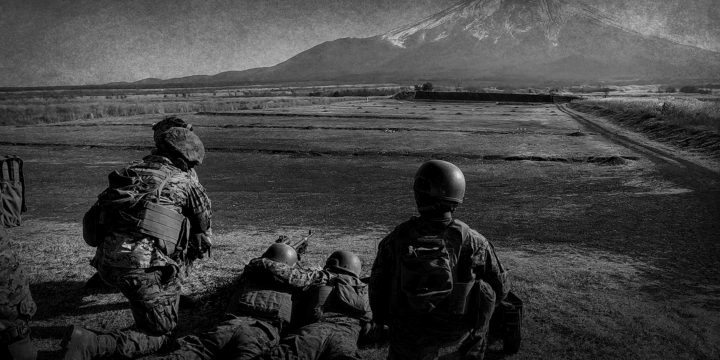
America is willing to sacrifice for uninhabited rocks and reefs in the East and South China Seas. This is one of the main messages from Japanese prime minister Kishida Fumio and Philippines president Ferdinand Marcos’ official visits to the United States. The Biden administration’s doubling down on advancing Indo-Pacific countries’ interests vis-à-vis China represents a reckless strategy in a region where Washington should be especially shrewd and savvy. Instead of fighting others’ battles and setting itself up to fail, Washington should adopt a restrained regional policy to secure its interests.

Primarily, the United States has no vital interest in the outcome of the Senkaku/Diaoyu Islands or the South China Sea territorial disputes. The islands, rocks, and shoals in question are unpopulated, small, and hold little strategic value. Military outposts on these disputed territories are highly susceptible to attacks, face resupply nightmares, and inherent environmental issues—making any existing or potential Chinese bases more distractions than threats. Additionally, while freedom of navigation in the East and South China Seas is a legitimate concern, Beijing is highly unlikely to halt commerce since it is the prime beneficiary. Not to mention, trade can be rerouted at monetary cost. No lives need to be sacrificed or the world destroyed for mildly cheaper goods.

President Joe Biden’s insistence on U.S. defense treaties with Japan and the Philippines covering the Senkaku/Diaoyu Islands and the Philippines’s military activity in the South China Sea increases tensions and risks conflict with China. Beijing views the two disputes as “core” or vital interests. As such, China is willing to risk war to assert its claim if necessary. Indeed, Beijing became more assertive after Washington announced its “Pivot to Asia,” out of fear it could effectively lose its territorial claims. China’s assertiveness will not disappear with stronger U.S.-Japan-Philippines ties but will likely intensify to test the relationship and attempt to deter it.

Moreover, the “ironclad” security guarantees for Japan and the Philippines’ disputed territory encourage risky behavior. While Japan has been relatively restrained in the East China Sea, its 2012 nationalization of the Senkaku/Diaoyu Islands intensified the dispute with China. Denationalizing the islands and regulating their ownership, which could cool tensions, are likely off the table so long as Washington fully underwrites Japan’s claims.

Read at National Interest

Author

Quinn
Marschik

Former Contributing Fellow

Defense Priorities

More on Asia

In the mediaDiplomacy, Asia, China, Europe and Eurasia, Russia

Why the Trump–Xi–Putin summit was worth it—despite the skeptics

Featuring Lyle Goldstein

November 21, 2026

In the mediaDiplomacy, Asia, China, Europe and Eurasia, Russia

Trump is pursuing a particular type of presidential legacy

Featuring Jennifer Kavanagh

November 20, 2026

Press ReleaseDiplomacy, Asia, China, Europe and Eurasia, Russia

Trump-Xi-Putin summit lays foundations for stability

By Jennifer Kavanagh

November 19, 2026

Op-edAsia, China, Military strategy and budget, Nuclear weapons

Japanese nuclear submarines are a bad idea for East China Sea security—for now

By Lyle Goldstein

November 19, 2026

In the mediaDiplomacy, Asia, China

Trump and Xi are set to meet in China amid tensions over AI. Here’s what to know.

Featuring Lyle Goldstein

November 18, 2026

In the mediaDiplomacy, Asia, China, Europe and Eurasia, Russia

Trump-Xi-Putin summit can be useful, expert says

Featuring Lyle Goldstein

November 18, 2026

Events on Asia

See All Events
virtualEurope and Eurasia, Asia, Grand strategy

Assessing the 2026 NDS: Alignment with restraint?

February 9, 2026
virtualAsia

What’s Next for U.S. Foreign Policy in 2026? Asia Edition

January 14, 2026
virtualGreat power competition, Balance of power, China, Grand strategy, Middle East

U.S.-China competition and the value of Middle East influence

June 10, 2025

Receive expert foreign policy analysis

Join the hub of realism and restraint

Expert updates and analysis to enhance your understanding of vital U.S. national security issues

Defense Priority Mono Logo

Our mission is to inform citizens, thought leaders, and policymakers of the importance of a strong, dynamic military—used more judiciously to protect America’s narrowly defined national interests—and promote a realistic grand strategy prioritizing restraint, diplomacy, and free trade to ensure U.S. security.

Defense Priorities Foundation is a 501(c)(3) non-profit organization supported entirely by donations from individuals and foundations—no funding comes from the U.S. government or any foreign government. Donations are unlimited and deductible for Federal Income Tax purposes.

  • Experts
  • Papers
  • Symposia
  • Q&A
  • Polls
  • Events
  • Media
  • Terms and Conditions
  • Privacy Policy
  • About
  • Jobs
  • Contact
  • Donate
© 2026 Defense Priorities Foundation. All rights reserved.