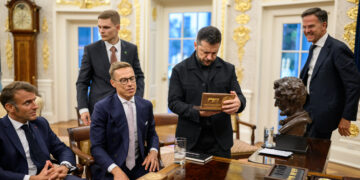
It was a big week for President Donald Trump’s attempts to end the war in Ukraine. After a two-hour call with his Russian counterpart, Vladimir Putin, Trump met in the White House with Ukraine’s leader, Volodymyr Zelensky on Friday. Pundits are already busy trying to assess who came out ahead. Did Putin’s outreach win Trump back to Russia’s side or does the American President continue to support Ukraine’s efforts to achieve a battlefield victory?
The answer, it seems, is none of the above. Instead, reality is the true winner of the latest diplomatic scramble, having successfully dealt a firm blow to the magical thinking afflicting all major stakeholders in the current war.
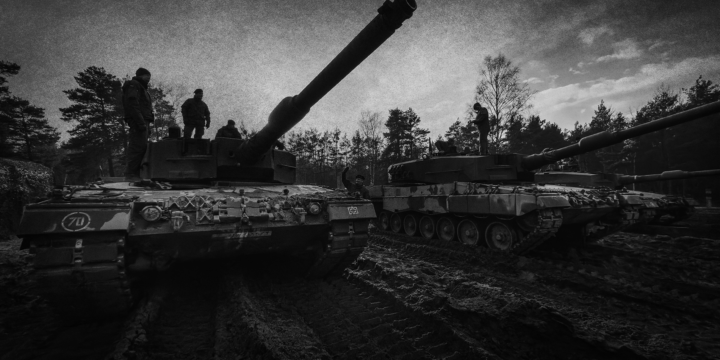
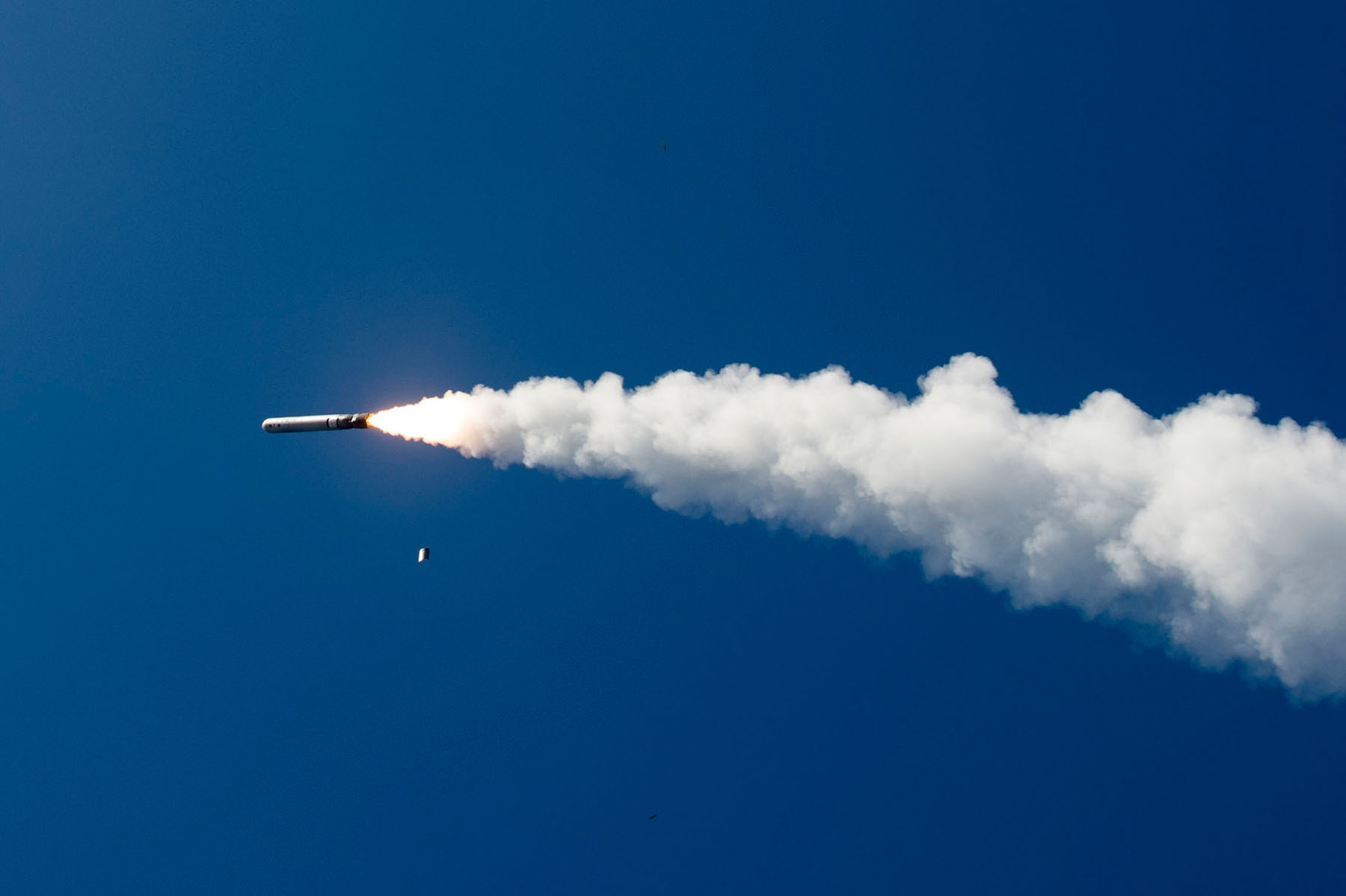
The wake-up call was harshest for Zelensky. The Ukrainian delegation came to Washington projecting confidence that President Trump would endorse their plan to go back on the offensive and provide Kyiv with long-range Tomahawk missiles that would allow Ukraine to strike deeper into Russian territory. Trump declined both requests. He said that he hoped the war could be ended without the use of Tomahawks, made no new commitments of military aid, and called on Zelensky to instead make a deal that would bring peace.
Trump’s position should have been expected. Despite all the talk about Tomahawks in Kyiv and in Washington, these missiles were never truly on the table for Ukraine. Not only does Kyiv have no way to launch the long-range missile, but U.S. stockpiles are so constrained that the Pentagon would surely object to giving any up. Trump’s rhetoric around Tomahawks resembled his earlier warnings about harsher sanctions on Russia—a threat that he does not want to make good on.
Author






Events on Ukraine-Russia